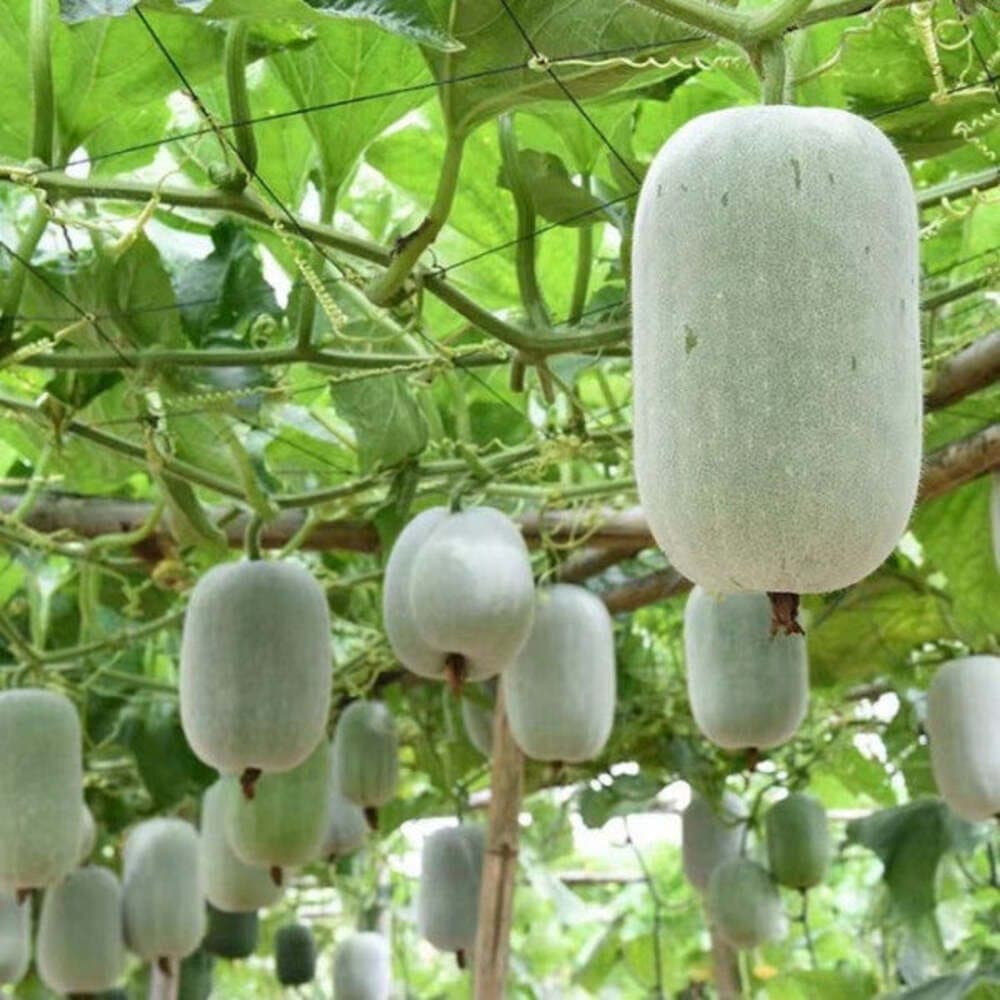
Ash gourd is one of the most remarkable, nutrient-dense, and underrated vegetables in the world. Known scientifically as Benincasa hispida, this humble vegetable has been cherished in Asian cultures for thousands of years — celebrated in Ayurvedic medicine as a "yogic superfood" for its unique ability to boost energy while simultaneously calming the mind.
With its high water content, distinctive waxy coating, and mild flavour, ash gourd is used in everything from refreshing detox juices to traditional sweets.
Botanical Profile
| Detail | Information |
|---|---|
| Botanical Name | Benincasa hispida |
| Family | Cucurbitaceae (cucumber and squash family) |
| Sanskrit Name | Kushmanda |
| Other Names | Winter Melon, Wax Gourd, White Pumpkin, Petha (Hindi), Neer Poosanikai (Tamil), Kumbalanga (Malayalam) |
Ash gourd grows as a creeping vine. When young, it is covered in fine hairs; as it matures, it develops a distinctive white, powdery, waxy coating — which gives it the name "ash gourd" and provides an exceptionally long shelf life compared to other gourds.
History & Origin
Ash gourd is believed to have originated in South and Southeast Asia, with roots in India, Japan, and Indonesia. It has been cultivated and used medicinally for thousands of years across India, China, and Korea.
In Ayurveda, it is considered one of the finest fruit-yielding creepers — used for both nourishment and healing. In parts of India, ash gourd also holds symbolic ritual significance, used in ceremonies to represent the removal of negative energies and obstacles.
Nutritional Value (Per 100g)
Ash gourd is remarkably low in calories and extraordinarily high in water — making it a perfect functional food for hydration, detox, and weight management.
| Nutrient | Amount |
|---|---|
| Water | ~96% |
| Calories | 13–15 kcal |
| Dietary Fibre | 2.9 g |
| Carbohydrates | ~3 g |
| Protein | < 1 g |
| Vitamin C | 14–30% of Daily Value |
| Minerals | Zinc, Calcium, Iron, Phosphorus, Potassium, Magnesium |
| Antioxidants | Rich in flavonoids and carotenes |
Medicinal Properties & Health Benefits
Natural Detoxifier & Diuretic
Ash gourd may support the normal elimination of waste products and kidney function, and gently increases urine production — making it a popular natural diuretic food.
Cooling & Anti-Acidity
With one of the most high-intensity cooling effects of any vegetable, ash gourd is traditionally used to reduce excess body heat, ease acidity, and calm the sensation of heart palpitations associated with Pitta imbalance. Persistent palpitations or chest discomfort always need medical evaluation.
Digestive Health
Its fibre content and mild laxative properties may help ease constipation, acidity, and dyspepsia, and it is traditionally used as a soothing food in cases of peptic ulcers. It is gentle on the digestive tract.
Immunity Support
Rich in Vitamin C and zinc, ash gourd may help support the immune system — contributing to the body's natural defences against infection and seasonal illness.
Mental Clarity & Calm
In Ayurveda, ash gourd is classified as both a Medhya (intellect promoter) and Prasadana (calmative). It has traditionally been used to improve memory, support mental clarity, and calm an overactive or anxious mind — one of the reasons it is considered a yogic food.
Respiratory Support
Acts as a natural expectorant, loosening phlegm and providing relief in conditions like cough, congestion, and asthma.
Skin & Hair Care
The gel extract from ash gourd is applied topically to treat dandruff, dry scalp, and sun-damaged skin.
Ash Gourd in Ayurvedic Medicine
In Ayurveda, ash gourd (Kushmanda) is classified as:
- Rasa (Taste): Sweet
- Virya (Potency): Cooling (Sheeta)
- Dosha action: Balances Vata and Pitta
Key Ayurvedic Applications
Kushmanda Rasayana: A classical Ayurvedic formulation using ash gourd as the primary ingredient — used to treat bleeding disorders, improve body weight in cases of emaciation, and act as a general rejuvenator.
Internal bleeding (traditional use): Fresh ash gourd juice is traditionally used as a supportive food in cases of nosebleeds, blood-tinged sputum, and piles caused by Pitta aggravation. Any internal bleeding is a medical emergency — seek immediate medical care; do not rely on home remedies.
Nourishment therapy: Frequently used in Brimhana (nourishing) therapies for wasted or weakened body tissues.
Antiparasitic: Ash gourd seed powder has been used as an anthelmintic to help expel intestinal parasites.
Ash Gourd Juice: The Daily Detox Ritual
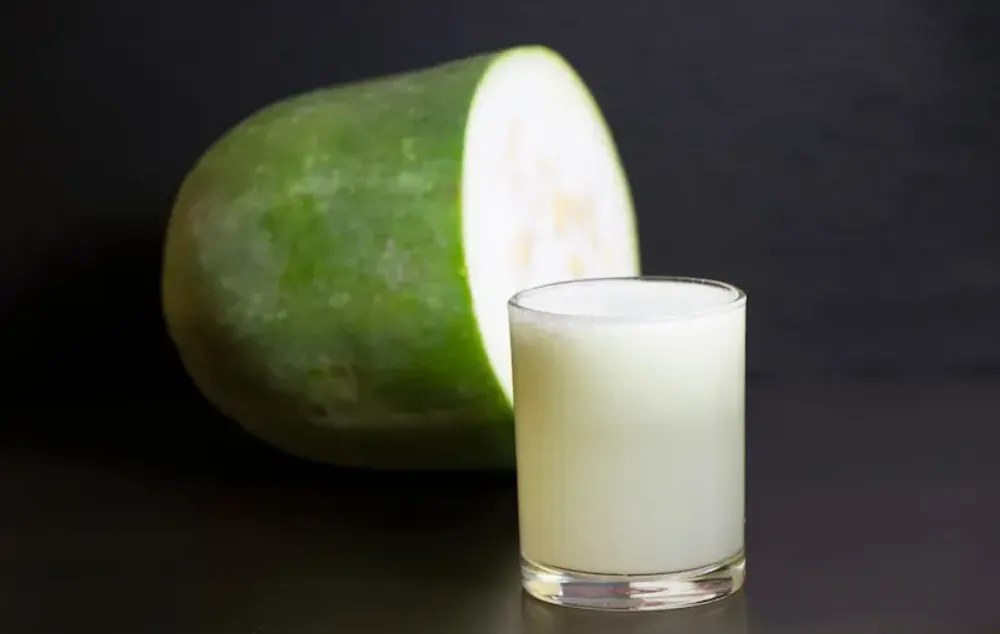
Drinking fresh ash gourd juice first thing in the morning is one of the most highly recommended practices in both Ayurveda and modern naturopathy. It:
- Flushes toxins accumulated overnight
- Alkalises the body and reduces acidity
- Supports weight management by keeping the body hydrated and metabolism active
- Calms the nervous system — setting a clear, focused tone for the day
How to prepare: Peel and chop raw ash gourd, blend with a small amount of water, and strain. Drink 100–200ml on an empty stomach. A pinch of black pepper and a squeeze of lime can be added for flavour and to balance the cooling effect.
Culinary Uses
| Dish | Description |
|---|---|
| Agra Petha | The famous North Indian sweet made from candied ash gourd pulp |
| Fresh juice | Raw detox drink, often with lime and a pinch of salt |
| Sambar / Kootu | Widely used in South Indian curries and stews |
| Kashi Halwa | Traditional sweet dish from Karnataka made with ash gourd |
| Bori / Vadialu | Mixed with lentils and sun-dried into dumplings used in curries |
Precautions
- Kapha conditions: Due to its strong cooling nature, those with sinusitis, asthma, cold, or Kapha-dominant constitution should consume ash gourd with black pepper or ginger to offset the cooling effect
- Kidney stones: Contains oxalates — consume in moderation if prone to kidney stone formation
- Medication interactions: Because of its diuretic action, those on blood-pressure medication, diuretics, or lithium should consult their doctor before regular therapeutic use, as it may amplify drug effects or affect electrolyte balance
- Pregnancy & breastfeeding: Small culinary amounts are generally considered safe, but large therapeutic doses (such as daily juice on an empty stomach) should be discussed with your healthcare provider before use during pregnancy or breastfeeding
- Children: Use small culinary amounts; avoid concentrated juice as a daily therapeutic drink without paediatrician guidance
- Asthma & respiratory conditions: While traditionally used as an expectorant, asthma is a serious condition — do not stop or replace prescribed inhalers or medication
- Freshness matters: Always use fresh ash gourd; older fruit may carry contaminants and loses its therapeutic potency
A Vegetable Worth Rediscovering
In a world of complex superfoods and exotic supplements, ash gourd stands out for being simple, accessible, affordable, and profoundly effective. Whether consumed as a morning juice, a cooling curry, or a traditional Ayurvedic preparation, it delivers real benefit — supporting the body, calming the mind, and restoring balance from within.
Kushmanda — the great gourd — is a food that belongs in every kitchen and every healing practice.
This article is for general educational purposes only and is not a substitute for professional medical advice, diagnosis or treatment. If you have an existing medical condition, are on medication, or are pregnant or breastfeeding, please consult your healthcare provider before making significant changes to your diet.
Related Reading
If you found this helpful, you may also like: