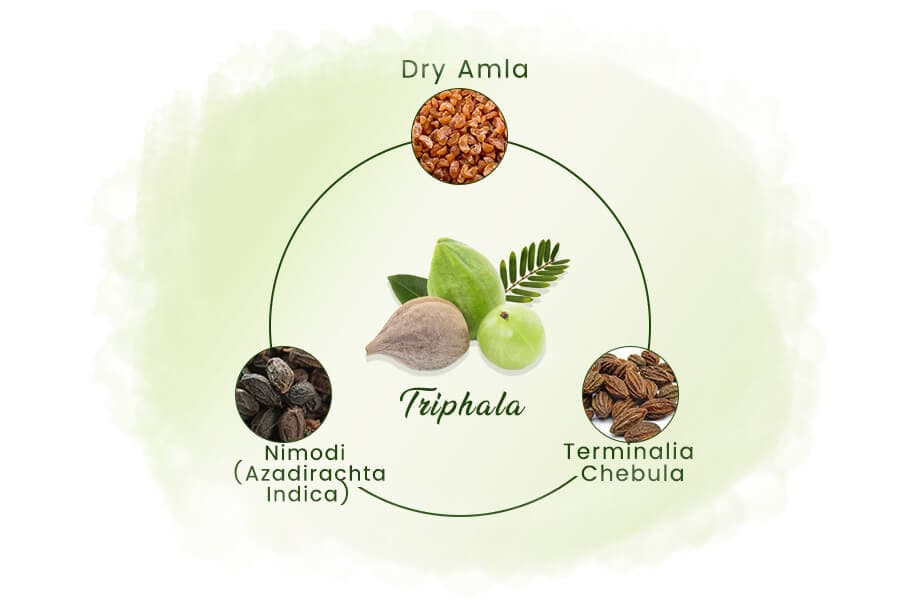
In the vast landscape of Ayurvedic medicine, few formulations are as revered, versatile, and time-tested as Triphala. Often referred to as a Rasayana (rejuvenative tonic) or the "nectar of life" in ancient texts, Triphala is not merely a remedy — it is a foundational daily tonic for total health.
Its name translates simply to "three fruits" in Sanskrit (tri = three; phala = fruits), yet the synergy these three fruits create is anything but simple.
What is Triphala? The Three Fruits
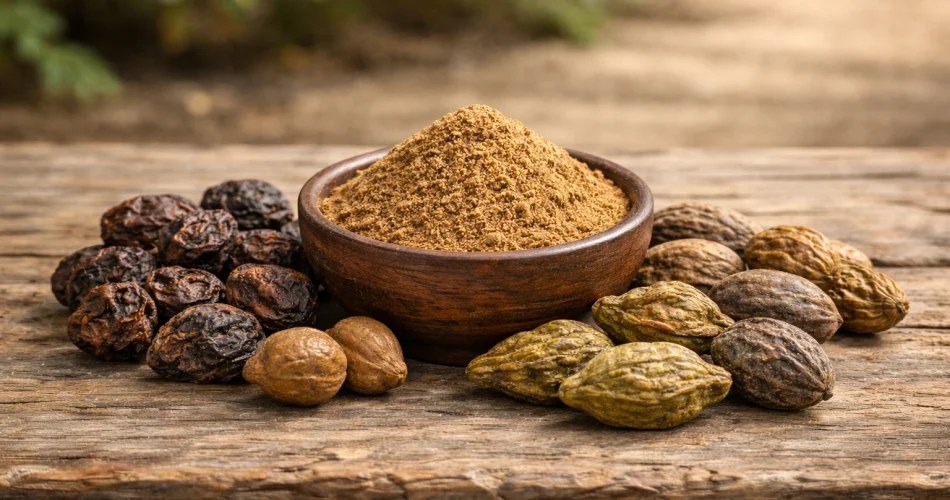
Triphala is a classical Ayurvedic formulation composed of the dried, powdered fruits of three native Indian trees. Individually, these fruits are nutritional powerhouses. Together, they work synergistically to balance all three bodily doshas — Vata, Pitta, and Kapha — making Triphala a uniquely tridoshic remedy.
Amalaki (Emblica officinalis) — The Rejuvenator
Also known as Indian Gooseberry (Amla), this cooling fruit is the cornerstone of many Ayurvedic formulas.
- Ayurvedic role: Balances Pitta (fire and metabolism)
- Key properties: Rich in Vitamin C, tannins, and antioxidants — nourishes tissues, supports immunity, cools the body, and promotes skin and hair health
- Role in Triphala: Gently removes toxins while simultaneously strengthening bodily tissues
Bibhitaki (Terminalia bellirica) — The Cleanser
Known as "the one who keeps away disease," Bibhitaki excels at removing accumulated toxins.
- Ayurvedic role: Balances Kapha (water and earth)
- Key properties: Contains gallic acid and ellagic acid — provides anti-inflammatory and anti-obesity effects
- Role in Triphala: A powerful detoxifier that removes mucus, cleanses the liver, and supports the lungs and respiratory system
Haritaki (Terminalia chebula) — The King of Medicines
Often depicted in the palm of the Medicine Buddha in Tibetan tradition, Haritaki is revered for its potent cleansing and tonic properties.
- Ayurvedic role: Balances Vata (air and space)
- Key properties: A gentle natural laxative that tones the colon and improves motility; rich in anthraquinones
- Role in Triphala: "Scrapes" accumulated waste from the intestinal wall and supports healthy digestion
Nutritional Value and Phytochemistry
| Active Compound | Benefit |
|---|---|
| Vitamin C | Immunity support, skin health, antioxidant protection |
| Gallic Acid | Anti-inflammatory, protects cells from free radical damage |
| Ellagic Acid | Improves blood sugar levels and insulin sensitivity |
| Tannins & Polyphenols | Tighten and tone the digestive tract |
| Chebulagic Acid | Anti-inflammatory and anti-microbial effects |
| Dietary Fibre | Supports bowel regularity and gut health |
Health Benefits of Triphala
Gastrointestinal Health and Constipation Relief
Triphala is most celebrated for its gentle yet effective laxative action. It cleanses the digestive tract, tones the colon, and supports muscular function in the intestines — improving digestion and preventing the build-up of Ama (toxins). Unlike harsh chemical laxatives, it does not cause dependency.
Detoxification and Internal Cleansing
Triphala works by balancing the body's innate elimination processes rather than forcing it. It supports liver function and helps detoxify the entire system — particularly effective when taken on an empty stomach.
Weight Management
By supporting fat metabolism and reducing lipid accumulation — especially around the liver and abdomen — Triphala is a well-established support in weight management. It also curbs cravings by balancing Agni (digestive fire).
Immunity Booster
Rich in Vitamin C and antioxidants, Triphala actively stimulates the immune system. Research has shown it increases the activity of natural killer (NK) cells and cytotoxic T-cells.
Eye Health Tonic
Traditionally, Triphala is used to support vision and eye health. In Ayurvedic tradition it is believed to help slow age-related decline in eyesight and is used as a supportive measure in conditions like cataracts and glaucoma. Cataracts and glaucoma are serious conditions that require ophthalmologist care — Triphala is not a substitute for prescribed eye treatment or surgery.
Skin and Hair Health
By purifying the blood and improving digestion, Triphala reduces skin issues like acne and psoriasis from within. Externally, its astringent properties tighten the skin and help manage dandruff when used as a hair rinse.
How and When to Take Triphala
Best Times
| Timing | Purpose |
|---|---|
| Before bed | Gentle overnight detox; laxative action occurs by morning |
| Early morning (empty stomach) | Systemic rejuvenation, detox, and weight management |
Forms of Consumption
Triphala Churna (Powder): The most traditional and effective form — the bitter-astringent taste itself initiates Agni and digestive response.
Tablets/Capsules: Convenient for those who find the taste unpleasant, though slightly less potent than churna.
Triphala Ghee (Gritham): Excellent for lubricating tissues, supporting eye health, and deep nourishment.
Preparation Methods
- Simple tea: Stir powder into warm water, steep briefly, and drink
- Overnight infusion: Soak powder in a glass of water overnight; strain and drink in the morning — especially recommended for eye health
- With honey or ghee: Mix into a paste for morning consumption
Usage Guidelines for Specific Concerns
| Concern | Recommended Use |
|---|---|
| General immunity & rejuvenation | Warm water, honey, or ghee — morning or bedtime |
| Constipation & regularity | Warm water, 1–2 hours after dinner |
| Weight management | Morning, empty stomach, with warm water and honey |
| Blood sugar support | 15–20 minutes after lunch or dinner |
| Eye health (internal) | Bedtime with warm water; external: overnight infusion as eye wash |
| Skin health | Night (internal); paste as face mask (external) |
Disclaimer: These are general Ayurvedic guidelines. Always consult an Ayurvedic practitioner or healthcare provider for personalised recommendations.
Precautions
- Pregnancy and breastfeeding: Avoid — Triphala has a downward-moving (Apana Vata) action and laxative effect that may not be appropriate during pregnancy
- Menstruation: Generally avoided on the heaviest days
- Children: Can be used in lower amounts, ideally under paediatrician or qualified Ayurvedic practitioner guidance
- Diabetes medication: Monitor blood sugar closely — Triphala may further lower it; consult your doctor before regular use to avoid hypoglycaemia
- Blood thinners: Triphala may have mild blood-thinning effects — consult your doctor if on anticoagulant medication
- Surgery: Stop use at least 2 weeks before any planned surgery
- Medication absorption: Like other fibre-containing remedies, Triphala may affect the absorption of oral medications — take at least 1–2 hours apart from prescription drugs
- Diarrhoea or IBD: Avoid during active diarrhoea or in inflammatory bowel disease flares
- Dosage: Start with a small amount to assess your body's response; high doses may cause loose stools or abdominal discomfort
A Foundational Tonic for Total Health
Triphala is more than an herbal laxative. It is a profound Ayurvedic Rasayana that nourishes, cleanses, and restores the entire body — from the gut and liver to the skin, eyes, and immune system.
By consistently incorporating this three-fruit formulation into your daily routine, you build the foundation for long-term health: a clean gut, strong digestion, and resilient immunity.
"Triphala is to the body what the sun is to nature — a daily source of cleansing, nourishment, and renewal."
This article is for general educational purposes only and is not a substitute for professional medical advice, diagnosis or treatment. If you have an existing medical condition, are on medication (especially diabetes drugs or blood thinners), or are pregnant or breastfeeding, please consult your healthcare provider or a qualified Ayurvedic practitioner before starting Triphala.
Related Reading
If you enjoyed this, you may also like:
- The Gut: Where Ancient Wisdom Meets Modern Science
- Constipation: Natural Relief Through Ayurveda & Naturopathy
- Ash Gourd: The Yogic Superfood & Ayurvedic Powerhouse
- Fatty Liver Disease: A Satwik & Holistic Guide
- Bitter Gourd Powder: Benefits for Blood Sugar, Detox & Immunity
- Satwik Agni Boost: An Ayurvedic Weight-Loss Drink from Indian Spices
- Isabgol in Ayurveda & Satwik Living: A Cooling, Gentle Bowel Regulator
- Curry Patta (Curry Leaves): A Small Leaf with Remarkable Health Benefits