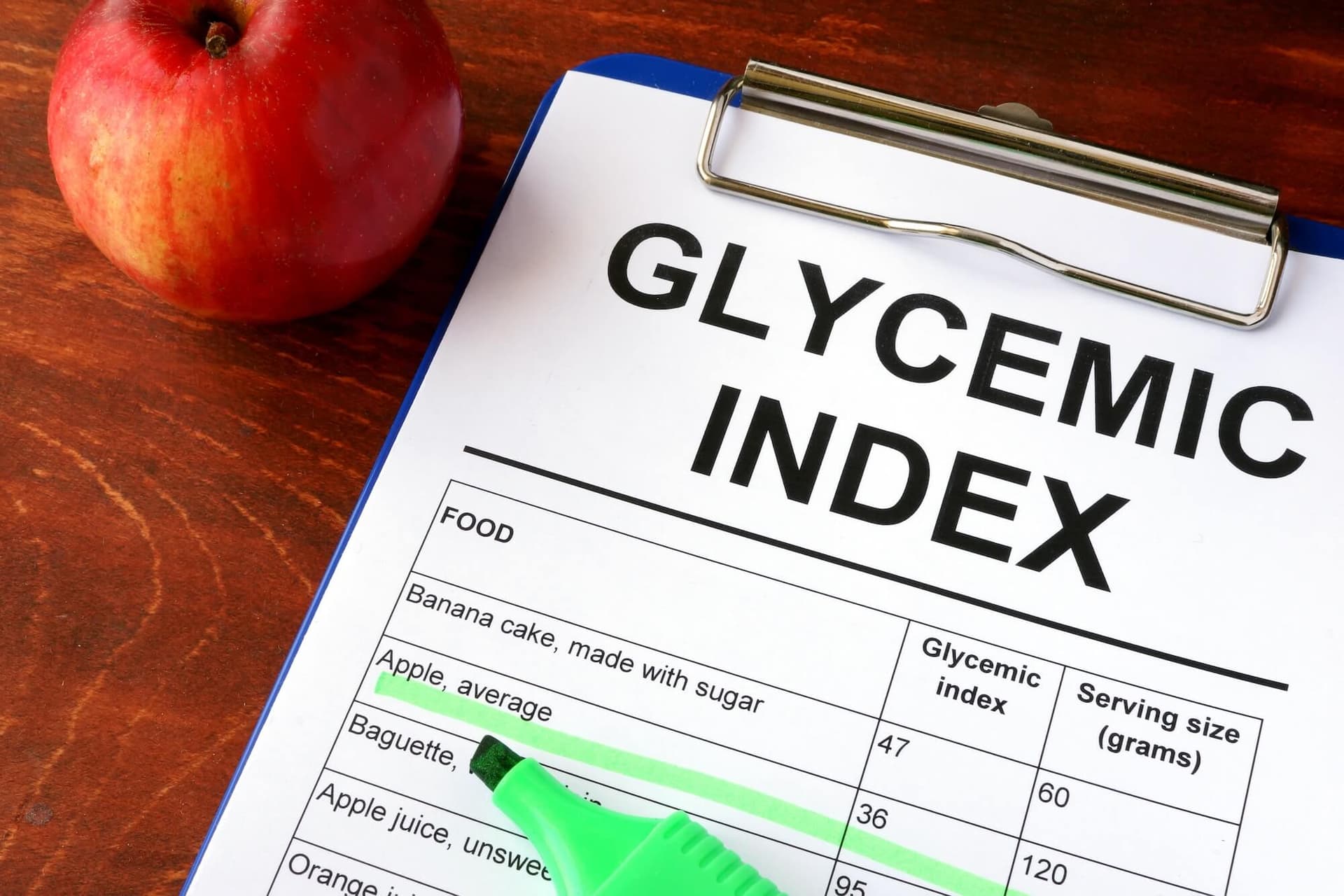
The Glycemic Index (GI) is a ranking system (0–100) that measures how quickly carbohydrate-containing foods raise blood glucose levels compared to a reference food, usually pure glucose (GI 100).
This guide explains how GI works, how it differs from glycemic load, the approximate GI of common Indian foods, and — most usefully — the practical ways you can lower the blood-sugar impact of an everyday Indian meal without giving up the foods you love.
How GI Affects an Individual
High-GI Foods (70+)
These are digested and absorbed rapidly, causing a sharp spike in blood sugar and an immediate surge in insulin. This can lead to subsequent energy "crashes" and increased hunger.
Medium-GI Foods (56–69)
These sit in between — a moderate rise that depends heavily on portion size and what else is on the plate.
Low-GI Foods (55 or less)
These are broken down more slowly, resulting in a gradual and sustained release of glucose. This promotes better blood sugar management, improved insulin sensitivity, and longer-lasting satiety.
Health Outcomes
Consistently choosing low-GI foods is associated with a reduced risk of type 2 diabetes, coronary heart disease, and certain other chronic conditions.
GI vs Glycemic Load: Why Both Matter
GI tells you how fast a food raises blood sugar. It does not tell you how much carbohydrate you actually ate. That is what Glycemic Load (GL) captures:
GL = (GI × grams of carbohydrate in the serving) ÷ 100
| Glycemic Load per serving | Rating |
|---|---|
| 10 or less | Low |
| 11–19 | Medium |
| 20 or more | High |
The classic example is watermelon: its GI is high (around 75), but a typical slice contains so little carbohydrate that its GL is only about 4–5 — low. Conversely, a low-GI food eaten in a large portion (a big bowl of basmati rice, for instance) can still deliver a high glycemic load.
Rule of thumb: use GI to choose which carbohydrate, and GL (portion size) to decide how much.
Approximate GI of Common Indian Foods
Values below are approximate ranges compiled from published international GI tables and Indian studies. GI varies with variety, ripeness, cooking method and processing, so treat these as a guide rather than exact figures.
Grains and staples
| Food | Approximate GI | Category |
|---|---|---|
| White rice (boiled) | 65–80 | High |
| Basmati rice | 50–58 | Low–Medium |
| Brown rice | 50–65 | Medium |
| Whole-wheat chapati / roti | 45–62 | Low–Medium |
| White bread | 70–75 | High |
| Pearl barley (jau) | 25–30 | Low |
| Rolled oats porridge | ~55 | Low–Medium |
| Instant oats | 75–80 | High |
| Bajra (pearl millet) | 50–55 | Low |
| Foxtail millet | 50–55 | Low |
| Ragi (finger millet) | 60–70 (varies widely) | Medium |
| Poha (flattened rice) | 65–70 | Medium–High |
| Potato (boiled) | 75–80 | High |
| Sweet potato (boiled) | 45–65 | Low–Medium (higher when roasted) |
Pulses and legumes
| Food | Approximate GI | Category |
|---|---|---|
| Chickpeas / chana (and roasted chana, sattu) | 28–35 | Low |
| Lentils — masoor, toor, moong dal | 25–40 | Low |
| Kidney beans (rajma) | 24–30 | Low |
| Soya beans / tofu | 15–20 | Low |
Pulses are the quiet heroes of the Indian plate — low GI, high in protein and fibre, and the single most effective addition for blunting the spike from rice or roti. (Roasted chana flour, or chana sattu, is a convenient way to add them.)
Dairy
| Food | Approximate GI | Category |
|---|---|---|
| Whole milk | 30–40 | Low |
| Plain curd / dahi | 35–40 | Low |
| Paneer | Negligible carbohydrate | — |
Fruits
| Food | Approximate GI | Category |
|---|---|---|
| Guava | 15–25 | Low |
| Jamun | ~25 | Low |
| Apple | 35–40 | Low |
| Mango | 50–55 | Low–Medium |
| Banana (ripe) | 50–60 | Medium (rises as it ripens) |
| Papaya | 55–60 | Medium |
| Watermelon | 72–80 | High GI, but low GL per slice |
Sweeteners
| Food | Approximate GI | Category |
|---|---|---|
| Glucose | 100 | Reference |
| Table sugar (sucrose) | ~65 | Medium |
| Honey | 50–60 (varies 35–85 by floral source) | Medium |
| Jaggery (gur) | 70–85 | High |
| Dates | 40–55 | Low–Medium (high GL if you eat several) |
Note that jaggery — often assumed to be a "diabetic-friendly" sugar — has a GI similar to or higher than white sugar. Its trace minerals do not offset its effect on blood glucose.
Critical Precautions for Using GI
While GI is a powerful tool, it should not be used in isolation. Keep these precautions in mind:
Portion Size (Glycemic Load)
GI measures quality, but quantity still matters. For example, watermelon has a high GI but a low Glycemic Load (GL) because it contains very little carbohydrate per typical serving.
Nutritional Value
Not all low-GI foods are healthy. Chocolate and ice cream often have a low GI due to high fat content, which slows digestion but adds unhealthy calories and saturated fats.
Mixed Meals
We rarely eat carbohydrates alone. Pairing a high-GI food with protein, fiber, or healthy fats (like adding avocado to toast) lowers the overall glycemic impact of the entire meal.
Cooking & Ripeness
Cooking: Overcooking food, like soft pasta, increases its GI; cooking al dente keeps it lower.
Ripeness: Riper fruits, such as spotted bananas, have a higher GI than unripe ones because their complex starches have broken down into simple sugars.
Individual Variability
Everyone reacts differently to the same food. Checking your blood sugar before and 2 hours after a meal is the most accurate way to understand your personal response.
8 Practical Ways to Lower the Glycemic Impact of an Indian Meal
- Never eat the carbohydrate alone. Roti or rice with dal, paneer, curd, eggs or sprouts — protein and fat slow gastric emptying and flatten the glucose curve.
- Eat vegetables and salad first, grains last. Studies on meal sequencing show that eating fibre and protein before starch measurably reduces the post-meal spike.
- Keep grains to a quarter of the plate. Half vegetables, a quarter protein (dal, paneer, legumes), a quarter grain. This controls glycemic load without needing to count anything.
- Cook, cool, then reheat rice and potatoes. Cooling cooked starch in the fridge converts some of it into resistant starch, which is digested more slowly — and the effect largely survives reheating.
- Don't overcook. Firmer rice, al dente pasta and lightly cooked vegetables have a lower GI than the same foods cooked to mush.
- Add something sour. Lemon, curd, buttermilk, tamarind or a traditional pickle with a meal modestly slows carbohydrate absorption.
- Whole fruit, never juice — and pair it. Juice strips out the fibre. Eat the whole fruit, ideally with a handful of nuts or seeds.
- Walk for 10–15 minutes after eating. Muscle contraction pulls glucose out of the blood without insulin. It is one of the cheapest and most effective habits there is — see our guide to walking for health.
Comparison Chart: High-GI Foods and Healthier Low-GI Indian Alternatives
| Common Food Item | Healthier Alternative | Notes |
|---|---|---|
| White Rice | Brown Rice, Millets (like Foxtail, Barnyard) | Generally higher in fiber |
| Refined Wheat (Maida) | Whole Wheat Flour, Barley Flour | Whole grains offer more nutrients |
| Potato (Aloo) | Sweet Potato (Shakarkandi) | Sweet potato can be a source of vitamins |
| White Bread | Whole Wheat Bread, Besan Chilla | Look for options with higher fiber content |
| Cornflakes | Steel-Cut Oats | Less processed options can be more filling |
| Semolina (Suji) | Broken Wheat (Dalia) | Retains more parts of the grain |
| Sugary Fruits (e.g., Mango) | Fruits lower in sugar (e.g., Guava, Jamun) | Varying your fruit intake is beneficial |
A Sample Low-GI Indian Day
- Breakfast: vegetable besan chilla with curd, or a bowl of rolled-oats porridge with seeds and a few berries or guava slices
- Mid-morning: a chana sattu drink, or roasted chana with a small apple
- Lunch: two whole-wheat or barley rotis, a generous bowl of dal, a sabzi, and salad eaten first
- Evening snack: moong or chana sprouts with lemon and coriander
- Dinner: millet or barley khichdi (or a small portion of brown rice) with dal, vegetables and a bowl of dahi
- After dinner: a short walk
Frequently Asked Questions
Is eating low-GI enough to manage diabetes?
No. GI is one useful tool among several — total carbohydrate, portion size, physical activity, sleep, body weight and prescribed medication all matter. Think of low-GI choices as a supportive habit, not a treatment.
Are all high-GI foods bad?
No. A ripe banana or a slice of watermelon after exercise is perfectly reasonable, and their glycemic load in normal portions is modest. It is the pattern of large, refined, high-GI meals that causes harm.
Does adding ghee or fat lower the GI of a meal?
Yes, fat slows digestion and lowers the measured GI of the meal — but it adds calories, so it is a matter of balance rather than a free pass. A teaspoon of ghee on a roti is traditional and sensible; drowning the meal in fat is not. Our post on cow ghee and diabetes goes into this.
Is jaggery or honey better than sugar for blood sugar?
Not meaningfully. Jaggery's GI is comparable to or higher than table sugar, and honey's is only moderately lower. Any of them should be used sparingly. Whole fruit is the better way to satisfy a sweet craving.
Important Note
It's important to remember that dietary changes should be discussed with a healthcare professional or a registered dietitian, especially if you have any health conditions like diabetes. They can provide personalized advice based on your individual needs and health status.
When selecting a sweetener for diabetes, it is critical to look beyond the "natural" label, as some natural options spike blood sugar even faster than refined sugar.
At Satwik Farms, we're committed to educating our community about healthy eating choices that support long-term wellness and better blood sugar management.
This article is for general educational purposes only and is not a substitute for professional medical advice, diagnosis or treatment. If you have an existing medical condition (especially diabetes or pre-diabetes), or are taking any medication, or are pregnant or breastfeeding, please consult your healthcare provider before making significant changes to your diet.
Related Reading
Continue exploring blood-sugar-friendly foods:
- Barley: A Superfood for Diabetics and Beyond
- Millet Master: Our Diabetic-Friendly Multigrain Atta
- Sweet Potato (Shakarkand): Nutrition, Ayurvedic View & Benefits for Diabetes
- Bitter Gourd Powder: Benefits for Blood Sugar, Detox & Immunity
- Dried Jamun Pulp: An Ancient Superfood for Blood Sugar Control
- Dried Jamun Seed Powder (Jamun Beej Churna)
- Cow Ghee for Diabetes: Benefits, Uses & Ayurvedic Perspective
- Methi (Fenugreek) Sprouts: A Blood-Sugar-Friendly Sprouted Superfood
- Passion Fruit Health Benefits: Heart, Blood Sugar, Digestion & More