Diabetes management is not only about cutting sugar. It is deeply connected with digestion, metabolism, inflammation, insulin sensitivity, gut health, stress and overall dietary quality. In both Ayurveda and modern nutrition science, healthy fats play an important role in metabolic balance — and among traditional fats, cow ghee is considered one of the most beneficial when used correctly and in moderation.
Pure cow ghee has been used in Indian households for centuries as a digestive enhancer, nourishing fat and Satwik food. Ayurveda especially values cow ghee for balancing aggravated Vata and Pitta, supporting Agni (digestive fire), and improving tissue nourishment without overburdening digestion when used properly.
Modern research also recognises that ghee contains beneficial fatty acids — notably butyric acid and conjugated linoleic acid (CLA) — that may support gut health, inflammation balance and metabolic function.
That said, diabetes patients must use ghee strategically and in small amounts — not freely.
A supportive lifestyle food — not a substitute for prescribed diabetes treatment. Please continue your medications and check with your doctor or diabetes educator before changing the role of ghee in your diet. This article is general guidance, not a treatment plan.
Is Cow Ghee Good for Diabetic Patients?
In moderate amounts, pure cow ghee can be a useful part of a balanced diet for many people with diabetes. Potential benefits include:
- May help slow glucose absorption when combined with carbohydrates
- May improve satiety and reduce overeating
- Provides stable, slow-releasing energy
- May support digestion
- May reduce cravings for sugary foods
- Helps absorption of fat-soluble vitamins
- May support the gut lining through butyric acid
Ayurveda also views ghee as helpful in easing the dryness, weakness and metabolic instability that often accompany long-term blood-sugar imbalance.
But excessive intake can push up calories and may negatively affect lipid profiles in some individuals. Quantity, timing and overall meal quality matter more than the ingredient alone.
The Ayurvedic Perspective
In Ayurveda, diabetes broadly resembles the conditions described as Prameha and, in advanced form, Madhumeha. These involve:
- Weak digestive fire (Mandagni)
- Disordered fat and carbohydrate metabolism
- Tissue imbalance
- Toxin accumulation (Ama)
- Sedentary lifestyle
- Excessive sweet and heavy food
Although diabetes is often associated with excess weight, Ayurveda does not recommend stripping healthy fats out of the diet completely. Properly used ghee is traditionally believed to:
- Support digestion
- Lubricate tissues
- Balance Vata
- Improve nutrient absorption
- Ease dryness caused by excessive urination
- Support mental calmness
Quantity should always be individualised based on body type, weight, digestive capacity, lipid profile, activity level and current blood-sugar control.
Modern Science: Why Ghee May Help in Diabetes Management
1. May slow the glycemic response
When a small amount of healthy fat is combined with carbohydrate, digestion slows. That can mean:
- Less rapid glucose spikes
- Greater meal satisfaction
- Reduced hunger after meals
In practice, this is why combinations like rice with a teaspoon of ghee, millet roti with ghee, or dal with a touch of ghee tend to feel more satisfying — and may produce a gentler glucose curve — than dry, refined-carb meals.
2. Better satiety
A constant background of hunger and cravings is one of the harder parts of diabetes. Ghee may help by:
- Increasing fullness
- Slowing gastric emptying
- Reducing the urge to snack frequently
Indirectly, that can support better blood-sugar control through the day.
3. Butyric acid and gut health
Cow ghee naturally contains butyric acid, a short-chain fatty acid associated with:
- Intestinal lining health
- A healthier gut microbiome
- Inflammation balance
Emerging research links gut health closely with insulin resistance and metabolic disease, so this may be one of the more interesting modern angles on a very old food.
4. Replacing harmful fats
For many people, the most useful change is not adding ghee but swapping out worse fats: reheated cooking oils, hydrogenated fats, vanaspati and deep-fried refined oils. Moderate use of pure cow ghee in their place is generally a step up in dietary fat quality.
5. A stable cooking fat
Ghee has a high smoke point (around 250°C), which makes it more stable during cooking than many refined vegetable oils. Stable fats produce fewer harmful oxidation by-products under high heat.
Best Ways to Use Ghee in a Diabetic Diet
1. A small amount on roti
A ½ to 1 teaspoon spread thinly over a high-fibre roti — multigrain, millet or whole-wheat — may:
- Slow digestion
- Improve satiety
- Prevent dryness
- Make the meal more enjoyable, which helps long-term adherence
2. Stirred into dal or khichdi
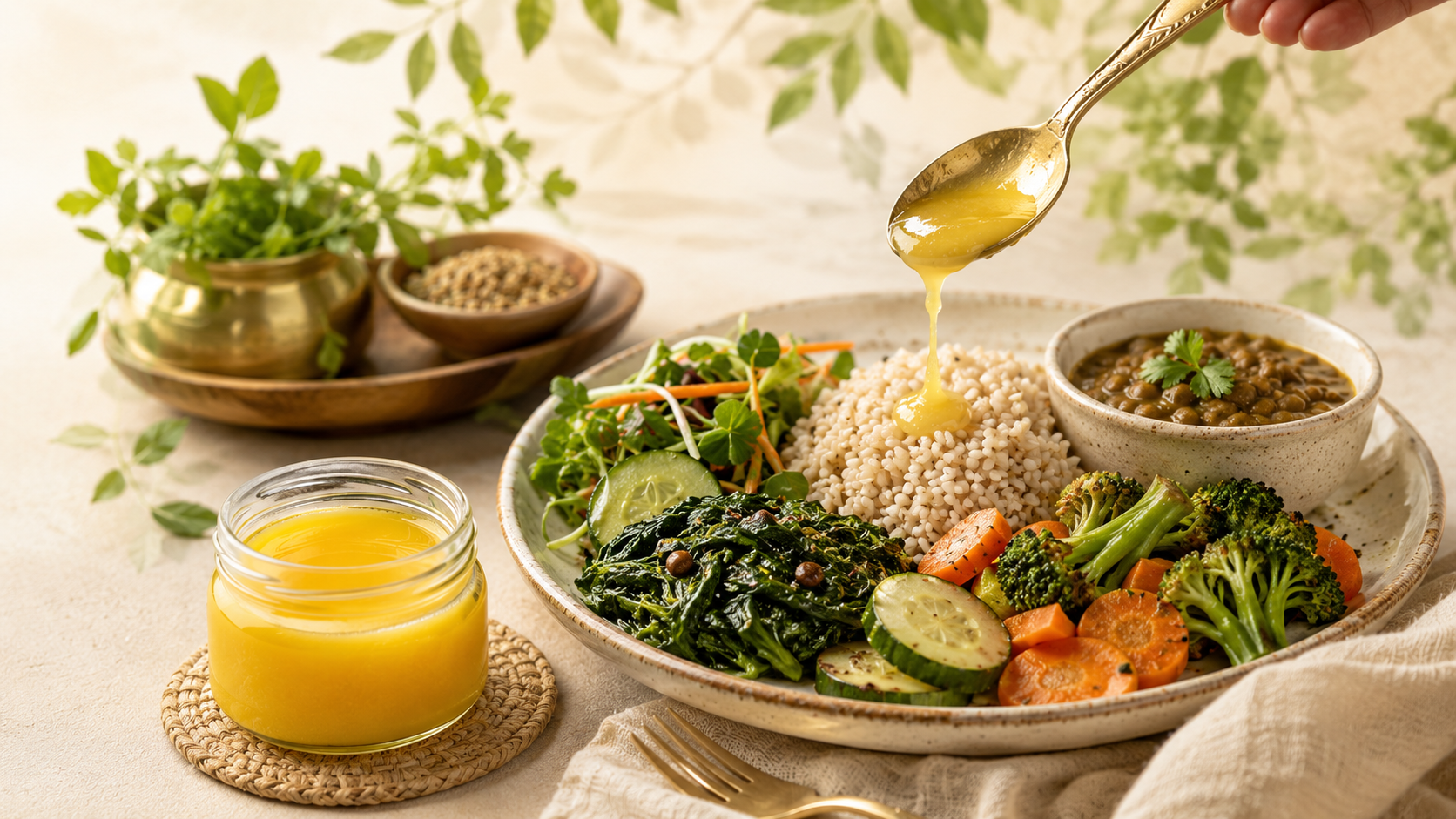
A small spoon of ghee in dal or a diabetic-friendly khichdi may support digestion, reduce bloating and improve absorption of fat-soluble nutrients — especially when the meal centres on moong dal, millets, vegetables and high-fibre foods.
3. Selective morning use
Some Ayurvedic practitioners suggest a ½ teaspoon of ghee in warm water or with a small bowl of warm millet porridge for individuals dealing with dryness, constipation, aggravated Vata or weak digestion.
This is not appropriate for everyone — particularly overweight diabetic individuals with elevated cholesterol or triglycerides. When in doubt, skip it or ask your doctor.
4. Pair with low-GI meals
Ghee works best when paired with fibre, protein, whole grains and vegetables. Sensible combinations:
- Moong khichdi + ½–1 tsp ghee
- Bajra roti + small smear of ghee
- Vegetable dal + ghee tadka
- A sprouts bowl with a few drops of ghee tempering
Avoid combining excessive ghee with sugar-heavy sweets, deep-fried foods, refined flour, or simply overeating.
5. Night-time use (specific cases)
For diabetic individuals with constipation, dryness, sleep disturbance or excessive acidity, Ayurveda sometimes suggests warm turmeric milk with ¼–½ tsp ghee at night. Use this only if your blood sugar is well-controlled, avoid sweetened milk, and keep an eye on total calories.
Recommended Quantity
A reasonable starting range for most diabetic adults:
| Profile | Suggested daily ghee |
|---|---|
| Most diabetic adults | 1–2 teaspoons (5–10 ml) |
| Physically active individuals | Up to 2–3 teaspoons, depending on calories and lipids |
| Overweight or sedentary | Lower end of the range, or less |
These are general guidelines, not prescriptions. Your healthcare provider's advice on total fat and calorie intake always takes precedence.
Best timing
- ✓ With lunch
- ✓ At breakfast on warm cooked food
- ✗ Excessive late-night intake
- ✗ Heavy fried, ghee-rich meals
- ✗ Combined regularly with sugary desserts
Which Ghee Is Best?
Prefer
- Pure cow ghee
- Traditional Bilona ghee
- Grass-fed sources
- No additives, no preservatives
Avoid
- Vanaspati (hydrogenated vegetable fat)
- Hydrogenated fats of any kind
- Artificially flavoured fats
- Reheated cooking oils
Ghee and Weight Management in Diabetes
Many people fear fats during diabetes, but moderate healthy fat intake can actually help by reducing overeating, improving meal satisfaction and lowering junk-food cravings. The honest constraint is total calories — too much ghee can still lead to weight gain, raised triglycerides and a calorie surplus.
Moderation, again, is the rule.
Precautions
Cow ghee suits many people with diabetes — but please respect the cautions:
- Diabetes medication: ghee itself is not blood-sugar-lowering, but a meal that is gentler on glucose may change your insulin or oral-medication needs over time. Don't adjust diabetes medications on your own — work with your doctor and monitor your sugars.
- High LDL cholesterol or heart disease: treat ghee as a flavour and cooking choice in moderation, not a remedy. Follow your doctor's dietary advice on saturated fat.
- Severe fatty liver: introduce slowly and in small amounts; discuss with your provider.
- Obesity / sedentary lifestyle: keep intake on the lower end and watch overall calories.
- Severe digestive weakness: start small; excessive ghee can sit heavy.
- Dairy allergy: ghee is very low in lactose and casein, but those with a true dairy protein allergy should consult their doctor before regular use.
- Pregnancy & breastfeeding: culinary use is traditionally encouraged in Ayurveda; therapeutic doses should be discussed with a qualified practitioner.
A Satwik Diabetic Meal With Ghee
A simple, balanced lunch that puts the ideas above together:
- 2 multigrain or millet rotis
- 1 bowl moong dal
- A mixed-vegetable sabzi
- A fresh salad
- 1 teaspoon cow ghee (spread thinly across the roti and dal)
- Buttermilk on the side
This combination tends to deliver a steadier glycemic response, better satiety, gentle digestive support and stable energy through the afternoon.
The Satwik View
In Satwik nutrition, the goal isn't extreme restriction — it is metabolic harmony. Pure cow ghee, used in moderation, may help calm cravings, support digestion, nourish tissues and quietly improve food satisfaction. A calm nervous system and a steady digestion are both important in long-term diabetes care, and both quietly benefit from this kind of food choice.
Final Thoughts
Cow ghee can be a valuable part of a diabetic-friendly diet when it is:
- Used in moderation
- Paired with fibre-rich foods
- Combined with active lifestyle habits
- Used in place of unhealthy processed fats — not on top of them
Its benefits may include better satiety, smoother digestion, gentler glucose spikes, gut support and an overall improvement in meal quality.
But ghee is not a treatment for diabetes. It works only as part of a wider approach: a balanced diet, regular movement, weight management, stress control, proper sleep, and consistent medical follow-up.
For most diabetic individuals, 1–2 teaspoons of pure cow ghee a day, used thoughtfully with wholesome meals, can offer real Ayurvedic and nutritional value while making the diabetic diet more sustainable, satisfying and humane.
This article is for general educational purposes only and is not a substitute for professional medical advice, diagnosis or treatment. If you are living with diabetes, pre-diabetes, raised cholesterol, heart disease, fatty liver or a true dairy allergy, are taking any medication, or are pregnant or breastfeeding, please consult your healthcare provider before making significant changes to your diet — including how you use ghee.
Related Reading
If you found this helpful, you may also like:
- Cow Ghee: The Golden Elixir of Ayurveda, Nutrition & Modern Wellness
- Understanding Glycemic Index: A Guide to Better Blood Sugar Management
- Millet Master: Our Diabetic-Friendly Multigrain Atta
- Bitter Gourd Powder: Benefits for Blood Sugar, Detox & Immunity
- Dried Jamun Seed Powder (Jamun Beej Churna)