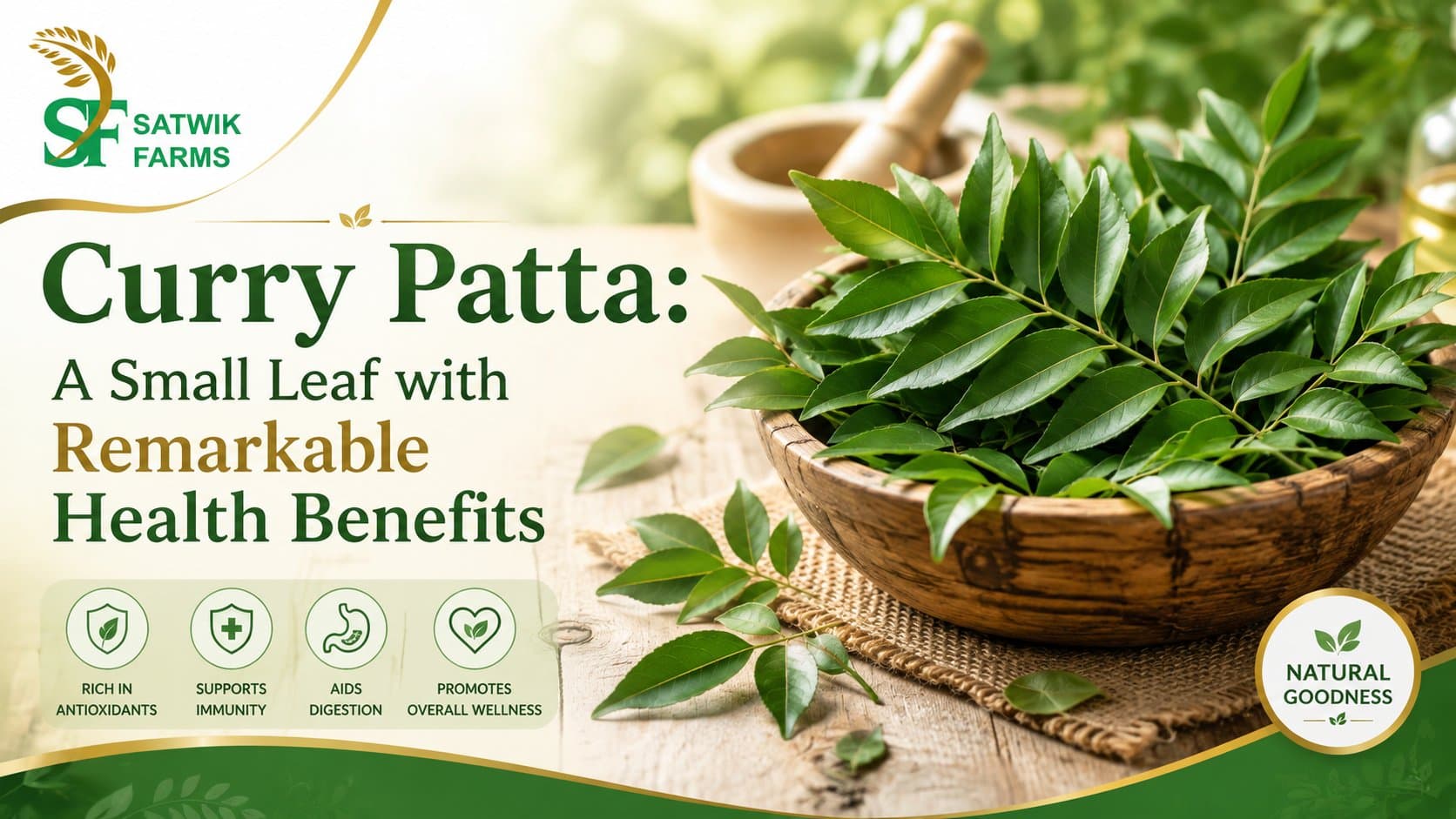
Curry patta, commonly known as curry leaves, is much more than an aromatic ingredient used to temper dals, curries and chutneys. Scientifically known as Murraya koenigii, this fragrant green leaf has been an important part of Indian cuisine and traditional Ayurvedic practices for centuries.
Its distinctive aroma, slightly bitter taste and wealth of plant compounds make curry leaves an interesting addition to a healthy, natural diet.
At Satwik Farms, we believe that many of nature's simplest foods can become an important part of everyday wellness when consumed as part of a balanced lifestyle.
What Is Curry Patta?
Curry patta is the leaf of the curry-leaf tree, Murraya koenigii, a small tropical and subtropical tree belonging to the Rutaceae family.
It is widely used throughout Indian and South Asian cooking. Fresh leaves are commonly added to:
- Dal and lentils
- Vegetable curries
- Sambhar and rasam
- Poha and upma
- Chutneys and pickles
- Buttermilk and rice dishes
- Herbal preparations
The leaves are generally used for their wonderful fragrance and flavour, but they also contain fibre, vitamins, minerals, essential oils, flavonoids, polyphenols and characteristic carbazole alkaloids.
Nutritional Value of Curry Leaves
Curry leaves are particularly interesting because they provide several nutrients and beneficial plant compounds.
Reported nutritional values vary depending on cultivation, variety, maturity and whether the leaves are fresh or dried. One commonly cited nutritional profile for 100 g of fresh curry leaves includes approximately:
| Nutrient | Approximate amount (per 100 g) |
|---|---|
| Energy | 108 kcal |
| Protein | 6.1 g |
| Fibre | 6.4 g |
| Carbohydrates | 18.7 g |
| Fat | 1 g |
| Calcium | 830 mg |
| Phosphorus | 57 mg |
| Iron | 0.93 mg |
| Magnesium | 44 mg |
| Carotene | 7,560 µg |
| Niacin | 2.3 mg |
| Vitamin C | 4 mg |
| Folic acid | 23.5 µg |
These figures should be considered approximate, because the nutritional composition reported for curry leaves varies considerably between studies and growing conditions.
A practical point
We don't normally eat 100 g of curry leaves in one sitting. Curry leaves are usually consumed in much smaller quantities as a culinary herb. Their greatest everyday value is therefore not simply the amount of vitamins or minerals in a serving, but the combination of plant compounds, aroma, flavour and fibre they contribute to the diet.
1. Rich in Antioxidant Compounds
Curry leaves contain several naturally occurring compounds, including polyphenols, flavonoids, carotenoids and carbazole alkaloids.
These compounds have demonstrated antioxidant activity in laboratory and experimental studies. Antioxidants help protect cells from oxidative stress caused by unstable molecules known as free radicals.
Regularly including a variety of colourful vegetables, herbs and spices in the diet is therefore a sensible way of increasing exposure to naturally occurring protective plant compounds.
2. May Support Healthy Digestion
Curry leaves have traditionally been used as a digestive and appetising herb.
In traditional Indian practices, the leaves have been used in preparations intended to support digestion and relieve digestive discomfort. Their aromatic oils and bitter compounds may contribute to this traditional digestive role.
A simple way to enjoy them is by adding fresh curry leaves to dal, vegetables, buttermilk, chutneys and light curries — rather than relying on concentrated herbal preparations.
3. Curry Leaves and Blood Sugar
One of the most interesting areas of scientific research surrounding curry leaves is their potential relationship with blood-glucose metabolism.
Studies in animals and laboratory models have reported antihyperglycemic effects from Murraya koenigii extracts and certain compounds isolated from the plant. Some research has suggested improvements in glucose tolerance and insulin sensitivity.
However, it is important to understand the distinction: curry leaves are not a treatment or cure for diabetes. Most of the evidence is from laboratory and animal studies, and stronger human clinical research is required before therapeutic claims can be made. If you have diabetes, continue your prescribed medication — curry leaves are a food, not a substitute for treatment.
For people concerned about blood sugar, curry leaves can be included as part of a balanced diet rich in vegetables, pulses, whole grains, fibre and adequate protein. (Our guide to the glycemic index explains how different foods affect blood sugar.)
4. May Support Heart and Metabolic Health
Experimental research has investigated curry leaves for possible cholesterol-lowering, lipid-regulating and cardioprotective effects. Some animal studies have reported favourable changes in blood lipids and related metabolic markers.
Again, these findings are promising but should not be interpreted as proof that eating curry leaves can prevent or treat heart disease. The best approach is to use curry leaves as one small part of an overall heart-friendly lifestyle.
5. Traditional Ayurvedic Uses
Curry leaves have a long history in Ayurvedic and Indian traditional medicine.
Traditional sources describe the leaves as having a bitter and aromatic character, used in preparations related to digestion, appetite and various other conditions. Different parts of the plant — including leaves, roots, bark and fruits — have traditionally been used for different purposes.
Ayurvedic descriptions commonly associate curry leaves with:
- Supporting digestion
- Helping maintain appetite
- Traditionally balancing certain digestive complaints
- Supporting general vitality
- Traditional use in skin and hair preparations
It is important to distinguish traditional Ayurvedic use from modern clinical evidence. Traditional use provides valuable knowledge and a basis for research, but it does not automatically establish that a particular preparation will treat a medical condition.
6. Curry Leaves in Naturopathy and Natural Wellness
In naturopathic and traditional wellness practices, curry leaves are often used as part of simple food-based approaches. Popular household practices include:
Fresh Curry Leaves
A few washed fresh leaves may be eaten along with breakfast or incorporated into food.
Curry Leaf Chutney
Fresh curry leaves can be combined with coconut, coriander, green chilli, lemon and other ingredients to make a flavourful chutney.
Curry Leaf Buttermilk
Finely chopped curry leaves can be added to plain buttermilk along with roasted cumin and coriander.
Curry Leaf Infusion
Some traditional practices prepare an infusion using fresh leaves. However, concentrated herbal preparations should not be considered automatically safe or appropriate for everyone.
Food quantities are generally preferable to highly concentrated extracts unless advised by a qualified healthcare professional.
7. Curry Leaves for Hair and Scalp
Curry leaves have also been traditionally associated with hair care.
One traditional preparation involves cooking curry leaves with coconut oil and using the resulting oil externally on the scalp and hair. Historical and traditional literature describes this practice as a hair tonic.
Curry leaves contain antioxidants and various plant compounds, making them an interesting ingredient for traditional hair-care preparations. However, claims that curry leaves definitively prevent hair loss or reverse grey hair are not sufficiently established by clinical evidence.
8. Anti-Inflammatory Potential
Laboratory and animal studies have found anti-inflammatory activity associated with various compounds in Murraya koenigii. Carbazole alkaloids and other phytochemicals are being investigated for their biological effects.
This is an exciting area of research, but curry leaves should not be used as a replacement for prescribed anti-inflammatory treatment.
9. A Natural Source of Plant Phytochemicals
One of the most fascinating features of curry leaves is their phytochemical diversity. Research has identified:
- Carbazole alkaloids
- Flavonoids and polyphenols
- Terpenoids and coumarins
- Essential oils
- Carotenoids
These compounds are responsible for many of the biological activities being investigated in curry leaves — and help explain why a humble culinary herb has attracted so much scientific interest.
How to Include Curry Leaves in Your Daily Diet
You don't need to consume large quantities. Try adding fresh curry leaves to:
- Dal tadka
- Vegetable sabzi
- Sambhar
- Poha and upma
- Coconut chutney
- Buttermilk
- Lemon rice
- Sprouts
- Homemade spice blends
Tip: when making a tadka, add curry leaves towards the end of the tempering process so that their characteristic aroma is retained without unnecessarily overcooking them.
Fresh Curry Leaves vs Dried Curry Leaves
Fresh curry leaves generally provide the most vibrant aroma and are ideal for cooking.
Dried curry leaves are convenient and have a longer shelf life, although their flavour and some heat-sensitive nutrients may differ from fresh leaves.
For everyday cooking, fresh leaves are an excellent choice whenever available.
Who Should Be Careful?
Curry leaves used as a normal culinary ingredient are generally very different from concentrated extracts or supplements.
- Medication interactions: people taking medicines for diabetes (risk of additive blood-sugar-lowering with concentrated preparations), blood pressure, blood clotting or other chronic conditions should consult their healthcare professional before regularly using concentrated curry-leaf preparations or supplements.
- Pregnancy and breastfeeding: normal culinary amounts in food are generally considered fine, but seek professional advice before using medicinal doses or concentrated herbal preparations.
- Never replace prescribed medication with curry leaves or any other herbal remedy without medical advice.
Curry Patta: Small Leaf, Big Potential
Curry leaves beautifully demonstrate how traditional food and traditional medicine have often existed side by side.
They bring aroma to our food, nutrients to our diet and a remarkable collection of natural plant compounds that modern science continues to investigate. From a simple dal tadka to chutneys, buttermilk and traditional preparations, curry patta can easily become part of a wholesome, plant-rich diet.
At Satwik Farms, we believe in bringing people closer to fresh, natural and wholesome foods — grown with care and enjoyed in their simplest form.
🌿 Eat Natural. Live Healthy. Live Satwik.
Important note: the properties discussed above include traditional uses and findings from laboratory and animal research. They should not be interpreted as established cures or treatments for disease. More well-designed human clinical studies are needed to confirm many of the proposed therapeutic effects of curry leaves.
This article is for general educational purposes only and is not a substitute for professional medical advice, diagnosis or treatment. If you have an existing medical condition (especially diabetes, blood pressure or clotting disorders), or are taking any medication, or are pregnant or breastfeeding, please consult your healthcare provider before making significant changes to your diet.
Related Reading
Explore more leaf-based remedies and Ayurvedic wisdom from the Satwik collection: