Where ancient Ayurvedic wisdom meets modern nutritional science.
Fenugreek (methi) sprouts are one of nature's most underrated functional foods. Methi seeds have been used in Ayurveda for thousands of years, but sprouting transforms them into a more digestible, nutrient-dense food with greater therapeutic potential. Their gently bitter taste reflects their strength — especially for blood sugar balance, digestion, metabolism and inflammation.
Introduction
Methi, known botanically as Trigonella foenum-graecum, holds a revered place in traditional Indian kitchens and Ayurvedic medicine. While methi seeds are widely used as both a spice and a medicinal herb, sprouted methi is an upgraded version of this ancient food.
Germination awakens dormant enzymes, reduces anti-nutrients, improves digestibility, and enhances the bioavailability of nutrients and phytochemicals. The result is a potent functional food that may support metabolic health, digestion, immunity and overall vitality.
This article explores methi sprouts from nutritional, medicinal, Ayurvedic and scientific perspectives.
What Are Methi Sprouts?
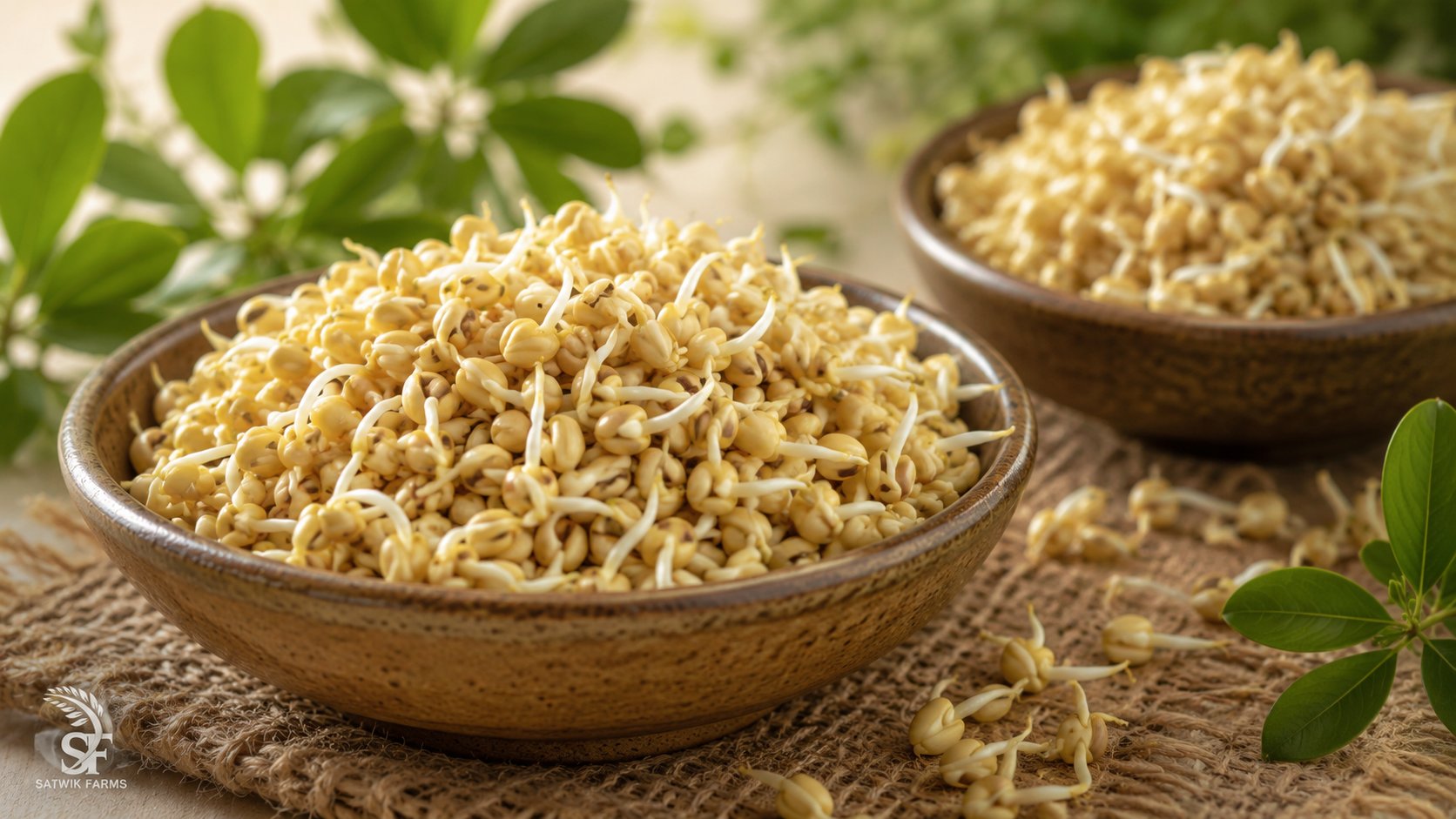
Methi sprouts are the young shoots obtained by germinating fenugreek seeds for roughly 2–4 days. The process is simple:
- Soak methi seeds for 8–12 hours
- Drain and rinse twice daily
- Allow germination until tiny shoots emerge
The sprouts have a mildly bitter, nutty flavour and can be eaten raw, steamed or added to a variety of recipes.
Why Are Sprouts Better Than Seeds?
Sprouting is nature's way of unlocking nutrition. During germination:
- Complex carbohydrates begin to break down
- Proteins become easier to digest
- Anti-nutrients decrease
- Vitamin content rises
- Antioxidant activity increases
- Mineral bioavailability improves
Studies suggest sprouting reduces anti-nutritional compounds and supports better nutrient absorption — so methi sprouts offer many of the benefits of methi seeds, with improved digestibility.
Nutritional Value of Methi Sprouts
Approximate composition per 100 g of fresh methi sprouts:
| Nutrient | Per 100 g |
|---|---|
| Calories | 50–70 kcal |
| Protein | 3–5 g |
| Carbohydrates | 4–8 g |
| Dietary fibre | 4–6 g |
| Fat | 1–2 g |
| Water | 80–85% |
Vitamins: Vitamin C, folate (B9), Vitamin K, Vitamin A precursors and B-complex vitamins.
Minerals: iron, magnesium, calcium, potassium, zinc and phosphorus.
Bioactive Compounds
Methi sprouts carry several medicinal phytochemicals:
- Galactomannan — a soluble fibre that slows glucose absorption.
- 4-Hydroxyisoleucine — a rare amino acid studied for its role in healthy insulin secretion.
- Diosgenin — a steroidal saponin studied for anti-inflammatory and lipid-lowering effects.
- Flavonoids and polyphenols — antioxidants.
- Trigonelline (an alkaloid) — studied in relation to glucose regulation and nerve health.
The Ayurvedic Perspective
Ayurveda classifies methi as follows:
| Property | Classification |
|---|---|
| Rasa (taste) | Tikta (bitter), Katu (pungent) |
| Guna (qualities) | Laghu (light), Snigdha (slightly unctuous) |
| Virya (potency) | Ushna (heating) |
| Vipaka (post-digestive effect) | Katu (pungent) |
Effect on the Doshas
- Balances Kapha — traditionally valued in sluggish metabolism, congestion and excess weight.
- Reduces Vata — said to support joint lubrication and digestion.
- May increase Pitta — excess intake may aggravate acidity or heat in sensitive individuals.
Traditional Ayurvedic Actions
- Deepana — kindles Agni (digestive fire) without heaviness
- Pachana — helps digest Ama (metabolic toxins)
- Medohara — supports healthy fat metabolism
- Balya — offers strength and nourishment
- Shothahara — traditionally used to calm inflammation
- Sandhivata support — used traditionally for joint stiffness
Health Benefits of Methi Sprouts
1. Blood Sugar Balance
This is perhaps the most researched benefit. The soluble fibre galactomannan slows glucose absorption, while 4-hydroxyisoleucine has been studied for supporting the body's insulin response. Recent studies on fenugreek sprouts show notable alpha-amylase inhibitory activity, suggesting they may help moderate the rise in blood sugar after meals.
Methi sprouts can be a supportive food for prediabetes, type 2 diabetes, insulin resistance and metabolic syndrome — as part of a balanced diet, not as a replacement for prescribed treatment (see the dedicated diabetes section below).
2. Weight Management
Methi sprouts may promote satiety through their high fibre content, slower gastric emptying and reduced cravings. The bitter principles are also traditionally associated with better metabolic efficiency.
3. Digestion & Constipation Relief
The soluble and insoluble fibre can add stool bulk, support regular bowel movement and aid healthy gut transit. Regular use may help ease mild, chronic constipation. They may also help reduce bloating, improve appetite, support the gut microbiota and aid enzyme activity. (Persistent digestive problems still need medical attention.)
4. Cholesterol Support
Fenugreek has been studied for its ability to help reduce LDL cholesterol and triglycerides. Proposed mechanisms include reduced intestinal cholesterol absorption, increased bile-acid excretion and antioxidant effects.
5. Anti-Inflammatory & Antioxidant Effects
Diosgenin and flavonoids have anti-inflammatory properties, and fenugreek sprouts show measurable antioxidant (free-radical scavenging) activity in lab studies. These effects may help counter the oxidative stress involved in ageing and chronic disease.
6. Heart Health
By supporting blood sugar, the lipid profile and oxidative balance together, methi sprouts may indirectly support cardiovascular health as part of a heart-friendly lifestyle.
7. Nutritional Support in Deficiency
With iron, folate and other nutrients, methi sprouts can be a useful addition for those with mild iron or folate shortfalls, low vegetable intake or a reduced appetite. They should complement, not replace, medical treatment of any diagnosed deficiency.
8. Cognitive & Neurological Interest
Emerging laboratory evidence points to cholinesterase-inhibitory activity in some fenugreek sprout varieties, hinting at possible neuroprotective potential. This is early research — human studies are still needed.
Methi Sprouts & Diabetes
Methi has a long history in Madhumeha (the Ayurvedic concept of diabetes) management. Proposed mechanisms include slowing carbohydrate absorption, supporting insulin sensitivity and secretion, and softening post-meal glucose spikes.
A few practical pointers for those managing blood sugar:
- Eat them with breakfast or lunch rather than late at night
- If you take diabetes medication or insulin, monitor your blood sugar — methi can add to the glucose-lowering effect and may raise the risk of hypoglycaemia (low blood sugar)
- Avoid large medicinal doses without professional guidance
A supportive food, not a substitute for prescribed diabetes treatment. Continue your medication and check with your doctor before making methi sprouts a daily fixture.
Methi Sprouts & Thyroid Health
A common question is whether methi affects the thyroid. Current evidence does not indicate that moderate consumption of methi sprouts adversely affects thyroid function in healthy people. Those with a thyroid disorder can usually enjoy methi sprouts in moderation as part of a balanced diet — but should avoid large medicinal doses and continue routine thyroid monitoring if under treatment.
How Much Should You Eat?
| Goal | Suggested Daily Amount |
|---|---|
| General wellness | 20–30 g (about 2–3 tbsp) |
| Blood sugar / metabolic support | 25–50 g, preferably split between meals |
| Beginners | Start with 10–15 g and increase gradually |
Starting small helps your digestion adjust to the fibre and the bitter principles.
Best Ways to Enjoy Methi Sprouts
- Raw — tossed into a salad
- Mixed sprouts bowl — with moong and chana sprouts, lemon, cucumber and rock salt
- Lightly stir-fried — sautéed with vegetables (gentler on sensitive stomachs)
- In raita — stirred through fresh curd
- Paratha filling — folded into stuffed parathas
- Soup garnish — for texture and a nutritional lift
Precautions & Safety
Methi sprouts are generally safe in food amounts, but a few cautions matter.
Go easy if you have severe acidity, active gastritis or recurrent loose motions — methi is heating (Ushna) and high in fibre.
Medication interactions
- Diabetes medication / insulin — additive blood-sugar-lowering effect; watch for hypoglycaemia and monitor your levels.
- Blood-thinning medication — fenugreek may have mild blood-thinning activity; check with your doctor.
- Planned surgery — because of the blood-sugar effects, it's sensible to stop medicinal-dose fenugreek about two weeks before any scheduled surgery.
Pregnancy & breastfeeding — culinary amounts of methi sprouts are generally considered fine, but fenugreek in medicinal/therapeutic doses should be avoided during pregnancy, as it can stimulate uterine activity. Take therapeutic doses only under professional supervision. (Fenugreek is also traditionally used to support breast-milk supply — discuss with your provider if breastfeeding.)
Children — offer smaller portions (start with ½–1 tsp) and prefer lightly cooked sprouts.
Allergies — fenugreek belongs to the legume family and can cross-react in people with peanut or chickpea allergy. If you notice itching, swelling or breathing difficulty, stop and seek medical care.
Food safety (important for all raw sprouts) — raw sprouts can occasionally carry bacteria such as Salmonella or E. coli. Always rinse thoroughly, prepare hygienically, refrigerate properly and eat them fresh. Pregnant women, young children, older adults and anyone with a weakened immune system should cook sprouts thoroughly rather than eating them raw.
The Satwik Perspective
At Satwik, food is medicine when it is grown cleanly, prepared traditionally and eaten mindfully. Methi sprouts embody Satwik principles because they are fresh, living, minimally processed, nutrient-dense, supportive of digestive fire and naturally balancing. Their bitter taste is a gentle reminder that the most restorative foods are not always the sweetest.
Conclusion
Methi sprouts beautifully unite ancient Ayurvedic wisdom with modern nutritional science. Through the simple act of germination, ordinary fenugreek seeds become a functional food rich in fibre, antioxidants, minerals and therapeutic phytochemicals.
Whether your goal is steadier blood sugar, better digestion, gentle weight management or all-round wellness, a moderate daily helping of methi sprouts — alongside a balanced diet — can be a practical and affordable habit. As Ayurveda teaches, true health often begins not in the pharmacy but in the kitchen.
This article is for general educational purposes only and is not a substitute for professional medical advice, diagnosis or treatment. If you have an existing medical condition (especially diabetes or thyroid disorders), are taking any medication (particularly blood-sugar or blood-thinning medicines), or are pregnant or breastfeeding, please consult your healthcare provider before making significant changes to your diet.
Related Reading
If you found this helpful, you may also like:
- Chana & Moong Sprouts: Nutrition, Ayurvedic Benefits & How to Eat Them Daily
- Bitter Gourd Powder: The Whole-Fruit Superfood for Blood Sugar & Detox
- Understanding Glycemic Index: A Guide to Better Blood Sugar Management
- Millet Master: Our Diabetic-Friendly Multigrain Atta
- Constipation: Natural Relief Through Ayurveda & Naturopathy