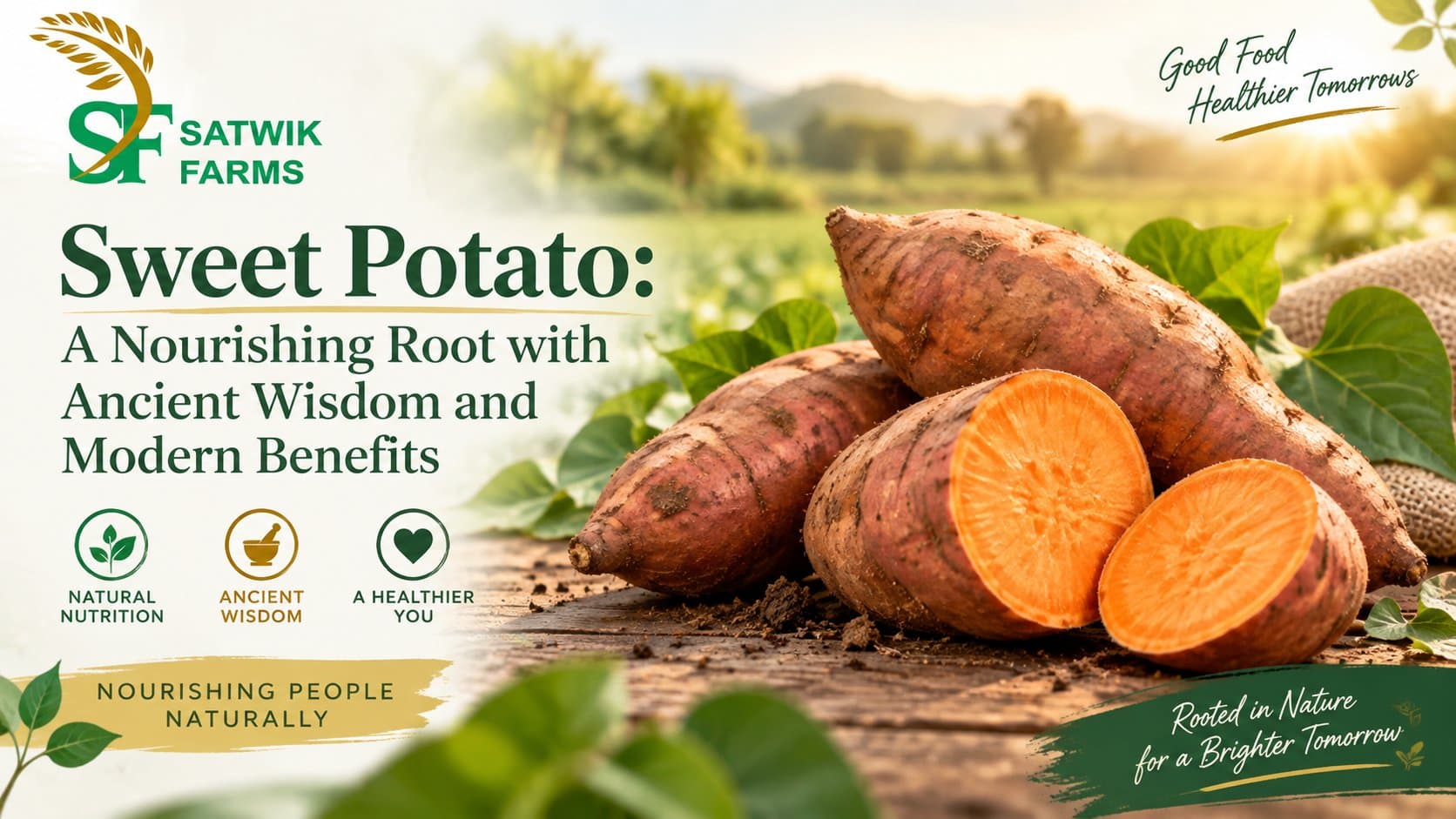
Sweet potato, commonly known as shakarkand in India, is one of nature's most versatile and nourishing root vegetables. With its naturally sweet taste, attractive colours and impressive nutritional profile, it has been valued in traditional food cultures for centuries. Today, modern nutritional science is also highlighting its fibre, vitamins, minerals and antioxidant compounds.
In this guide we look at where sweet potato comes from, what the different colours mean, what Ayurveda says about it, whether it suits a diabetic diet, and the best ways to cook it.
🌱 Origin and History
Sweet potato (Ipomoea batatas) is believed to have originated in Central or South America, where it was cultivated thousands of years ago. It later spread across the world through trade and exploration and became an important food crop in Asia, Africa and other tropical regions.
Today, sweet potatoes are grown extensively in countries including China, India, Tanzania, Uganda, Japan and the United States. Here in Tanzania it is a familiar staple — viazi vitamu — grown in home gardens and small farms across the country.
🌈 Types of Sweet Potato
Sweet potatoes come in several varieties, differing in colour, sweetness and nutritional composition:
| Flesh colour | Taste & texture | Notable nutrients |
|---|---|---|
| Orange-fleshed | Sweet, soft and moist when cooked | Rich in beta-carotene, which the body converts into vitamin A |
| White / cream-fleshed | Milder, less sweet, drier and starchier | Useful fibre and minerals |
| Purple-fleshed | Mildly sweet with a dense texture | Particularly rich in anthocyanins, powerful antioxidant plant compounds |
| Yellow-fleshed | Moderately sweet | Carotenoids and other beneficial phytonutrients |
If you want the most beta-carotene, choose orange. If you want the widest range of antioxidants, purple is the one to look for.
🥗 Nutritional Powerhouse — Per 100 g Cooked
Approximate values for boiled or steamed sweet potato:
| Nutrient | Amount (per 100 g cooked) |
|---|---|
| Energy | 75–90 kcal |
| Carbohydrate | 17–21 g |
| Dietary fibre | 2–3 g |
| Protein | 1–2 g |
| Fat | Negligible |
| Potassium, vitamin C, manganese, vitamin B6 | Naturally present |
Values vary with variety and cooking method. Orange varieties are especially valuable sources of beta-carotene, while purple varieties provide anthocyanins. Eating the skin (well washed) adds extra fibre.
🌿 Sweet Potato According to Ayurveda
In Ayurveda, sweet-tasting and nourishing root vegetables are traditionally considered brimhana (nourishing, building) foods. Sweet potato is generally regarded as strengthening and supportive of nourishment when consumed appropriately.
Its naturally sweet taste can make it a satisfying alternative to highly processed sweets and refined carbohydrates. However, Ayurvedic suitability depends on individual prakriti (constitution), digestion (agni), quantity and preparation.
People with sluggish digestion or excess Kapha may need smaller quantities, particularly because of its naturally sweet, heavy and nourishing character. Cooking it with a little ginger, black pepper or cumin is the traditional way to make it lighter on the digestion.
These are traditional Ayurvedic perspectives and should not be interpreted as medical treatment.
🔬 What Does Modern Science Say?
The combination of fibre, antioxidants and micronutrients makes sweet potato a valuable part of a balanced diet.
- Fibre supports digestive health and contributes to satiety — feeling full for longer after a meal.
- Beta-carotene supports normal vision and immune function after conversion to vitamin A.
- Potassium contributes to normal blood-pressure regulation.
- Antioxidant compounds (carotenoids and anthocyanins) may help protect cells from oxidative stress.
Is Sweet Potato Good for Diabetics?
Sweet potato can be included in a diabetic diet, but portion control is essential because it remains a carbohydrate-rich food. Its glycemic index is moderate when boiled and rises when it is baked or roasted for a long time, so cooking method matters. (To understand why, read our guide to the glycemic index.)
A practical serving is around 100–150 g cooked for many adults, preferably boiled or steamed.
It is best eaten with vegetables and a source of protein such as dal, sprouts, paneer or tofu. It should replace part of the rice, chapati or other starch, rather than being added on top of a carbohydrate-heavy meal.
Sweet potato is a supportive food choice, not a substitute for prescribed diabetes treatment. Continue your medication, keep portions consistent, and monitor your blood sugar as advised by your doctor before making it a regular part of your meals.
❤️ Other Health Considerations
- Digestion & constipation: its fibre content may support regularity and ease mild constipation, especially when the skin is eaten and enough water is taken.
- Heart health: its potassium and overall nutrient profile can contribute to a heart-healthy dietary pattern.
- Eyes & immunity: vitamin A precursors support normal vision and immune function.
- Cellular protection: antioxidants contribute to overall cellular protection.
- Weight management: boiled sweet potato is filling for relatively few calories, which may help with appetite control — but fried or sugared preparations quickly undo that advantage.
Sweet potato should not be considered a cure for diabetes, hypertension, fatty liver or any other disease. It is a nutritious food that can support a healthy dietary pattern, not a medicine.
⚠️ Who Should Be Careful?
Sweet potato eaten as a normal food is well tolerated by most people. A few groups should take extra care:
- Diabetes medication: sweet potato is carbohydrate-rich. Keep portions consistent, prefer boiled or steamed, and monitor your levels — do not adjust medication on your own.
- Kidney disease or potassium-restricted diets: sweet potato is high in potassium. If you have kidney disease or take medicines that raise potassium (some blood-pressure medicines), ask your doctor or dietitian about suitable portions.
- Kidney stones: sweet potato contains oxalates. People prone to calcium-oxalate stones may be advised to limit intake — boiling reduces oxalate content.
- Vitamin A supplements: the beta-carotene in orange sweet potato is safe (the body converts only what it needs), but very high intake can give the skin a harmless orange tint. It is not a reason to combine with high-dose vitamin A supplements without advice.
- Children: mashed boiled sweet potato is a traditional first food for babies over 6 months; introduce it in small amounts like any new food.
- Pregnancy and breastfeeding: normal culinary amounts are considered fine and the folate and beta-carotene are welcome; no special precautions beyond good hygiene and moderate portions.
- Allergies: true sweet potato allergy is rare. If you notice itching, swelling or digestive upset after eating it, stop and seek advice.
🍽️ Best Ways to Enjoy It
For maximum nutritional benefit, choose boiled, steamed or baked sweet potato rather than deep-fried preparations. Keep the preparation simple and avoid adding sugar, jaggery or excessive fat.
A few wholesome ideas:
- Boiled shakarkand chaat — cubed boiled sweet potato with lemon juice, rock salt, roasted cumin and a little chaat masala.
- Steamed with the morning meal — a small portion of steamed sweet potato in place of one chapati or a scoop of rice.
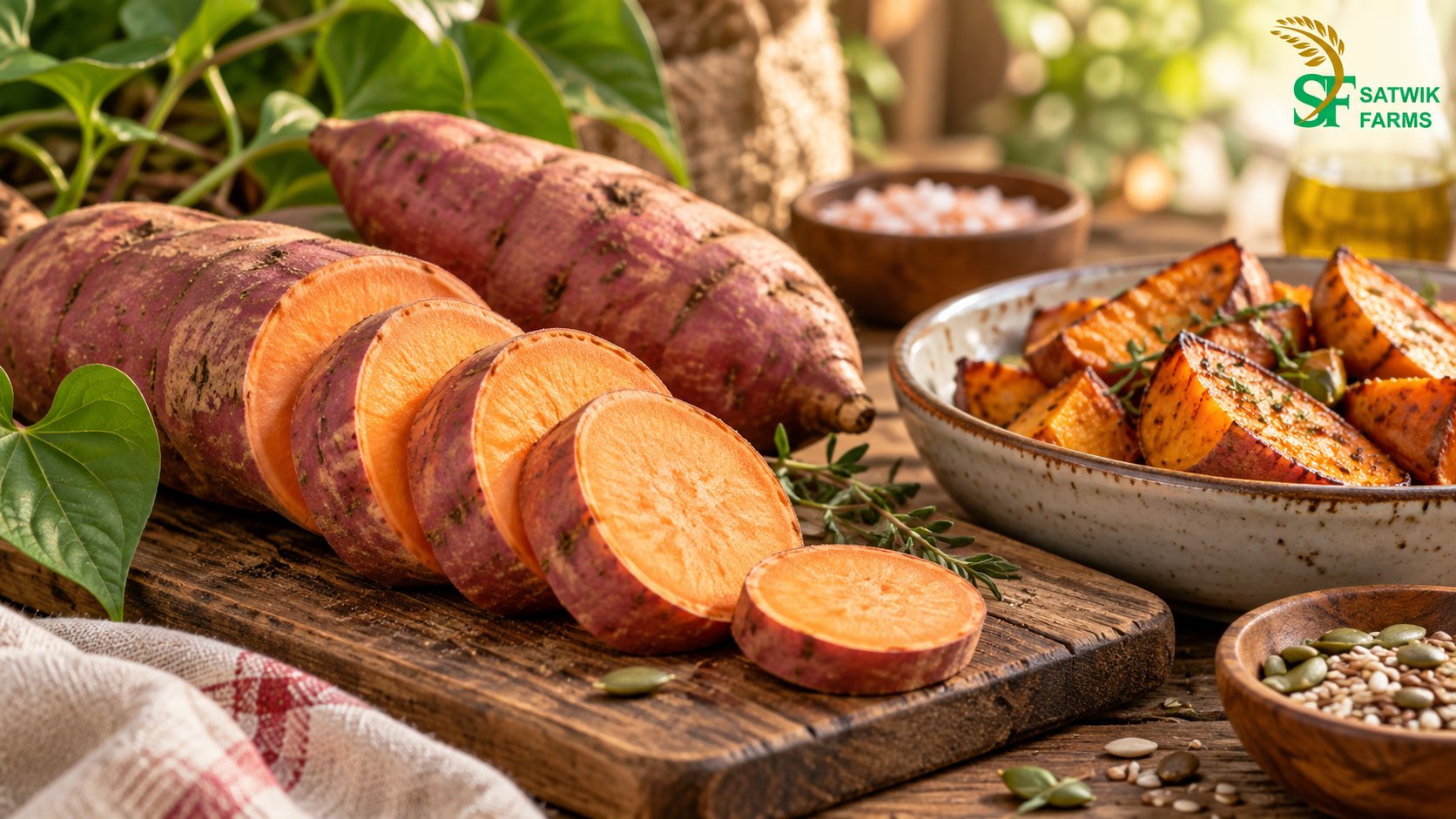
- Roasted wedges — tossed with a teaspoon of cold-pressed oil, thyme or curry leaves and a pinch of salt, roasted until just tender.
- Sweet potato & dal bowl — a balanced plate with dal or sprouts, a green vegetable and a modest serving of sweet potato.
- Fasting-day (vrat) food — a traditional choice during fasts, best boiled rather than fried.
Nature gives us sweetness with nourishment. Sweet potato is a beautiful example — simple, wholesome and satisfying when eaten in the right quantity.
Satwik Living — choosing traditional wisdom, supported by modern nutrition.
This article is for general educational purposes only and is not a substitute for professional medical advice, diagnosis or treatment. If you have an existing medical condition (especially diabetes, kidney disease or a history of kidney stones), or are taking any medication, or are pregnant or breastfeeding, please consult your healthcare provider before making significant changes to your diet.
Related Reading
More from the Satwik wellness collection:
- Understanding Glycemic Index: Your Guide to Better Blood Sugar Management
- Millet Master: Our Diabetic-Friendly Multigrain Atta
- Constipation: Natural Relief Through Ayurveda & Naturopathy
- Jackfruit: Nature's Giant Superfruit — Nutrition, Raw vs Ripe
- Ash Gourd: The Yogic Superfood & Ayurvedic Powerhouse