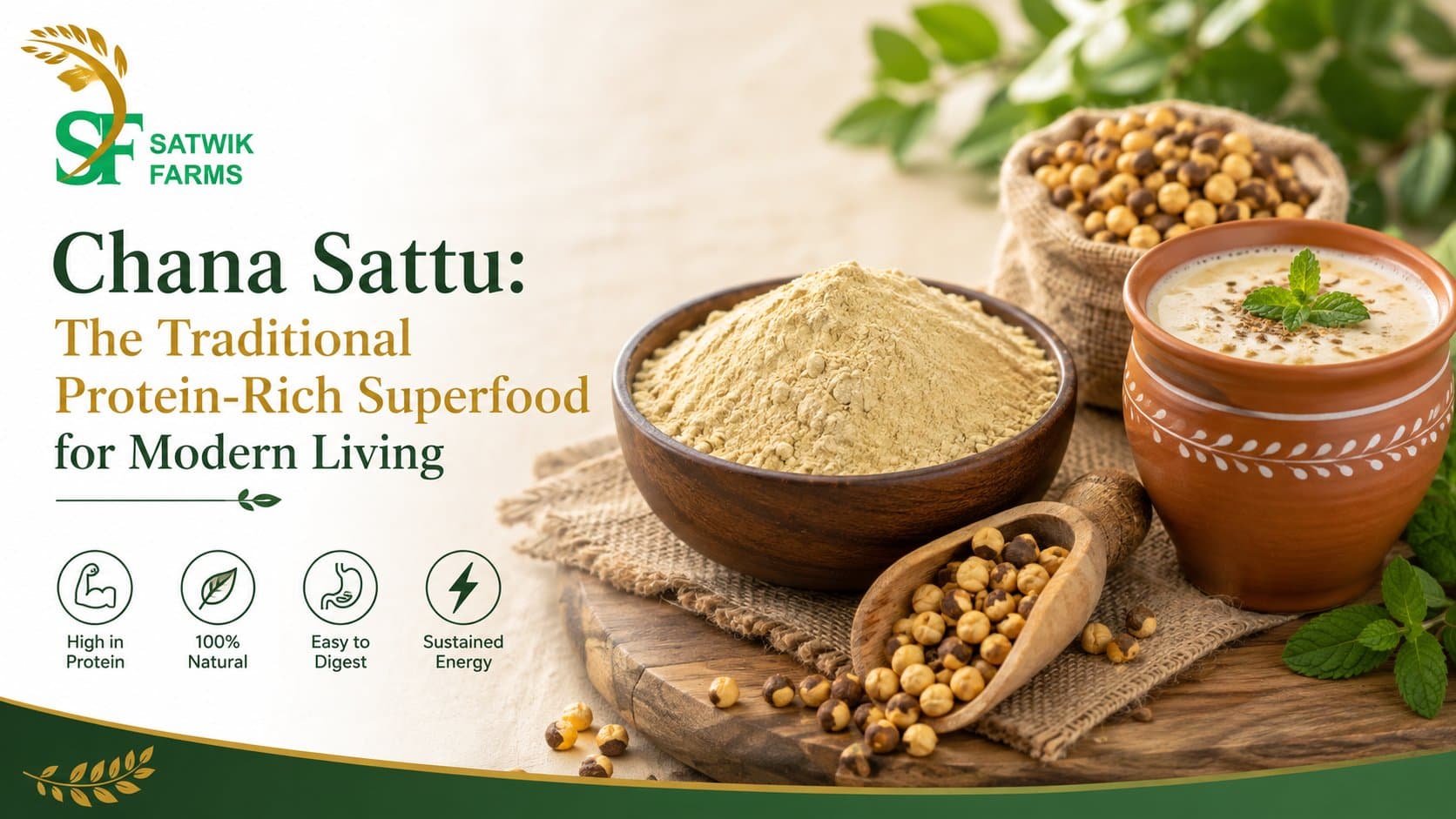
In a world full of highly processed protein drinks and packaged energy foods, chana sattu offers something beautifully simple: the goodness of roasted Bengal gram in a natural, wholesome powder.
Traditionally prepared by dry-roasting chana and grinding it into a fine flour, chana sattu has been enjoyed in India for generations. It is naturally rich in plant protein and fibre, making it a convenient addition to a balanced vegetarian diet.
Chana Sattu Nutrition — Per 100 g
Approximate nutritional values:
| Nutrient | Amount (per 100 g) |
|---|---|
| Energy | 380–390 kcal |
| Protein | 21–23 g |
| Carbohydrates | 58–60 g |
| Dietary fibre | 10–11 g |
| Fat | 6–7 g |
| Iron | ~4–5 mg |
| Magnesium, potassium & other minerals | Naturally present |
The exact values depend on the variety of chana, the roasting method and processing. Pure chana sattu is also naturally gluten-free — just check the label for cross-processing with wheat if that matters to you.
Why Add Chana Sattu to Your Diet?
1. Rich Source of Plant Protein
With around 22 g protein per 100 g, chana sattu can help vegetarian and vegan diets meet daily protein requirements. Protein is essential for maintaining muscles, tissues and normal body functions.
2. Naturally High in Fibre
Its fibre content can support digestive health and may help you feel satisfied for longer. Replacing sugary snacks or beverages with a balanced sattu preparation can be a smart dietary choice.
3. Sustained Energy
Chana provides carbohydrates along with protein and fibre, making sattu a more balanced option than many refined, sugary energy drinks.
4. Naturally Refreshing
A traditional sattu drink prepared with water, lemon and a little salt is particularly popular in hot weather. It can be a refreshing alternative to sweetened beverages.
5. A Convenient Vegetarian Food
No elaborate cooking is required. Roasted sattu can be mixed into water, buttermilk or suitable recipes, making it practical for breakfast or between-meal nutrition.
Chana Sattu According to Ayurveda
The traditional Ayurvedic concept of Saktu refers to roasted and powdered grains or pulses. Classical Ayurvedic literature describes saktu as light, strengthening and useful for relieving thirst and fatigue.
Chana sattu is traditionally associated with a cooling quality and is particularly valued during hot weather. Ayurveda also emphasizes consuming sattu appropriately rather than in excessive quantities.
These are traditional Ayurvedic perspectives and should not be interpreted as medical treatment.
What Does Modern Nutrition Say?
Modern nutrition recognizes roasted chickpea flour as a useful source of plant protein, dietary fibre and minerals. The combination of protein and fibre can contribute to satiety and make meals more nutritionally balanced.
For people concerned about blood sugar, unsweetened sattu may be preferable to sugar-loaded drinks — but it is still a carbohydrate-containing food. Portion size and the overall meal are important. If you have diabetes, sattu is a supportive food choice, not a substitute for prescribed treatment — continue your medication and discuss significant dietary changes with your doctor. (To understand how different foods affect blood sugar, see our guide to the glycemic index.)
How Much Chana Sattu Should You Take?
For most healthy adults, 20–30 g (about 2–3 tablespoons) per serving is a practical starting portion.
It can be taken:
- In the morning as part of breakfast
- Mid-morning or afternoon as a nutritious drink
- After physical activity as part of a balanced meal or snack
If you are new to high-fibre foods, start with a smaller quantity and increase gradually — a sudden jump in fibre can cause temporary gas or bloating.
Who Should Be Careful?
- Chickpea or legume allergy: avoid sattu entirely if you are allergic to chana or related legumes, and seek medical advice if you notice any reaction.
- Diabetes medication: sattu is carbohydrate-containing; keep portions consistent and monitor your levels as advised by your doctor.
- Children: smaller portions (1–2 teaspoons to start) are sensible; introduce gradually.
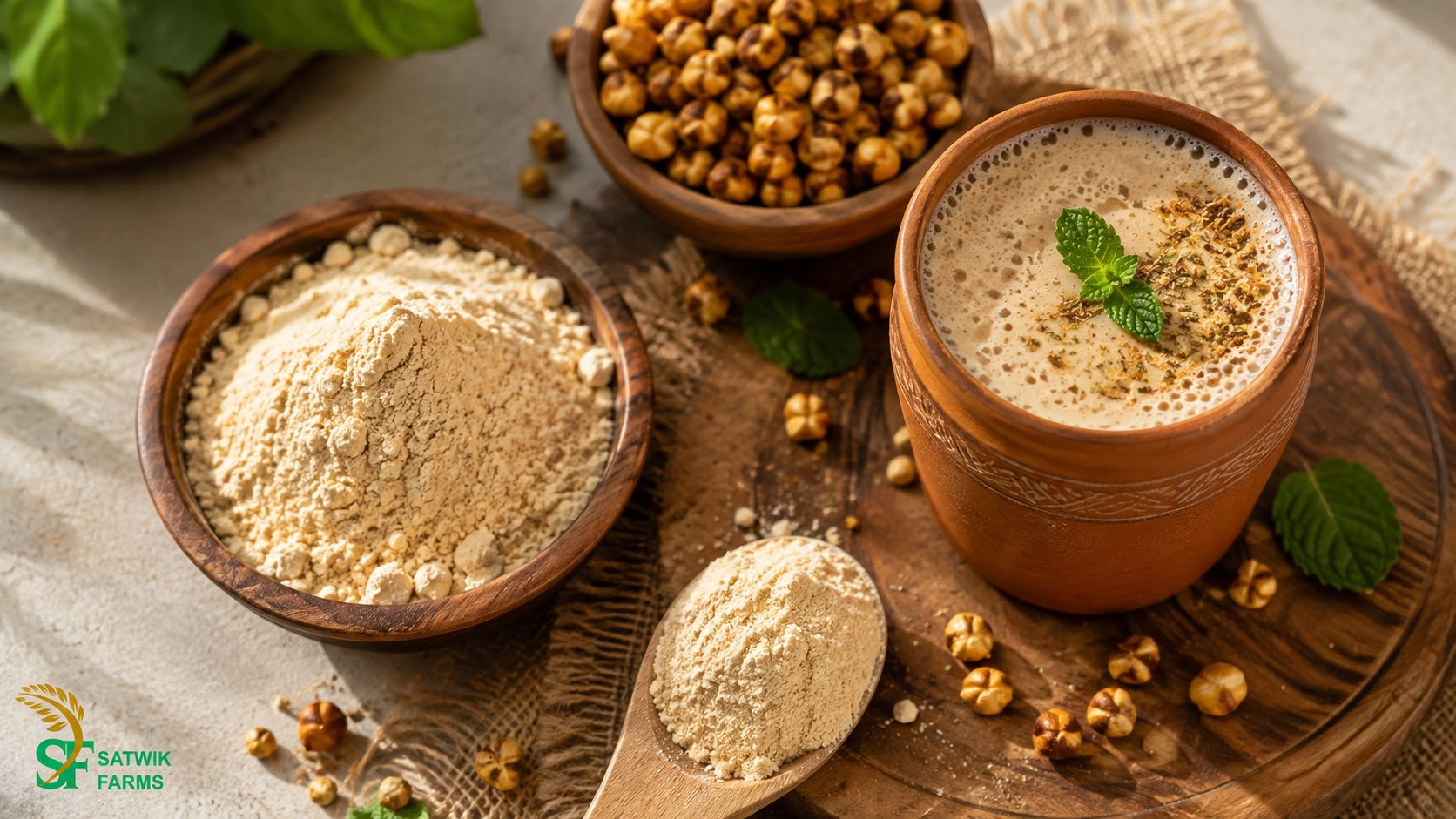
Best Chana Sattu Drink
Ingredients:
- 2–3 tablespoons chana sattu
- 250–300 ml cool or room-temperature water
- Juice of ½ lemon
- A small pinch of rock salt
- Roasted cumin powder (optional)
- Fresh mint (optional)
Mix thoroughly and drink fresh. For a healthier everyday version, avoid adding sugar.
Satwik Chana Sattu
At Satwik, we believe good food should be simple, pure and nourishing. Satwik Chana Sattu brings the traditional goodness of roasted chana to the modern kitchen — pure, protein-rich and naturally wholesome.
Satwik Chana Sattu — traditional nourishment for a stronger, healthier everyday life.
This article is for general educational purposes only and is not a substitute for professional medical advice, diagnosis or treatment. If you have an existing medical condition (especially diabetes or a legume allergy), or are taking any medication, or are pregnant or breastfeeding, please consult your healthcare provider before making significant changes to your diet.
Related Reading
Continue exploring plant-powered nutrition from the Satwik collection:
- Chana & Moong Sprouts: Nutrition, Ayurvedic Benefits & How to Eat Them Daily
- Tofu: Benefits, Nutrition, Ayurveda & How Much to Eat Daily
- The Power of Our Roasted Seed Mix: A Nutritional Powerhouse
- Understanding Glycemic Index: Your Guide to Better Blood Sugar Management
- Satwik Paustik Ladoo: Healthy Sugar-Free Ladoo with Ayurvedic Benefits