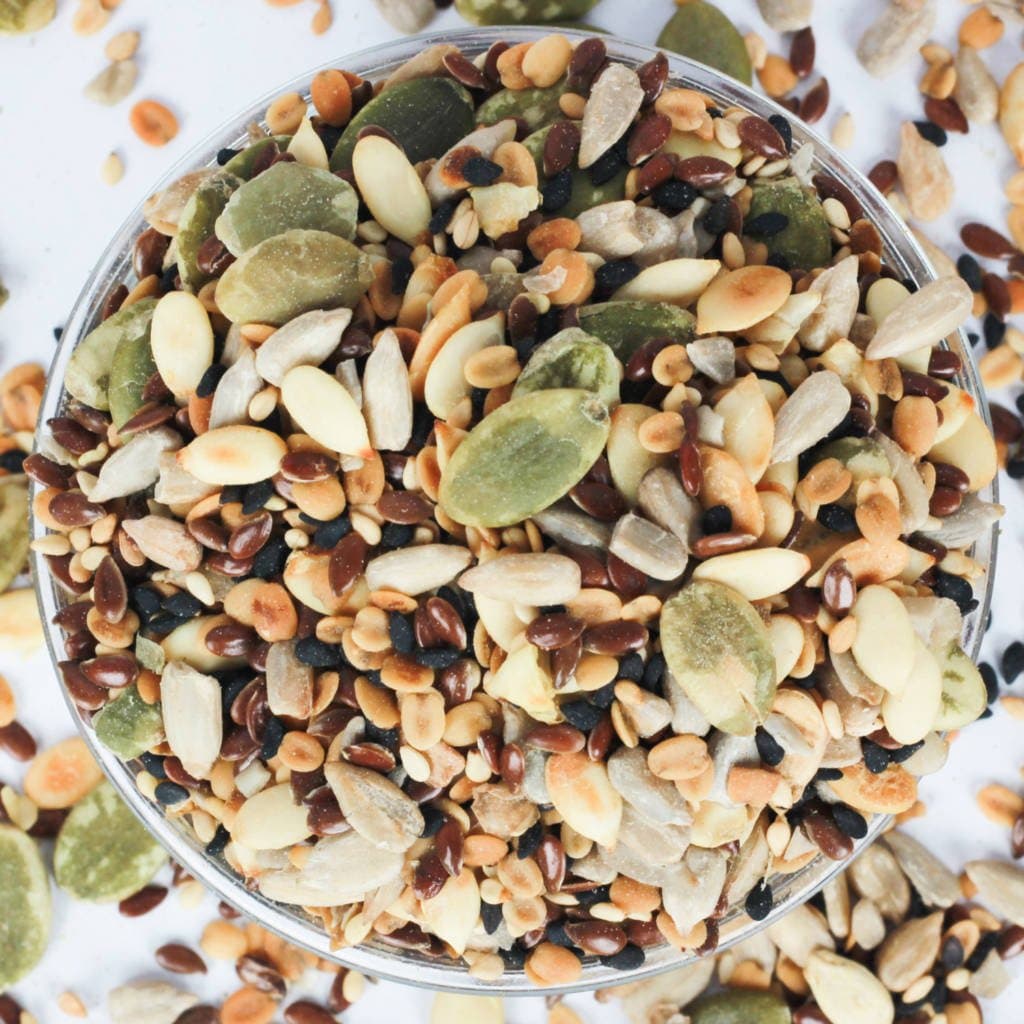
Our roasted seed mix is a synergistic blend of six seeds — Flax, Chia, Pumpkin, Sunflower, Sesame, and Watermelon — crafted to deliver maximum nutritional benefit in every tablespoon. Because the seeds are roasted, the mix is not only more flavorful but also easier to digest: heat helps break down anti-nutrients like phytic acid, which can otherwise block mineral absorption.
The Ideal Omega Balance
Most modern diets have an Omega-6 to Omega-3 ratio between 15:1 and 20:1 — heavily skewed toward inflammation. Our seed mix achieves an Omega ratio of approximately 2.17:1, placing it firmly in the "ideal" range recommended by health experts (1:1 to 4:1).
| Fat Type | Amount per 10g Serving | Key Health Benefit |
|---|---|---|
| Omega-3 (ALA) | 0.76 g | Supports brain and heart health |
| Omega-6 (LA) | 1.78 g | Essential for skin and hormone health |
| Omega Ratio | 2.35 : 1 | Ideal range (1:1 to 4:1) |
This balance is achieved because Flax and Chia — both higher in Omega-3 than Omega-6 — perfectly offset the higher Omega-6 content of pumpkin, sunflower, and sesame seeds.
Nutritional Profile (Per 10g Serving)
| Nutrient | Amount | % Daily Value |
|---|---|---|
| Calories | ~55.6 kcal | 2.8% |
| Protein | 2.25 g | 4.5% |
| Total Fat | 4.59 g | 5.9% |
| Total Carbs | 2.19 g | 0.8% |
| Dietary Fiber | 1.51 g | 5.4% |
Rich in Essential Minerals
| Mineral | Per 10g Serving | % Daily Value |
|---|---|---|
| Magnesium | 43.6 mg | 10.4% |
| Manganese | 0.30 mg | 13.0% |
| Iron | 0.82 mg | 4.5% |
| Zinc | 0.63 mg | 5.7% |
| Calcium | 30.1 mg | 2.3% |
For a full 30g serving (about 2 tablespoons), the mineral delivery is significant:
| Mineral | Amount | % Daily Value |
|---|---|---|
| Magnesium | 130 mg | 31% |
| Zinc | 1.9 mg | 17% |
| Selenium | 8.4 mcg | 15% |
| Iron | 2.5 mg | 14% |
| Vitamin E | 1.7 mg | 11% |
| Calcium | 95 mg | 7% |
Prominent Vitamins
- Vitamin E — Extremely high, primarily from sunflower seeds; a potent antioxidant for skin and immune health
- B Vitamins (B1, B3, B6) — From sesame and flax seeds, supporting energy metabolism and nervous system function
- Vitamin K — From pumpkin seeds, essential for blood clotting and bone health
Five Key Health Benefits
1. Heart and Cardiovascular Health
The combination of flax and chia seeds provides high levels of Omega-3 and fiber, which may help lower LDL ("bad") cholesterol and support heart health. Potassium and magnesium from pumpkin and sesame seeds support healthy blood vessel function and may help maintain healthy blood pressure as part of a balanced diet.
2. Immunity and Cellular Defense
This mix is exceptionally rich in Zinc (primarily from pumpkin and watermelon seeds) and Selenium (from sunflower seeds) — both critical for white blood cell function. Vitamin E from sunflower and pumpkin seeds protects cells from oxidative stress and slows signs of aging.
3. Digestive and Metabolic Health
With over 15g of fiber per 100g, this mix acts as a natural prebiotic, supporting healthy gut bacteria and preventing constipation. The high fiber and protein content also slow sugar absorption into the bloodstream, helping prevent energy crashes and manage insulin levels.
4. Bone and Joint Support
Sesame and chia seeds provide a high dose of plant-based Calcium and Phosphorus, essential for strong bones. The Omega-3s in flax and chia have anti-inflammatory properties that may reduce joint stiffness and pain.
5. Mental Wellness and Sleep
Pumpkin seeds contain Tryptophan, an amino acid your body uses to produce serotonin and melatonin (the "sleep hormone"). Magnesium helps calm the nervous system for better rest, while healthy fats and B-vitamins in sunflower and sesame seeds support cognitive function and focus.
A Diabetic-Friendly Profile
A supportive lifestyle food — not a substitute for prescribed diabetes treatment. If you have diabetes, please continue your medication and check with your doctor before making seeds a daily staple, especially if you take glucose-lowering drugs or blood thinners.
Very Low Glycemic Index
The mix has an estimated GI of 15–25 — exceptionally low because it is composed entirely of seeds: naturally high in fats, protein, and fiber, but very low in available carbohydrates.
- Pumpkin and Sunflower Seeds: Estimated GI ~15–20
- Chia and Flax Seeds: Estimated GI < 10 (due to extremely high fiber)
- Sesame Seeds: Estimated GI ~15–25
- Watermelon Seeds: Estimated GI ~15
For a standard 30g serving, the Glycemic Load (GL) is less than 1 — considered exceptionally low and ideal for blood sugar management or ketogenic/low-carb diets.
Seed-Specific Diabetic Advantages
- Flaxseeds — Contain lignans and soluble fiber associated in research with supporting healthy fasting blood sugar levels
- Chia Seeds — Their gelatinous fiber creates a barrier in the gut, slowing carbohydrate digestion
- Pumpkin Seeds — One of the best natural sources of magnesium; diets rich in magnesium are associated with significantly lower diabetes risk
- Sunflower Seeds — Contain chlorogenic acid, a compound studied for its potential role in supporting healthy glucose metabolism
Key Mechanisms
- Low Glycemic Response — High fiber slows sugar absorption into the bloodstream
- Improved Insulin Sensitivity — Abundant magnesium helps your body use insulin more effectively
- Reduced Inflammation — High Omega-3 content reduces systemic inflammation, a root cause of insulin resistance
- Steady Energy — Protein and healthy fats prevent rapid blood sugar spikes and crashes
Serving Suggestion
Since seeds are calorie-dense, a typical serving is 1–2 tablespoons (approx. 15–30g), providing roughly 83–165 calories. Use as a snack, salad topper, yoghurt mix-in, or add to your morning smoothie.
For diabetics: Keep the mix unsalted and free of added sugars or honey to maintain its diabetic-friendly profile.
Precautions
- Medication interactions: Flax and chia (omega-3) may interact with blood thinners; the fiber and lignan content may enhance the effect of diabetes medications — monitor blood sugar carefully if you are on glucose-lowering drugs. Consult your doctor before regular use.
- Hormonal therapies: Because flax contains lignans (phyto-oestrogens), those on HRT, tamoxifen, or oral contraceptives should consult their doctor before regular use.
- Pregnancy & breastfeeding: Therapeutic doses of flax are generally not recommended during pregnancy because of phyto-oestrogenic activity. Small culinary amounts are usually fine — please consult your healthcare provider before regular use.
- Children: Use much smaller amounts (½–1 teaspoon) and consult a paediatrician before making the mix a daily staple.
- Allergies: Sesame and sunflower allergies are not uncommon. Stop use immediately if you notice itching, swelling, or any allergic reaction.
- Introduce gradually: The high fibre content may cause bloating or gas if introduced suddenly — start small and drink plenty of water.
At Satwik Farms, we believe in the power of whole, natural foods. Our roasted seed mix is carefully crafted to support your health, one tablespoon at a time.
This article is for general educational purposes only and is not a substitute for professional medical advice, diagnosis or treatment. Nutritional benefits vary between individuals. If you have diabetes, a cardiovascular condition, are on medication, or are pregnant or breastfeeding, please consult your healthcare provider before making significant changes to your diet.
Related Reading
If you enjoyed this, you may also like: