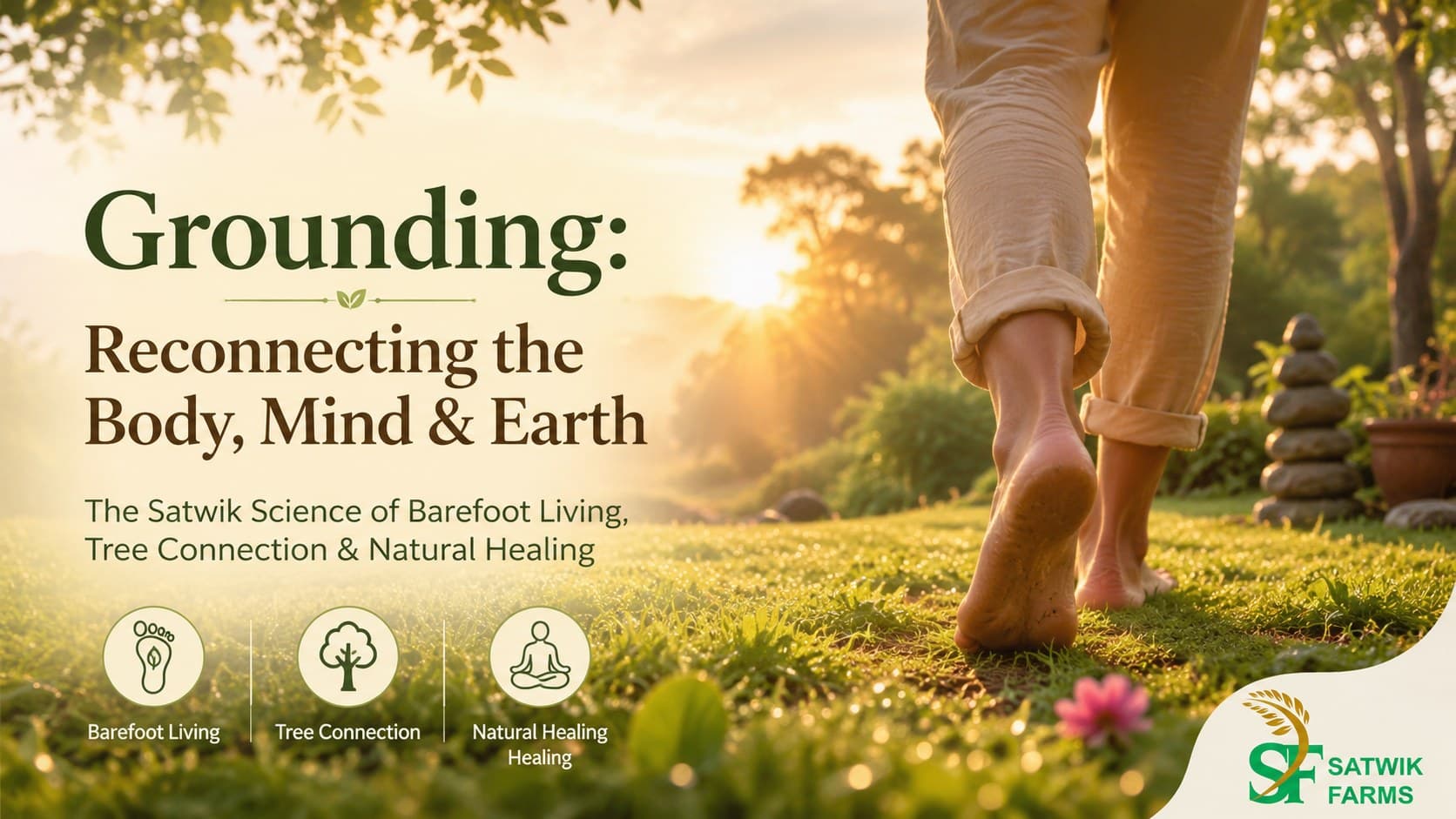
The Satwik science of barefoot living, tree connection and natural healing.
In today's hyper-connected digital world, human beings are becoming increasingly disconnected from the very source that sustains life — nature. Long hours indoors, synthetic flooring, rubber footwear, artificial lighting, stress, inflammation, sleep disturbances and emotional exhaustion have become ordinary modern problems.
Ancient traditions across the world emphasised one simple truth: the Earth itself is healing. In Ayurveda, yogic science, naturopathy and tribal cultures, physical contact with nature was never optional — it was part of daily living. Modern science is now beginning to validate what traditional wisdom has known for thousands of years: grounding may positively influence inflammation, stress hormones, sleep, emotional balance and overall wellbeing.
What Is Grounding (Earthing)?
Grounding — also called earthing — is the practice of making direct physical contact with the Earth's natural surface. It can include:
- Walking barefoot on soil, grass or sand
- Sitting on the ground or leaning against a tree
- Lying on natural ground
- Gardening with bare hands
- Meditating in nature
- Immersing the feet in river sand or mud
The Earth carries subtle natural electrical charges. Grounding theories suggest that direct contact may help neutralise excess free radicals and support physiological balance. From the Satwik perspective, grounding is not merely physical contact — it is an energetic reconnection with nature.
Grounding in Ayurveda
Ayurveda teaches that the human body is made from the Pancha Mahabhutas — the five elements:
| Element | Sanskrit | Quality it brings |
|---|---|---|
| Earth | Prithvi | Stability, strength, nourishment |
| Water | Jala | Cohesion, fluidity |
| Fire | Agni | Transformation, metabolism |
| Air | Vayu | Movement, lightness |
| Space | Akasha | Openness, awareness |
The Earth element provides stability, strength, calmness, patience and emotional steadiness. Modern lifestyles excessively stimulate Vata dosha through excess screen time, constant travel, overthinking, anxiety, artificial environments, sleep deprivation and processed foods. Grounding practices help restore Earth energy and balance an aggravated Vata.
Ayurvedic Benefits of Grounding
1. Balances Vata dosha — calms excessive nervous energy and may help with anxiety, restlessness, overthinking, poor sleep and nervous fatigue.
2. Supports mental stability — Ayurveda links mental steadiness with a strong Earth element, which may support emotional balance, clarity, patience and concentration.
3. May support better sleep — walking barefoot at sunrise or sunset is traditionally believed to calm the nervous system and align the body with natural circadian rhythms.
4. Enhances Prana flow — direct contact with nature is said to improve the movement of life force (Prana) through the body.
5. Strengthens connection with nature — Ayurveda considers nature the original healer; grounding restores this lost relationship.
The Modern Scientific View
Grounding research is still developing, but several studies suggest possible physiological benefits. The proposed mechanisms include:
- Reduced inflammation — electrons from the Earth may help neutralise free radicals linked with inflammation, potentially easing muscular soreness and supporting recovery.
- Cortisol regulation — grounding may positively influence the daily cortisol rhythm, which affects stress, sleep and energy.
- Improved sleep quality — observations suggest possible improvements in sleep onset, depth and morning freshness.
- Nervous system relaxation — nature exposure activates the parasympathetic ("rest and digest") nervous system, which may reduce mental fatigue and stress overload.
- Better circulation — some evidence suggests grounding may influence blood viscosity and circulation.
These are early and modest findings — grounding is best understood as a supportive lifestyle practice, not a proven medical treatment.
Techniques of Grounding
1. Barefoot Walking
The simplest and most ancient grounding method. Best surfaces are grass, soil, sand, riverbanks, natural stone and mud. Best times are early morning, sunset or just after rain, for 15–30 minutes daily.
Satwik tip: Walk slowly and consciously. Feel the texture and temperature of the Earth beneath your feet.
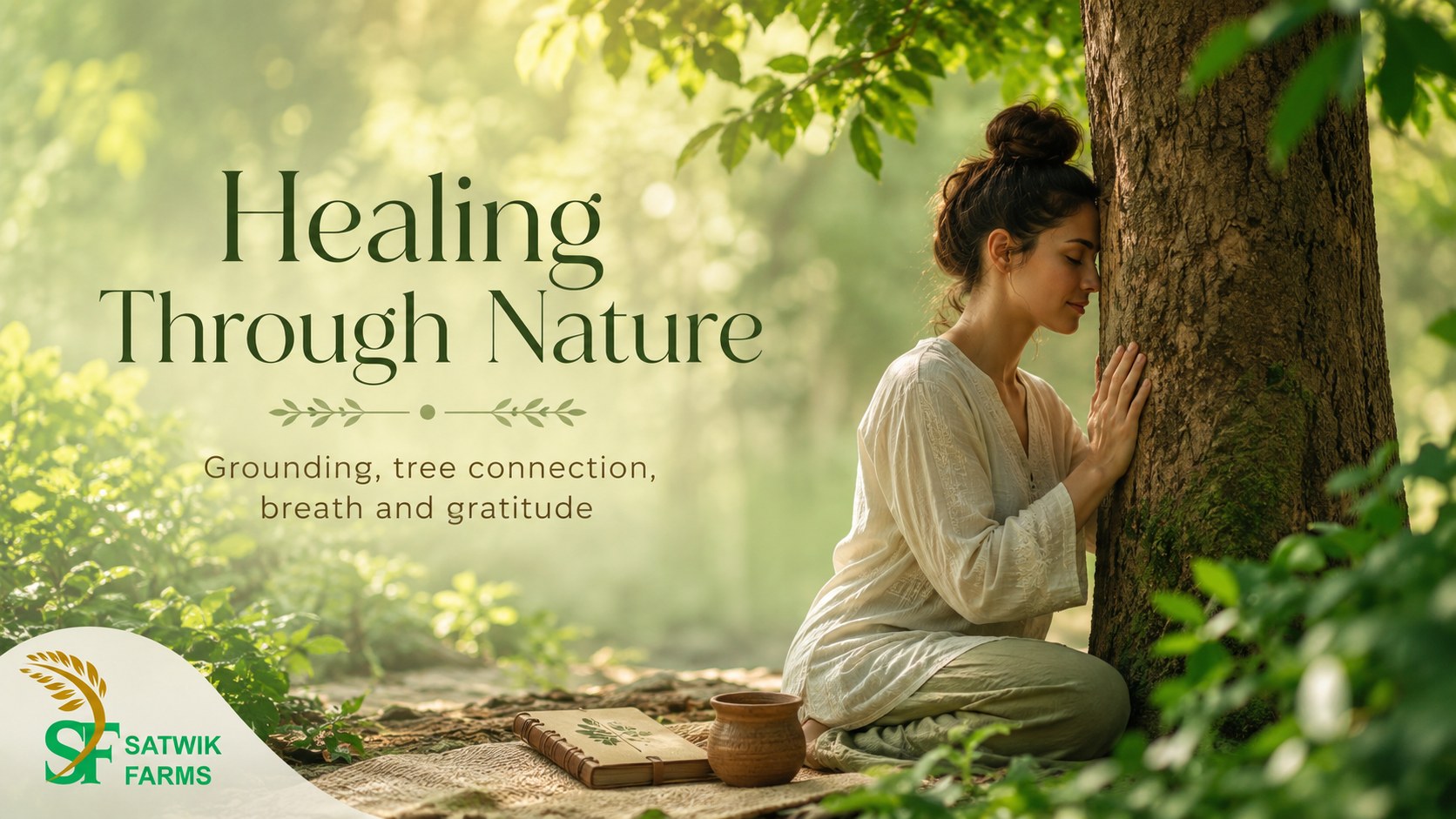
2. Tree Grounding (Tree Connection Therapy)
Ancient cultures considered trees living reservoirs of healing energy. The practice involves touching bark, sitting under trees, leaning against trunks or breathing consciously near roots. Traditional wisdom linked specific trees with distinct energies — banyan with stability, peepal with spiritual clarity, neem with purification, sandalwood with cooling calm. The modern parallel is the Japanese practice of Shinrin-yoku — "forest bathing" — which has been associated with lower stress hormones and improved mood.
3. Gratitude Grounding
True grounding is emotional and spiritual as well as physical. Sit on the ground and silently express gratitude — for breath, food, sunlight, water, trees, family, the Earth. Ayurveda considers gratitude a Satwik mental state that nourishes consciousness.
4. Mud Grounding (Earth Therapy)
Traditional naturopathy frequently used mud therapy — standing in wet soil, mud packs, gardening or natural clay contact — to cool excess heat, calm the nervous system and support relaxation.
5. Water Grounding
Walking in shallow river water, sitting near lakes or immersing the feet in natural water bodies may support mental relaxation, emotional release and the cooling of an aggravated Pitta.
6. Breath Grounding (Pranic Grounding)
Sit on the Earth with a straight spine, breathe slowly, and simply observe each inhalation and exhalation. This helps calm the mind, reduce overthinking and improve awareness.
Psychological & Spiritual Benefits
Grounding practices may support emotional balance, reduced irritability, better stress resilience, improved focus and a relief from digital fatigue. Nature exposure shifts attention away from overstimulation and mental clutter.
In yogic traditions, grounding stabilises consciousness — supporting deeper meditation, greater emotional control and inner silence. The Earth element is associated with root chakra stability, security and physical vitality.
A Satwik Grounding Routine
Morning
- Wake before sunrise and drink warm water
- Walk barefoot on grass for 15–20 minutes
- Practise deep breathing
- Sit quietly under a tree and express gratitude
Evening
- Take a barefoot walk at sunset
- Do gentle breathing and gratitude reflection
- Avoid screens afterward
Foods That Support Grounding Energy
Ayurveda also uses grounding foods to stabilise Vata:
- Cow ghee
- Warm milk with turmeric
- Root vegetables
- Mung dal
- Sesame, dates and almonds
- Millets and seasonal fruits
- Freshly cooked, warm meals
Limit excessive cold foods, processed foods, refined sugar, excess caffeine and overeating.
Precautions
Grounding is gentle and suits most people, but a little common sense helps:
- Avoid chemically treated lawns and unsafe surfaces (broken glass, sharp objects)
- Avoid grounding in extreme heat
- People with diabetes-related foot conditions, neuropathy or open wounds should be careful walking barefoot — check your feet afterward, and consult your doctor first
- Grounding should complement, not replace, medical care
Why Grounding Matters More Today Than Ever
Human beings evolved in direct contact with nature. Modern living has created artificial environments, chronic stress, isolation from natural rhythms, reduced sunlight and constant electromagnetic stimulation. Grounding helps restore simplicity, calmness and natural biological rhythms.
The Satwik lifestyle teaches that health is not merely the absence of disease — it is harmony with nature.
Final Thoughts
Grounding is one of the simplest yet most profound wellness practices available to us. Whether through barefoot walking, tree connection, gratitude, breath awareness, mud therapy or nature meditation, the Earth continuously offers nourishment, calmness and balance.
Ancient Ayurvedic wisdom recognised this deeply, and modern science is slowly uncovering the biological mechanisms behind these traditional practices. In the Satwik way of life, grounding is not a trend — it is a return to our original connection with nature.
When the body touches the Earth, the mind becomes quieter, the breath becomes softer, and life begins to feel balanced again.
This article is for general educational purposes only and is not a substitute for professional medical advice, diagnosis or treatment. If you have an existing medical condition (especially diabetes, neuropathy or foot conditions), are taking any medication, or are pregnant or breastfeeding, please consult your healthcare provider before making significant changes to your routine.
Related Reading
More from the Satwik wellness collection:
- Kundalini Jagaran (Part 1): The Seven Chakras & Satwik Foundations
- Walking for Health: Benefits, Best Time, Steps & the Ayurvedic View
- How to Charge Water: An Ayurvedic Practice
- Gut Health: Where Ayurveda Meets Modern Science
- Triphala: A Complete Ayurvedic Guide
- Coconut: Benefits, Uses, Ayurveda & How Much to Eat Daily
- Akshaya Tritiya: Significance, Rituals & the Sacred Amla Tree