In Part 1, we explored the philosophy of Kundalini Shakti, the seven chakras, Satwik living and the importance of gradual spiritual growth. In this section, we move into the practical aspects of chakra meditation — the appropriate hasta mudra (hand gesture), bija mantra, visualisation, benefits and precautions for each of the first four chakras.
Important note: In classical yoga, mudras and mantras are considered supportive practices that help focus attention and regulate the mind. They are not guaranteed methods to "force" chakra awakening. Progress is generally understood to come through consistent practice, ethical living and meditation — ideally with guidance from an experienced teacher.
Before You Begin
Best time for practice
- Brahma Muhurta (approximately 1.5 hours before sunrise) — traditionally regarded as the ideal time for meditation due to mental calmness and minimal distractions.
- Sunrise — a good alternative if Brahma Muhurta is not practical.
- Sunset — suitable for evening practice and relaxation.
Avoid practising immediately after a heavy meal — wait at least 2–3 hours after eating.
Preparing yourself
- Bathe, or wash your face and hands.
- Wear clean, loose, preferably cotton clothing.
- Sit on a natural mat (cotton, wool, or kusa grass if available).
- Face east in the morning, or north at other times, as suggested in many traditional texts.
- Keep the spine comfortably upright.
- Close the eyes and take 10–15 slow, natural breaths before beginning.
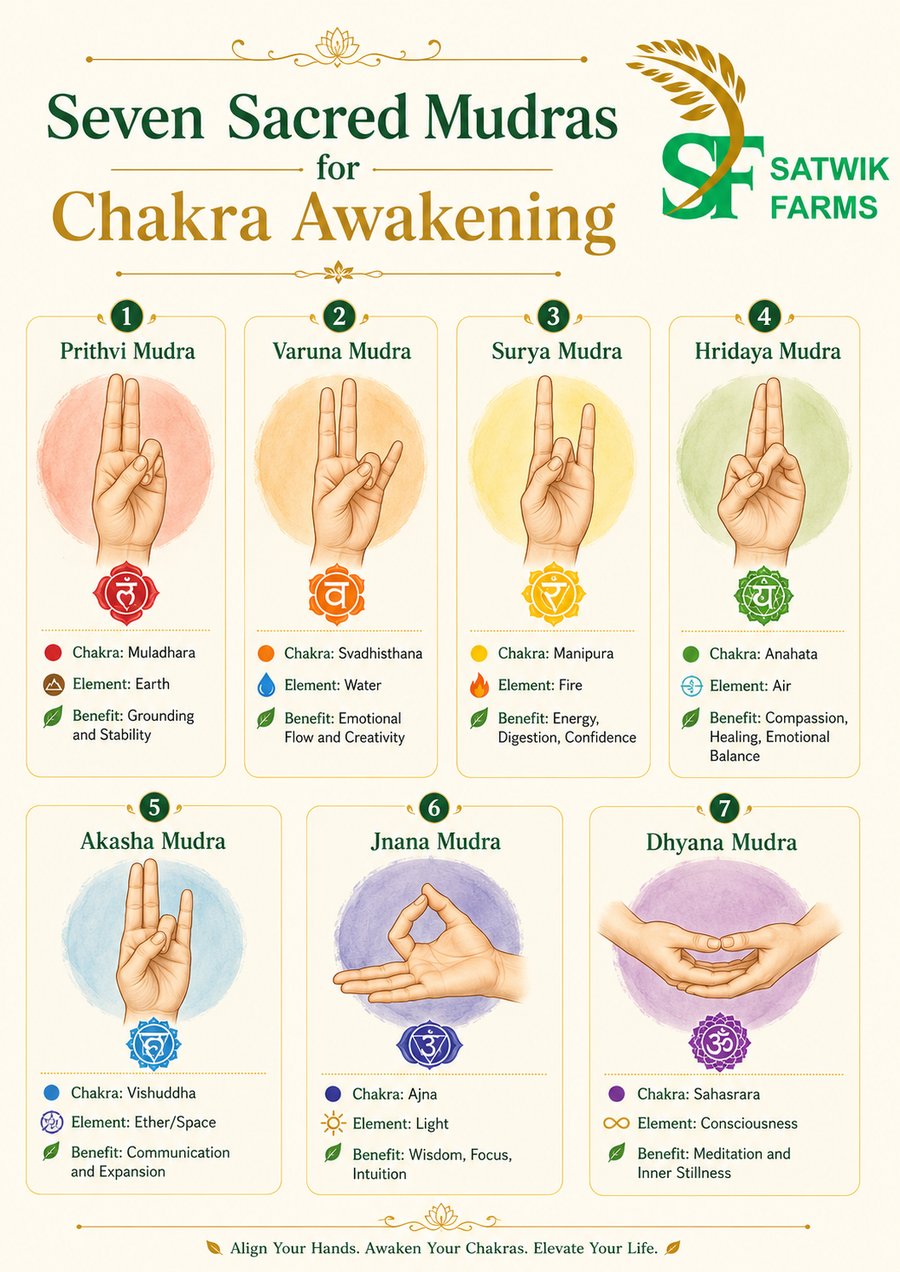
1. Muladhara Chakra (Root Chakra)
Sanskrit meaning: Mula = root, Adhara = support. Location: Base of the spine (perineal region). Element: Earth (Prithvi). Endocrine association: Often associated in modern yoga interpretations with the adrenal glands. Colour: Deep red. Bija mantra: LAM (pronounced "lum" with a soft 'u').
Mudra: Prithvi Mudra (Earth Mudra)
- Touch the tip of the ring finger to the tip of the thumb.
- Keep the other three fingers gently extended.
- Rest the hands on the knees with palms facing upward.
Meditation
Visualise a glowing red lotus at the base of the spine. As you inhale, imagine stability and strength filling the body. As you exhale, mentally chant LAM.
Duration: 10–15 minutes.
Benefits
- Cultivates a sense of grounding and security.
- May help reduce restlessness and improve mental steadiness.
- Encourages patience and resilience.
- Traditionally associated with vitality and balanced elimination.
Satwik reflection
Spend a few moments in gratitude for the earth, food, family and shelter. A feeling of gratitude reinforces the qualities of this chakra.
2. Swadhisthana Chakra (Sacral Chakra)
Meaning: One's own abode. Location: Lower abdomen, a few finger-widths below the navel. Element: Water. Colour: Orange. Bija mantra: VAM.
Mudra: Varuna Mudra (Water Mudra)
- Touch the tip of the little finger to the tip of the thumb.
- Keep the remaining fingers relaxed.
Visualisation
Imagine a radiant orange lotus in the lower abdomen. With each breath, feel emotional flexibility and creativity flowing like clear water.
Chant: Repeat VAM slowly and gently. Duration: 10 minutes.
Benefits
- Encourages emotional balance and creativity.
- Supports healthy expression of feelings.
- Traditionally linked with reproductive vitality and adaptability.
Satwik reflection
Practise forgiveness and kindness toward yourself and others, allowing emotional burdens to soften.
3. Manipura Chakra (Solar Plexus Chakra)
Meaning: City of jewels. Location: Navel region. Element: Fire. Colour: Golden yellow. Bija mantra: RAM.
Mudra: Surya Mudra (Sun Mudra)
- Bend the ring finger so that its tip touches the base of the thumb.
- Gently press the ring finger with the thumb.
- Keep the other fingers comfortably straight.
Visualisation
Visualise a bright golden sun radiating from the navel, spreading warmth, confidence and determination.
Chant: Repeat RAM with a steady rhythm. Duration: 10–15 minutes.
Benefits
- Enhances confidence and self-discipline.
- Traditionally associated with digestive fire (Agni).
- Supports motivation and purposeful action.
Ayurvedic perspective
Balanced digestive fire is central to Ayurveda. A healthy Manipura is symbolically linked with efficient digestion, energy and transformation.
4. Anahata Chakra (Heart Chakra)
Meaning: Unstruck sound. Location: Centre of the chest. Element: Air. Colour: Green (sometimes depicted as emerald or soft pink in different traditions). Bija mantra: YAM.
Mudra: Hridaya Mudra (Heart Mudra)
- Fold the index finger so its tip touches the base of the thumb.
- Bring the tips of the middle and ring fingers to the tip of the thumb.
- Keep the little finger extended.
Visualisation
Imagine a soft green lotus blooming in the centre of the chest, expanding with each breath and radiating compassion.
Chant: Repeat YAM slowly, allowing the sound to resonate gently. Duration: 15 minutes.
Benefits
- Promotes feelings of love, empathy and forgiveness.
- Helps cultivate emotional openness.
- Supports a calm and balanced state of mind.
Satwik reflection
Offer silent prayers for the well-being of all living beings — Lokah Samastah Sukhino Bhavantu.
Practice Tips
- Move through the chakras gradually rather than rushing to advanced practices.
- If you feel uncomfortable, shorten the session and return to calm breathing.
- The quality of attention is more important than the duration of practice.
- A peaceful, ethical and Satwik lifestyle supports meditation more effectively than intensive techniques alone.
Coming in Part 3
Part 3 covers the Vishuddha (Throat), Ajna (Third Eye) and Sahasrara (Crown) chakras, a complete 30–40 minute daily meditation routine integrating all seven chakras, a seven-day practice plan, signs of balanced progress, and important precautions.
This article is for general educational purposes only and is not a substitute for professional medical advice, diagnosis or treatment. Meditation and breathing practices are generally gentle, but if you have an existing medical condition (especially a psychiatric condition, epilepsy or another neurological condition), or are taking any medication, or are pregnant, please consult your healthcare provider before undertaking intensive practices.
Related Reading
Continue the Kundalini Jagaran journey:
- Kundalini Jagaran (Part 1): What Is Kundalini Shakti? The Seven Chakras & Satwik Foundations
- Kundalini Jagaran (Part 3): Throat to Crown, Daily Routine & Precautions
- Hast Mudras: A Practical Guide for Balancing Vata, Reducing Cough & Supporting Health
- Grounding & Earthing: Ayurveda and the Science of Natural Healing
- Satwik Agni Boost: An Ayurvedic Weight-Loss Drink from Indian Spices