"When the mind becomes still, prana becomes steady. When prana becomes steady, Kundalini naturally awakens." — Essence of the Hatha Yoga Pradipika
In Part 1 we covered the philosophy and foundations, and in Part 2 the practical meditation for the first four chakras. In this final part, we explore the last three chakras, integrate all seven into a daily meditation routine, and discuss precautions, signs of balanced progress and the role of Satwik living.
5. Vishuddha Chakra (Throat Chakra)
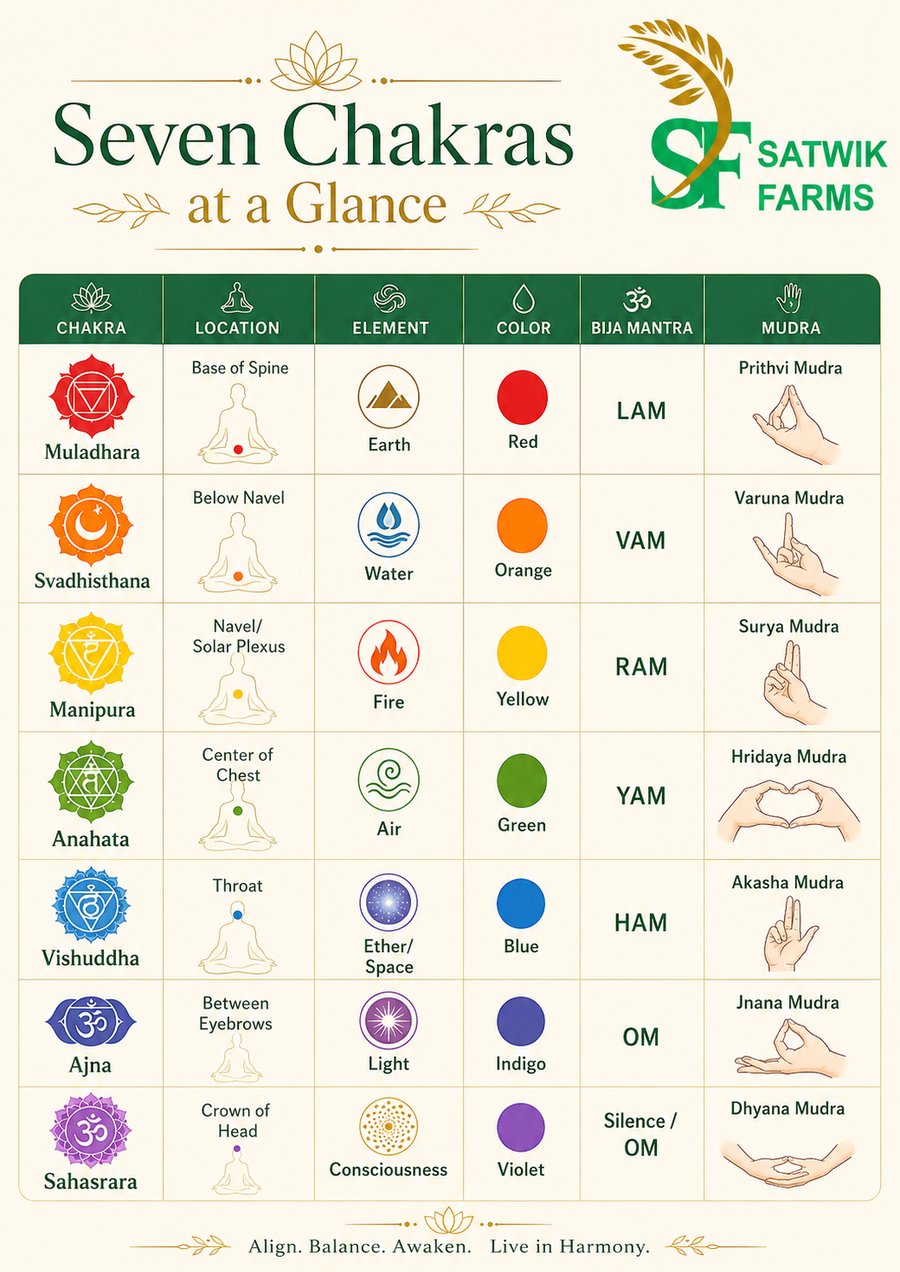
Meaning: Vishuddha means pure, or purification. Location: Centre of the throat. Element: Akasha (Ether/Space). Endocrine association: Thyroid and parathyroid (modern yogic association). Colour: Sky blue. Bija mantra: HAM (pronounced "hum" with a soft 'a').
Mudra: Akasha Mudra (Space Mudra)
- Touch the tip of the middle finger to the tip of the thumb.
- Keep the remaining fingers comfortably extended.
- Rest the hands on your knees with palms facing upward.
Visualisation
Imagine a luminous blue lotus radiating at your throat. As you inhale, visualise a cool blue light expanding. As you exhale, mentally chant HAM… HAM… HAM…
Feel your words becoming truthful, calm and compassionate.
Benefits
Traditionally associated with:
- Clear communication
- Confidence in expression
- Honest speech
- Creativity
- Deep listening
- Calmness
From a holistic perspective, this chakra encourages alignment between thoughts, words and actions.
Satwik practice
Observe Mauna (periodic silence) for 15–30 minutes once a week. Silence is regarded in many yogic traditions as a powerful means of conserving mental energy and cultivating mindful speech.
6. Ajna Chakra (Third Eye)
Meaning: Ajna means command, or perception. Location: Between the eyebrows. Element: Beyond the five gross elements; associated with mind, light and intuition. Colour: Indigo. Bija mantra: OM (AUM).
Mudra: Jnana Mudra (Gyan Mudra)
- Touch the index finger to the thumb.
- Keep the remaining fingers relaxed.
- Rest the hands on the knees.
Meditation
Focus gently between the eyebrows — avoid straining the eyes. Observe thoughts without judgement. Silently chant OM… OM… OM…, allowing the sound to dissolve into silence.
Benefits
Traditionally linked with:
- Mental clarity
- Intuition
- Improved concentration
- Inner awareness
- Wisdom
- Balanced decision-making
Meditation practices focusing on attention and awareness have been shown to support cognitive function, emotional regulation and sustained focus.
Satwik reflection
Spend a few minutes in self-inquiry:
- Who am I beyond my roles?
- What truly matters?
- Are my actions aligned with my values?
This reflective practice supports clarity and inner growth.
7. Sahasrara Chakra (Crown Chakra)
Meaning: Sahasrara means "thousand-petaled." Location: Crown of the head. Element: Beyond all elements. Colour: Violet or white. Bija mantra: Many traditions emphasise silent awareness rather than a specific mantra at this stage. Some practitioners continue with a gentle mental repetition of OM.
Mudra: Dhyana Mudra
- Place the right hand over the left.
- Palms face upward.
- Thumbs lightly touch each other.
- Rest the hands in the lap.
Meditation
Visualise brilliant white light descending from above and filling the entire body with peace. Remain in effortless awareness.
No force. No expectation. Simply observe.
Benefits
Traditional texts associate this stage with:
- Deep inner peace
- Spiritual insight
- Compassion
- Unity
- Contentment
- Freedom from fear
These qualities are understood to develop gradually through sustained practice rather than through a single dramatic event.
Complete Daily Kundalini Meditation Routine (30–40 Minutes)
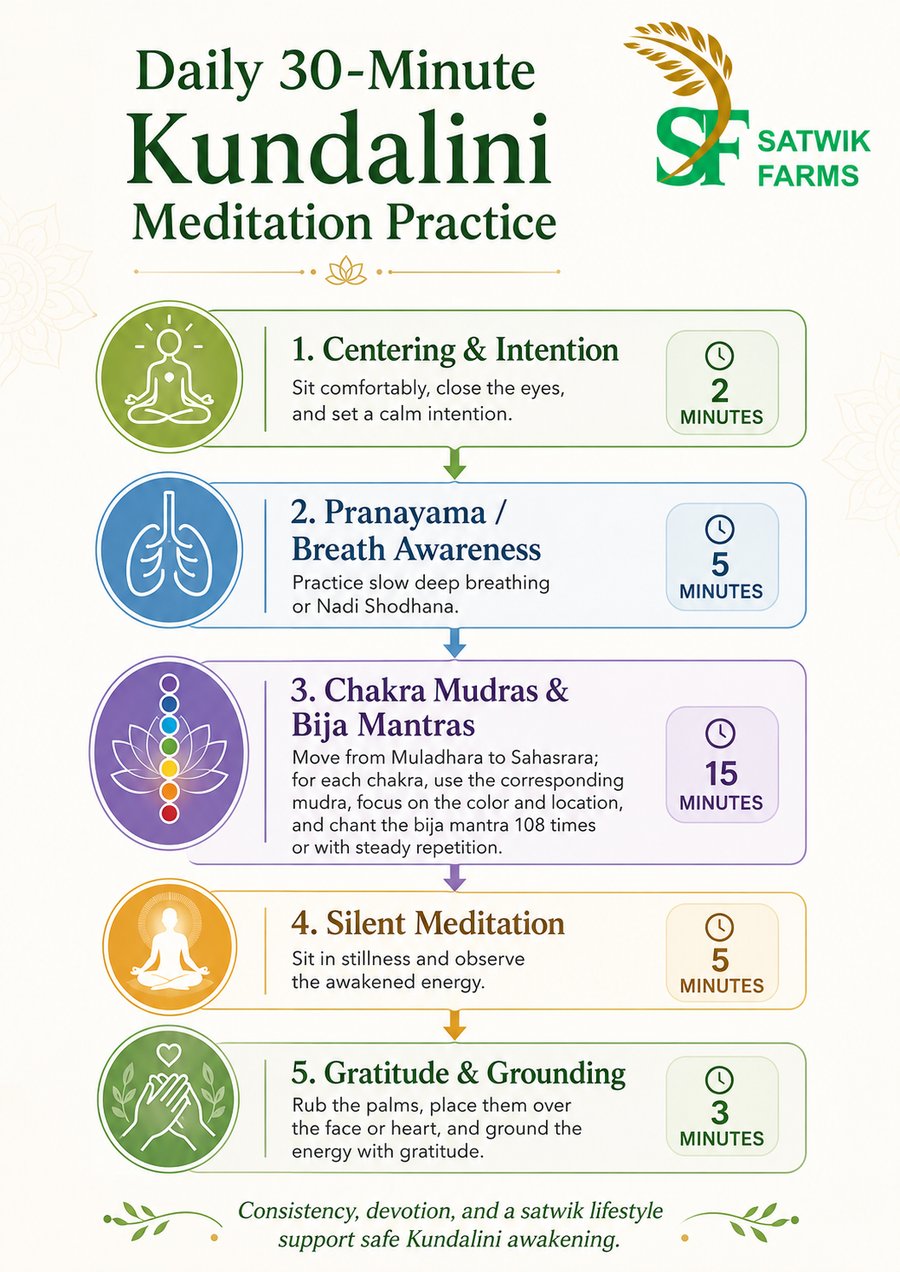
Step 1 — Preparation (3 minutes)
Sit comfortably in Sukhasana, Siddhasana, or on a chair with an upright spine. Close your eyes, relax your shoulders and jaw, and breathe slowly and naturally.
Step 2 — Deep breathing (5 minutes)
Practise gentle abdominal breathing or Nadi Shodhana (alternate nostril breathing) — without breath retention if you are a beginner.
Step 3 — Chakra meditation (20 minutes)
Move from the Root Chakra upward, spending 2–3 minutes on each chakra with gentle awareness, visualisation and the associated bija mantra:
- Muladhara — LAM — Prithvi Mudra
- Swadhisthana — VAM — Varuna Mudra
- Manipura — RAM — Surya Mudra
- Anahata — YAM — Hridaya Mudra
- Vishuddha — HAM — Akasha Mudra
- Ajna — OM — Jnana Mudra
- Sahasrara — silent meditation — Dhyana Mudra
Step 4 — Silent meditation (5–10 minutes)
Release all visualisations and mantras. Observe the breath. Witness thoughts without engaging. Rest in quiet awareness.
Step 5 — Closing (2 minutes)
Rub your palms together until warm and place them gently over your eyes. Offer gratitude for your body, breath, teachers, family and all living beings.
Seven-Day Chakra Practice
| Day | Chakra | Mudra | Mantra |
|---|---|---|---|
| Monday | Muladhara | Prithvi Mudra | LAM |
| Tuesday | Swadhisthana | Varuna Mudra | VAM |
| Wednesday | Manipura | Surya Mudra | RAM |
| Thursday | Anahata | Hridaya Mudra | YAM |
| Friday | Vishuddha | Akasha Mudra | HAM |
| Saturday | Ajna | Jnana Mudra | OM |
| Sunday | Sahasrara | Dhyana Mudra | Silent awareness |
Precautions
Classical yoga texts consistently advise caution with advanced Kundalini practices.
- Practise regularly but gently — avoid trying to force experiences.
- If you have significant psychiatric conditions, epilepsy or other serious neurological concerns, consult a qualified healthcare professional before undertaking intensive meditation practices.
- Advanced techniques involving prolonged breath retention (Kumbhaka), energetic locks (Bandhas) or forceful cleansing practices should be learned only from an experienced teacher.
- If practice leads to persistent distress, anxiety or confusion, reduce intensity and seek guidance.
Authentic progress is generally characterised by greater calmness, kindness, humility and emotional stability — not by dramatic sensations alone.
Satwik Living: The Foundation of Kundalini
Ancient masters emphasised that Kundalini is nurtured by the whole of one's life, not by meditation alone. A supportive Satwik lifestyle includes:
- Fresh, wholesome vegetarian food
- Regular sleep, waking before sunrise when possible
- Daily yoga and gentle exercise
- Meditation and prayer
- Seva (selfless service)
- Gratitude
- Ahimsa (non-violence)
- Satya (truthfulness)
- Moderation and self-discipline
- Satsang (keeping uplifting company)
These practices help cultivate the mental clarity and balance traditionally regarded as essential for spiritual growth.
Classical References
The concepts discussed in this guide are rooted in traditional yogic literature, including:
- Yoga Kundalini Upanishad
- Hatha Yoga Pradipika
- Shiva Samhita
- Gheranda Samhita
- Sat Chakra Nirupana
- Patanjali Yoga Sutras (for foundational principles of yoga and meditation)
Modern scientific research supports many benefits of meditation, breath awareness and yoga for stress reduction, emotional well-being and autonomic nervous system regulation, while the specific concept of Kundalini remains a subject of spiritual tradition rather than established scientific consensus.
Conclusion
Kundalini Jagaran is best understood not as the pursuit of extraordinary experiences, but as a lifelong journey toward greater awareness, compassion and inner balance. Mudras, bija mantras, meditation and a Satwik way of living are complementary practices that help cultivate a calm and focused mind.
When approached with patience, humility and consistency, these practices can become a meaningful path toward holistic well-being — integrating body, mind and spirit in the light of India's timeless yogic wisdom.
This article is for general educational purposes only and is not a substitute for professional medical advice, diagnosis or treatment. Meditation and breathing practices are generally gentle, but if you have an existing medical condition (especially a psychiatric condition, epilepsy or another neurological condition), or are taking any medication, or are pregnant, please consult your healthcare provider before undertaking intensive practices.
Related Reading
Continue the Kundalini Jagaran journey:
- Kundalini Jagaran (Part 1): What Is Kundalini Shakti? The Seven Chakras & Satwik Foundations
- Kundalini Jagaran (Part 2): Chakra Meditation with Mudras & Bija Mantras — Root to Heart
- Hast Mudras: A Practical Guide for Balancing Vata, Reducing Cough & Supporting Health
- Walking for Health: Benefits, Best Time & the Ayurvedic View
- Grounding & Earthing: Ayurveda and the Science of Natural Healing
- How to Charge Water: Ancient Indian Wisdom for Daily Wellness