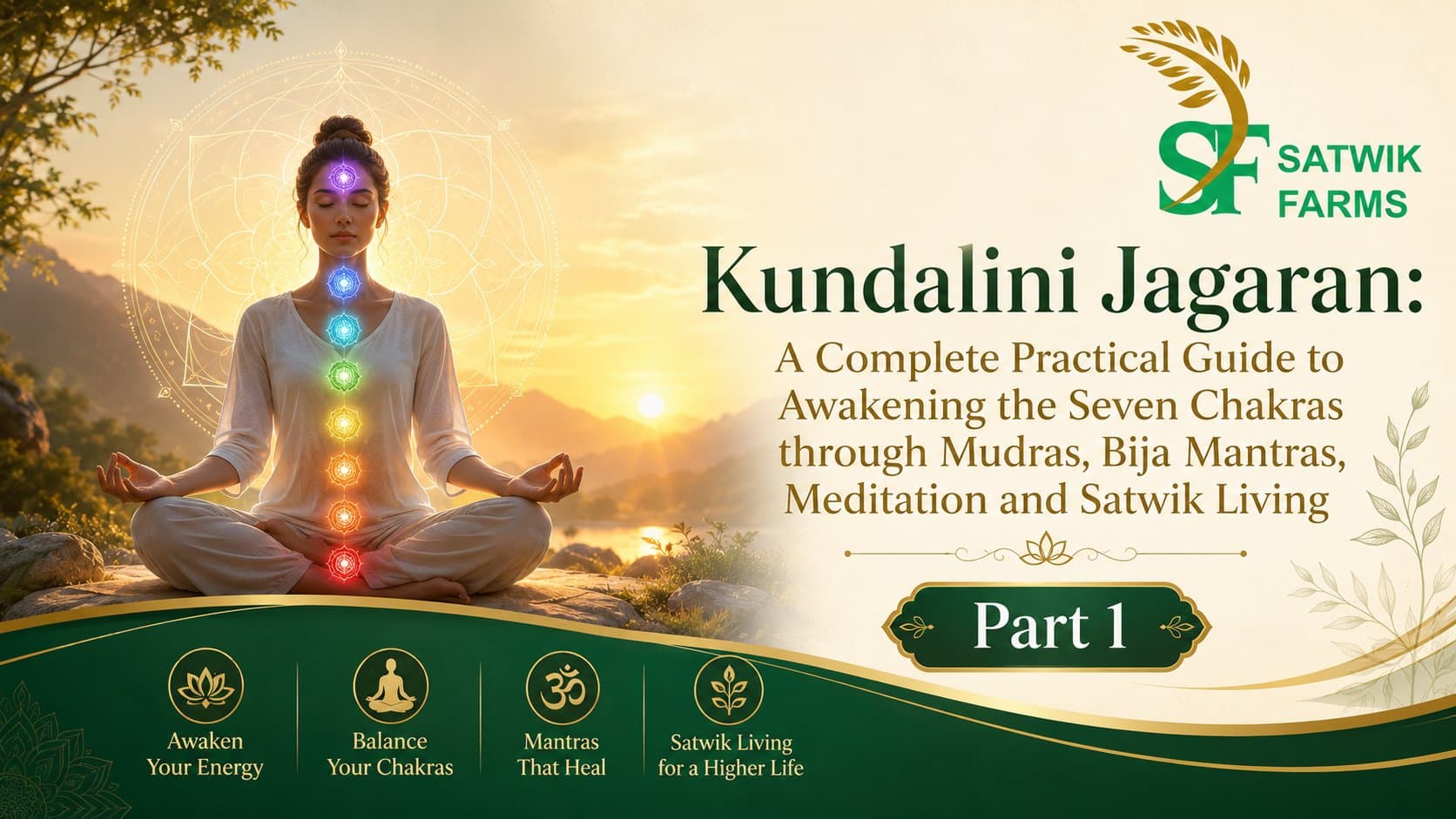
For thousands of years, India's yogic sages have spoken about a hidden spiritual energy resting within every human being. This dormant energy, known as Kundalini Shakti, is described as the source of higher consciousness, vitality, wisdom and inner transformation. The word Kundalini comes from the Sanskrit kundala, meaning "coiled" — symbolising a serpent coiled three and a half times at the base of the spine.
According to yogic philosophy, Kundalini resides in the Muladhara (Root Chakra). Through disciplined practice — meditation, pranayama, mudras, mantra chanting, ethical living and a Satwik lifestyle — this energy gradually rises through the Sushumna Nadi, activating each of the seven chakras. Rather than being a mystical event, traditional texts emphasise that Kundalini awakening is a gradual process of purification, self-awareness and spiritual evolution.
It is important to note that authentic Kundalini practices are not intended to produce dramatic supernatural experiences. Ancient scriptures consistently stress that the true signs of progress are mental peace, compassion, emotional balance, clarity of thought, self-discipline and a deep sense of connection with life.
What Is Kundalini Shakti?
In yogic tradition, Kundalini is considered the primordial life force (Shakti) present within every individual — the dynamic creative energy that sustains physical, mental, emotional and spiritual existence.
The Shiva Samhita and the Yoga Kundalini Upanishad describe Kundalini as the bridge between the material and spiritual dimensions of life. When dormant, a person remains primarily identified with worldly experiences. As this energy awakens gradually, awareness expands, leading to greater inner harmony and self-realisation.
From a modern perspective, Kundalini can be viewed as a symbolic representation of the integration of the nervous system, endocrine system, emotional intelligence and higher states of consciousness. While scientific research has not validated Kundalini as a measurable energy, studies on meditation, yoga and breathwork demonstrate measurable benefits for stress reduction, autonomic nervous system regulation, emotional well-being and cognitive function.
The Purpose of Kundalini Awakening
Ancient yogis never regarded Kundalini awakening as an end in itself. Rather, it was considered a means to cultivate:
- Self-awareness
- Emotional stability
- Fearlessness
- Compassion
- Inner peace
- Spiritual wisdom
- Balanced health
- Connection with the Divine
The goal is not to "gain powers" but to transcend limiting patterns and live with greater clarity and purpose.
Ancient Wisdom Meets Satwik Living
A key teaching in Indian philosophy is that Kundalini cannot be awakened safely through techniques alone — lifestyle plays a foundational role. The body and mind must be prepared through Satwik living, which includes:
- Consuming fresh, wholesome, vegetarian foods
- Maintaining personal cleanliness (Shaucha)
- Practising truthfulness (Satya)
- Cultivating non-violence (Ahimsa)
- Observing moderation (Brahmacharya in its broader sense of wise use of energy)
- Serving others (Seva)
- Practising gratitude
- Avoiding intoxicants and excess
A Satwik lifestyle purifies both body and mind, creating a stable foundation for deeper meditation and inner growth.
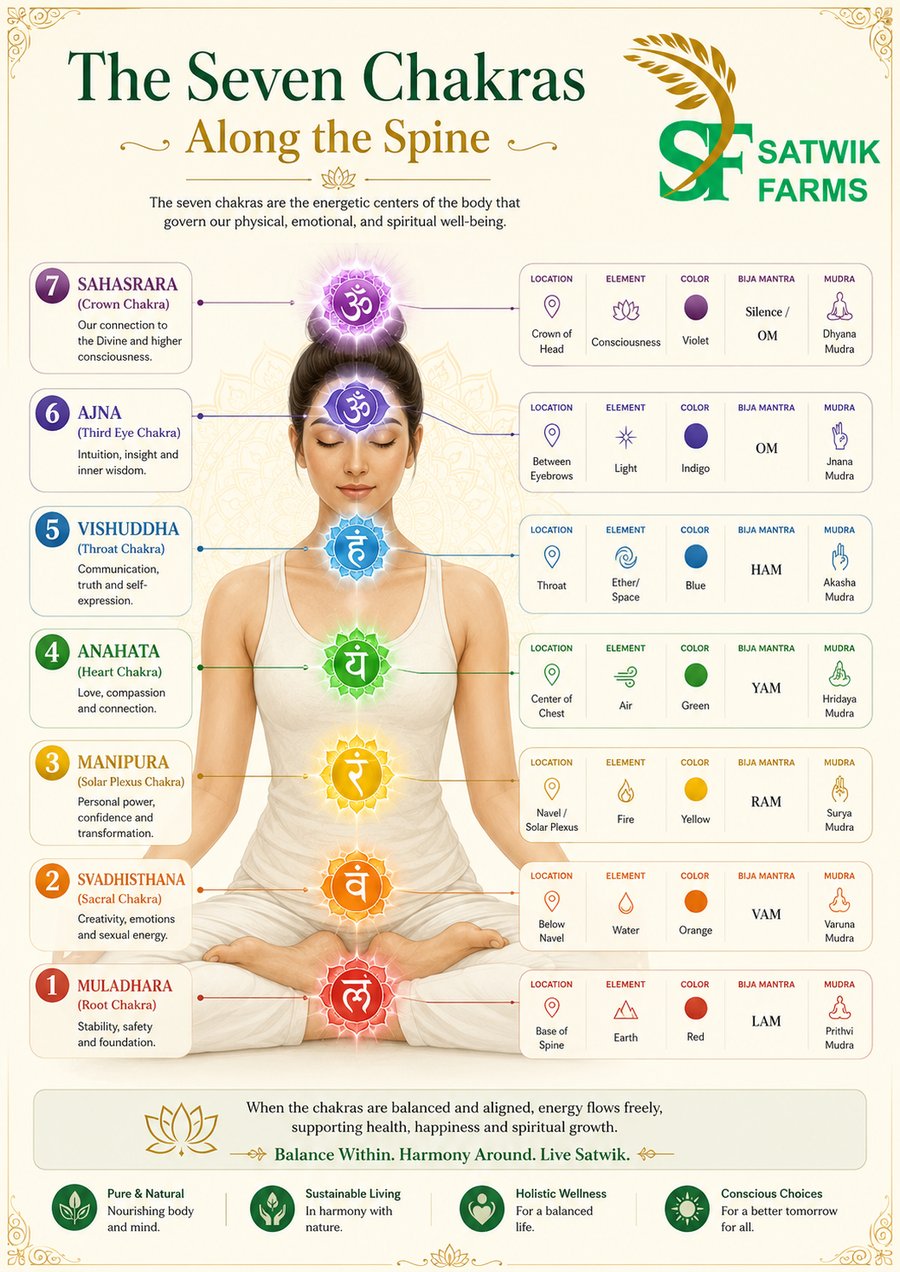
Understanding the Seven Chakras
The Sanskrit word Chakra means "wheel" or "energy centre." In yogic philosophy, chakras are subtle centres of consciousness located along the spine. Although they are not anatomical structures, they symbolically correspond to major nerve plexuses and endocrine glands.
| Chakra | Location | Element | Bija Mantra | Primary Quality |
|---|---|---|---|---|
| Muladhara | Base of spine | Earth | LAM | Stability and security |
| Swadhisthana | Lower abdomen | Water | VAM | Creativity and emotions |
| Manipura | Navel | Fire | RAM | Confidence and willpower |
| Anahata | Heart | Air | YAM | Love and compassion |
| Vishuddha | Throat | Ether | HAM | Communication and truth |
| Ajna | Between eyebrows | Mind/Light | OM (AUM) | Intuition and wisdom |
| Sahasrara | Crown of head | Beyond elements | Silence/OM | Pure consciousness |
How Kundalini Travels
According to yogic texts, three major subtle channels (Nadis) govern the flow of prana:
- Ida Nadi — associated with the moon, cooling energy, intuition and the parasympathetic response.
- Pingala Nadi — associated with the sun, activating energy, logic and sympathetic activity.
- Sushumna Nadi — the central channel through which Kundalini is said to ascend when Ida and Pingala are balanced.
The aim of yogic practice is to harmonise Ida and Pingala through breath regulation, meditation and ethical living so that awareness can naturally deepen.
Common Misconceptions About Kundalini
Many modern portrayals of Kundalini focus on extraordinary experiences. Traditional teachings present a more balanced view.
Myth: Kundalini awakening happens overnight. Reality: It is generally described as a gradual process requiring sustained practice.
Myth: Awakening guarantees supernatural powers. Reality: Classical texts emphasise humility, self-discipline and wisdom over extraordinary abilities.
Myth: Strong physical sensations are proof of spiritual progress. Reality: Sensations may occur in some practitioners but are neither necessary nor sufficient indicators of genuine development.
Myth: Anyone can safely perform advanced Kundalini techniques without guidance. Reality: Traditional lineages recommend learning advanced practices under the supervision of an experienced teacher.
Preparing for Kundalini Practice
Before attempting chakra meditation or mudras, establish a strong foundation:
1. Follow a Satwik diet
Prefer fresh fruits, seasonal vegetables, whole grains, sprouts, nuts, seeds, cow's milk (if suitable) and adequate hydration. Limit overly processed, excessively spicy, stale or intoxicating substances.
2. Practise daily meditation
Even 10–20 minutes of regular meditation helps cultivate mental steadiness.
3. Learn basic pranayama
Gentle practices such as diaphragmatic breathing and alternate nostril breathing (Nadi Shodhana) can prepare the mind and breath. More advanced breath-retention practices should be learned from a qualified instructor.
4. Sleep well
Quality sleep supports physical recovery, emotional regulation and sustained attention.
5. Maintain emotional balance
Practices such as gratitude, forgiveness, journaling and self-reflection help reduce emotional turbulence.
The Scientific Perspective
Although Kundalini itself has not been established as a scientific concept, research has consistently shown that meditation and yoga practices may:
- Reduce perceived stress and anxiety
- Improve emotional regulation
- Enhance attention and cognitive flexibility
- Improve heart-rate variability, reflecting better autonomic balance
- Support healthy blood pressure and sleep in many individuals
- Increase feelings of well-being and resilience
These findings support many of the practical benefits traditionally associated with disciplined yogic practice, while acknowledging that spiritual experiences remain subjective and vary among individuals.
Coming in Part 2
Part 2 provides a detailed practical guide to chakra meditation — the exact hand mudra, bija mantra pronunciation, step-by-step instructions, visualisation, duration and benefits for each of the first four chakras, from Muladhara to Anahata.
This article is for general educational purposes only and is not a substitute for professional medical advice, diagnosis or treatment. Meditation and breathing practices are generally gentle, but if you have an existing medical condition (especially a psychiatric condition, epilepsy or another neurological condition), or are taking any medication, or are pregnant, please consult your healthcare provider before undertaking intensive practices.
Related Reading
Continue exploring the Satwik wellness collection:
- Kundalini Jagaran (Part 2): Chakra Meditation with Mudras & Bija Mantras — Root to Heart
- Kundalini Jagaran (Part 3): Throat to Crown, Daily Routine & Precautions
- Hast Mudras: A Practical Guide for Balancing Vata & Supporting Health
- Grounding & Earthing: Ayurveda and the Science of Natural Healing
- How to Charge Water: Ancient Indian Wisdom for Daily Wellness
- Walking for Health: Benefits, Best Time & the Ayurvedic View