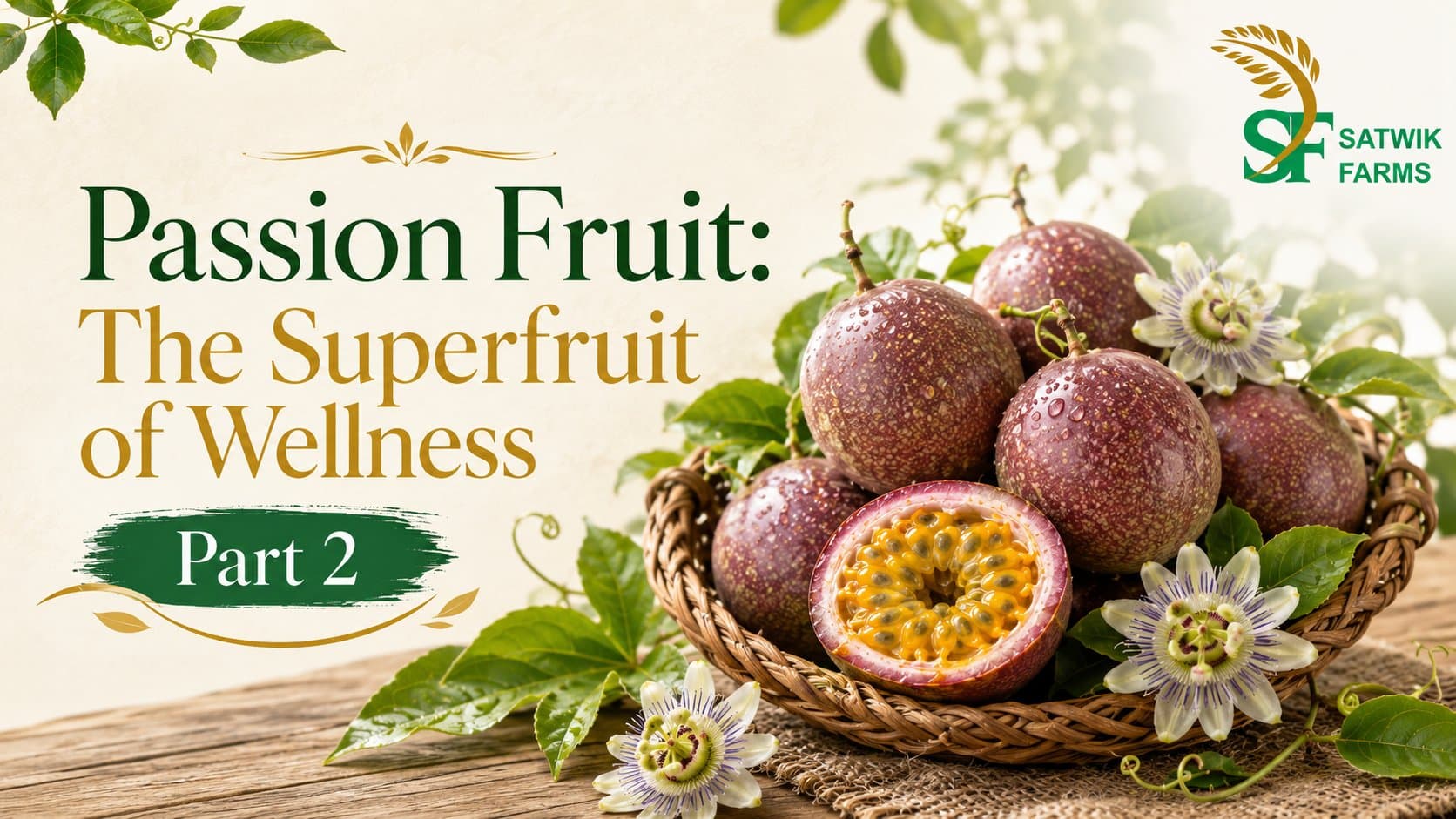
In Part 1 of this guide we looked at what makes passion fruit a genuine superfruit: exceptional dietary fiber, excellent vitamin C, and a broad spectrum of antioxidant plant compounds. In this part, we walk through what that nutrition may actually do for your body — system by system — along with an honest note on how strong the evidence is for each benefit.
This is Part 2 of our four-part passion fruit guide. Also read Part 1 — Nutrition & Botany, Part 3 — How to Eat It and Part 4 — Ayurveda & Satwik Living.
1. Supports Immunity
Passion fruit is an excellent source of vitamin C, a nutrient essential for immune function. Vitamin C supports white blood cell activity, collagen production, wound healing and protection against oxidative stress.
Regular intake of vitamin C-rich foods helps maintain a healthy immune system — though no food guarantees protection against infections.
2. Promotes Healthy Digestion, Gut Health & Regularity
Digestive complaints are increasingly common thanks to refined foods, irregular eating habits, stress and low fiber intake. Passion fruit's standout fiber content works on several fronts:
- Regularity: the fiber in the pulp and seeds adds bulk to stool and promotes regular bowel movements, which may help ease mild constipation. (Persistent or severe constipation always needs medical attention.)
- Gut microbiome: its soluble fiber acts as a prebiotic, nourishing the beneficial bacteria linked with better digestion, immunity and even mood.
- Colon health: regular fiber intake supports long-term intestinal health.
For best results, increase water intake alongside fiber. To go deeper into the gut–health connection, see our guide The Gut: Ancient Wisdom Meets Modern Science.
3. Supports Heart Health & Healthy Blood Pressure
Passion fruit supports cardiovascular health through several complementary mechanisms:
- Potassium and magnesium help the body regulate blood pressure by balancing the effects of sodium and supporting relaxed blood vessels and a steady heart rhythm.
- Soluble fiber binds bile acids in the intestine, which may contribute to lower LDL ("bad") cholesterol over time.
- Polyphenol antioxidants may help reduce inflammation and oxidative damage within blood vessels.
A heart-friendly diet that includes fruits like passion fruit alongside vegetables, whole grains, legumes, nuts and healthy fats is associated with lower cardiovascular risk. For those managing hypertension, passion fruit should complement — never replace — prescribed medications and medical advice.
4. May Help Manage Blood Sugar
Although passion fruit contains natural sugars, its high fiber content slows the digestion and absorption of carbohydrates. This gradual release may help:
- Reduce sharp post-meal blood sugar spikes
- Improve satiety
- Support better overall glycemic control as part of a balanced diet
Researchers have also studied piceatannol, a polyphenol concentrated in passion fruit seeds, for a possible role in improving insulin sensitivity. These findings are promising but come largely from early-stage research — larger human studies are still needed.
For people with diabetes or prediabetes: passion fruit is not a treatment for diabetes and is not a substitute for prescribed medication. Enjoy it in moderation — typically one fruit at a time, with a meal or paired with protein or healthy fats — and continue your usual monitoring and medical care. Our guide to the glycemic index explains why fiber-rich fruits behave differently from refined sugars.
5. Supports Healthy Weight Management
Passion fruit's fiber delays stomach emptying and increases fullness, while its natural sweetness can satisfy cravings with relatively few calories and almost no fat. Replacing sugary desserts with fresh passion fruit is a simple, realistic swap that may support healthy weight management — though no single food causes weight loss on its own.
6. A Supportive Food for Fatty Liver
Non-alcoholic fatty liver disease (NAFLD) is increasingly common alongside excess calorie intake and insulin resistance. Passion fruit's antioxidants may help reduce the oxidative stress involved, while its fiber supports healthier blood sugar and lipid patterns.
Passion fruit is not a cure for fatty liver — but it can be a useful component of the overall approach that actually helps: a whole-food diet, regular physical activity and gradual weight management. See our full holistic guide to fatty liver disease.
7. Supports Healthy Skin
Healthy skin depends on good nutrition, and passion fruit supplies several of the key players: vitamin C for collagen synthesis, vitamin A for skin repair, antioxidants that combat oxidative damage, and water for hydration. Regular consumption may contribute to better skin elasticity, wound healing and a healthier complexion over time.
8. Supports Eye Health
Passion fruit contains beta-carotene, which the body converts into vitamin A — essential for normal vision, night vision and the health of the eye's surface. Together with vitamin C and other antioxidants, it helps protect eye tissues from oxidative damage.
9. Contributes to Bone Health
Passion fruit is not a calcium-rich food, but it provides magnesium, phosphorus and small amounts of calcium — minerals that contribute to bone maintenance when combined with adequate vitamin D, protein and regular weight-bearing exercise (a daily walk counts — see our walking for health guide).
10. Relaxation and Stress — An Honest Note
You may have heard of passionflower being used for relaxation. That traditional herbal use refers mainly to the leaves of Passiflora incarnata, a related species — not the edible fruit of Passiflora edulis. The fruit itself is not a sedative and should not be assumed to have those effects.
That said, a nourishing diet, regular exercise, good sleep and mindful eating — the foundations of the Satwik lifestyle we describe in Part 4 — remain the real pillars of stress management.
Passion Fruit During Pregnancy
Passion fruit can be a nutritious addition to a pregnancy diet, providing folate, vitamin C, fiber and potassium — nutrients that support maternal health and fetal development.
A few sensible precautions:
- Choose ripe fruit and wash the outer shell before cutting.
- Enjoy moderate quantities rather than large amounts at once.
- If you have a high-risk pregnancy or specific dietary restrictions, discuss dietary changes with your healthcare provider.
Passion Fruit for Children
Children generally love the sweet-tart taste. The fruit offers vitamin C, fiber, antioxidants and hydration. Introduce it gradually — starting with half a fruit for younger children — and avoid adding sugar. If your child has known food allergies (especially latex allergy), check with your paediatrician first; we cover allergy precautions in Part 3.
How Strong Is the Evidence?
An honest summary: the fiber, vitamin and mineral benefits above rest on well-established nutrition science. The more specific findings — anti-inflammatory effects, piceatannol and insulin sensitivity — come largely from laboratory and animal studies, with human research still developing. Passion fruit is best viewed as a genuinely nutritious food that supports health, not a medicine that treats disease.
Continue reading: Part 3 — How to Eat Passion Fruit: Best Time, Daily Amount, Recipes & Precautions
This article is for general educational purposes only and is not a substitute for professional medical advice, diagnosis or treatment. If you have an existing medical condition (especially diabetes, heart disease, kidney disease or liver disease), or are taking any medication, or are pregnant or breastfeeding, please consult your healthcare provider before making significant changes to your diet.
Related Reading
If you found this helpful, you may also like: