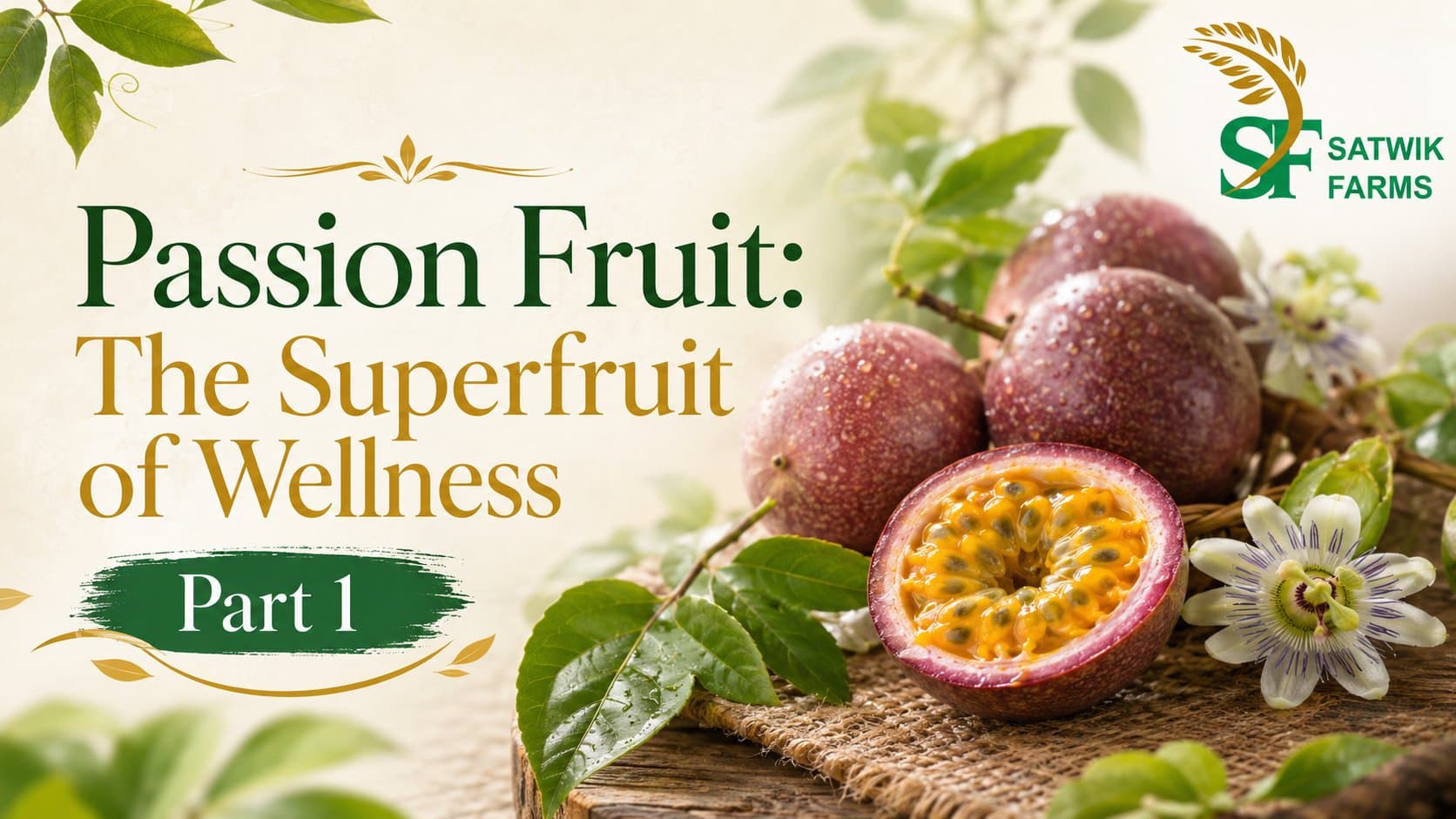
Nature has gifted us countless fruits that nourish the body while delighting the senses. Among these, passion fruit stands out as a nutritional powerhouse. With its vibrant purple or yellow shell and aromatic, jelly-like pulp filled with edible seeds, passion fruit is not only delicious but also packed with vitamins, minerals, antioxidants, dietary fiber and plant compounds that support overall health.
In recent years, passion fruit has gained popularity worldwide as scientific interest has grown in its potential role in supporting digestion, immunity, heart health and healthy blood sugar patterns. Although native to South America, the fruit is now cultivated in tropical and subtropical regions across the globe — including India, East Africa, Australia and Southeast Asia.
At Satwik Farms, we believe food should be more than just calories — it should be nourishment, vitality and a source of harmony with nature. Passion fruit embodies this philosophy beautifully.
This is Part 1 of our four-part passion fruit guide. Continue with Part 2 — Health Benefits, Part 3 — How to Eat It and Part 4 — Ayurveda & Satwik Living.
What Is Passion Fruit?
- Scientific name: Passiflora edulis
- Family: Passifloraceae
- Common names: Passion fruit, purple passion fruit, yellow passion fruit, Krishna Phal (in parts of India), and granadilla (for closely related varieties)
Interestingly, the name "passion fruit" has nothing to do with romance. It originated in the 16th century, when Spanish missionaries associated the flower's intricate structure with the Passion (suffering) of Christ — different parts of the flower were seen as symbols of the crucifixion, and the name stayed.
Botanical Description
Passion fruit grows on a vigorous, fast-growing perennial climbing vine that can climb 10 metres or more with proper support, holding on with curling tendrils.
Leaves are deep green, glossy and typically three-lobed.
Flowers are among the most beautiful in nature — white petals crowned by purple-and-blue corona filaments, with five stamens and three stigmas. They are highly attractive to bees and other pollinators.
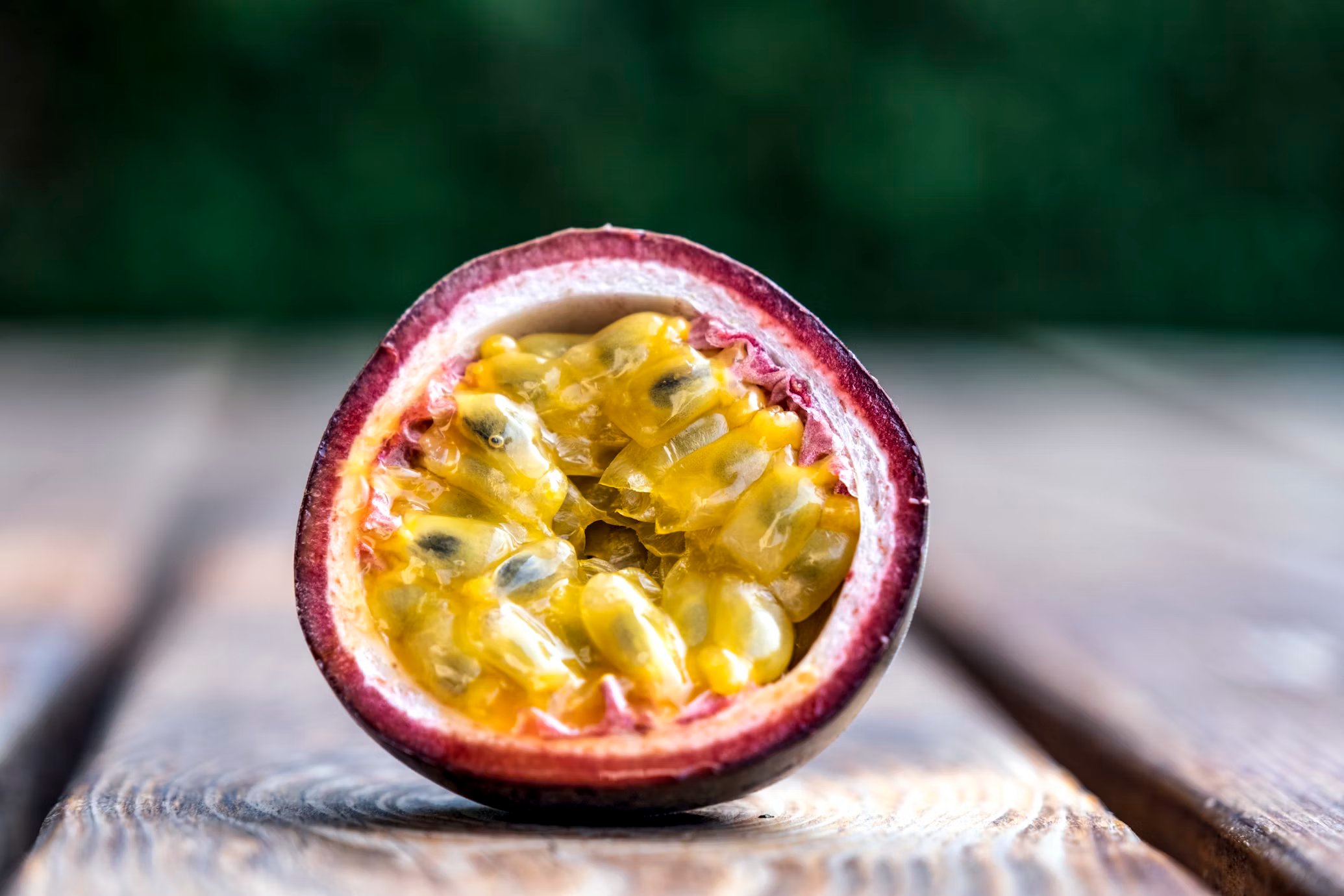
Fruit is round or oval, about 4–8 cm across, with a purple or yellow rind. Inside, dozens of crunchy, edible black seeds sit in juicy, aromatic pulp that delivers the characteristic sweet-tart flavour.
Origin and Distribution
Passion fruit originated in Brazil, Paraguay and northern Argentina. From South America it spread across the tropics and is now grown commercially in India, Kenya, Tanzania, Uganda, South Africa, Australia, New Zealand, Sri Lanka, Vietnam, Indonesia and many other regions — driven by its excellent nutritional profile and growing consumer demand.
Nutritional Value (Per 100 g Edible Portion)
Passion fruit is considered nutrient-dense despite being relatively low in calories.
| Nutrient | Amount (approx.) |
|---|---|
| Energy | ~97 kcal |
| Water | ~73 g |
| Carbohydrates | ~23 g |
| Natural sugars | ~11 g |
| Dietary fiber | ~10 g |
| Protein | ~2.2 g |
| Fat | ~0.7 g |
Vitamins: vitamin C, vitamin A (as beta-carotene), vitamin E, riboflavin (B2), niacin (B3), vitamin B6 and folate.
Minerals: potassium, magnesium, phosphorus, iron, calcium, zinc and copper.
Key phytochemicals: polyphenols, carotenoids, flavonoids, piceatannol (concentrated in the seeds), passiflorine and cyanidin derivatives — compounds studied for their antioxidant and anti-inflammatory properties.
Why Passion Fruit Is Considered a Superfruit
Unlike many fruits that shine in only one or two nutrients, passion fruit offers a rare combination: exceptional dietary fiber, excellent vitamin C, vitamin A, potassium, magnesium, iron and a broad spectrum of polyphenol antioxidants — all with low fat and no cholesterol. This nutrient synergy is why it can support so many aspects of health at once.
Here is how it compares with other popular "superfruits":
| Fruit | Main Strength | Dietary Fiber | Vitamin C | Antioxidants |
|---|---|---|---|---|
| Passion fruit | Fiber + vitamin C + polyphenols | ★★★★★ | ★★★★☆ | ★★★★★ |
| Orange | Vitamin C | ★★☆☆☆ | ★★★★★ | ★★★☆☆ |
| Guava | Vitamin C + fiber | ★★★★☆ | ★★★★★ | ★★★★☆ |
| Pomegranate | Polyphenols | ★★★☆☆ | ★★☆☆☆ | ★★★★★ |
| Kiwi | Vitamin C + potassium | ★★★☆☆ | ★★★★★ | ★★★★☆ |
| Papaya | Vitamin A + digestive enzymes | ★★★☆☆ | ★★★★☆ | ★★★★☆ |
Takeaway: rather than relying on any single "superfruit", eating a variety of seasonal fruits provides the broadest range of nutrients and phytochemicals. Passion fruit simply earns a well-deserved place in that rotation.
Antioxidant Power
Every day, our bodies produce unstable molecules called free radicals during normal metabolism. Pollution, stress, smoking, poor diet and infections increase their production further. Over time, excess free radicals contribute to oxidative stress, which is associated with premature aging, heart disease, diabetes and other chronic conditions.
Passion fruit is rich in antioxidants — vitamin C, beta-carotene, polyphenols and flavonoids — that help neutralise these harmful molecules and protect cells from oxidative damage. Diets built around antioxidant-rich fruits and vegetables are consistently associated with better long-term health, and regular passion fruit consumption may help reduce oxidative stress as part of such a diet.
Dietary Fiber — Passion Fruit's Greatest Strength
Passion fruit is among the richest fruits in dietary fiber: just 100 g provides roughly 10 g, a significant share of the recommended daily intake.
This fiber:
- Supports regular bowel movements and may help prevent constipation
- Nourishes beneficial gut bacteria
- Slows sugar absorption, supporting steadier blood glucose
- May help manage cholesterol levels
- Increases satiety, which supports healthy weight management
For people with sedentary lifestyles or diets low in whole plant foods, this exceptional fiber content makes passion fruit especially valuable. We explore all of these benefits in depth in Part 2 of this guide.
Continue reading: Part 2 — Passion Fruit Health Benefits: Heart, Blood Sugar, Digestion, Skin & More
This article is for general educational purposes only and is not a substitute for professional medical advice, diagnosis or treatment. If you have an existing medical condition, or are taking any medication, or are pregnant or breastfeeding, please consult your healthcare provider before making significant changes to your diet.
Related Reading
Continue exploring the Satwik wellness collection:
- Avocado: Nutrition, Health Benefits & the Complete Guide to Avocado Oil
- Papaya Benefits: Nutrition, Digestion & the Ayurvedic View
- Microgreens: A Satwik Superfood Backed by Science & Ayurveda
- Understanding Glycemic Index: Your Guide to Better Blood Sugar Management
- Why Choose Satwik Farms: Regenerative, Residue-Free Farming for a Better Future