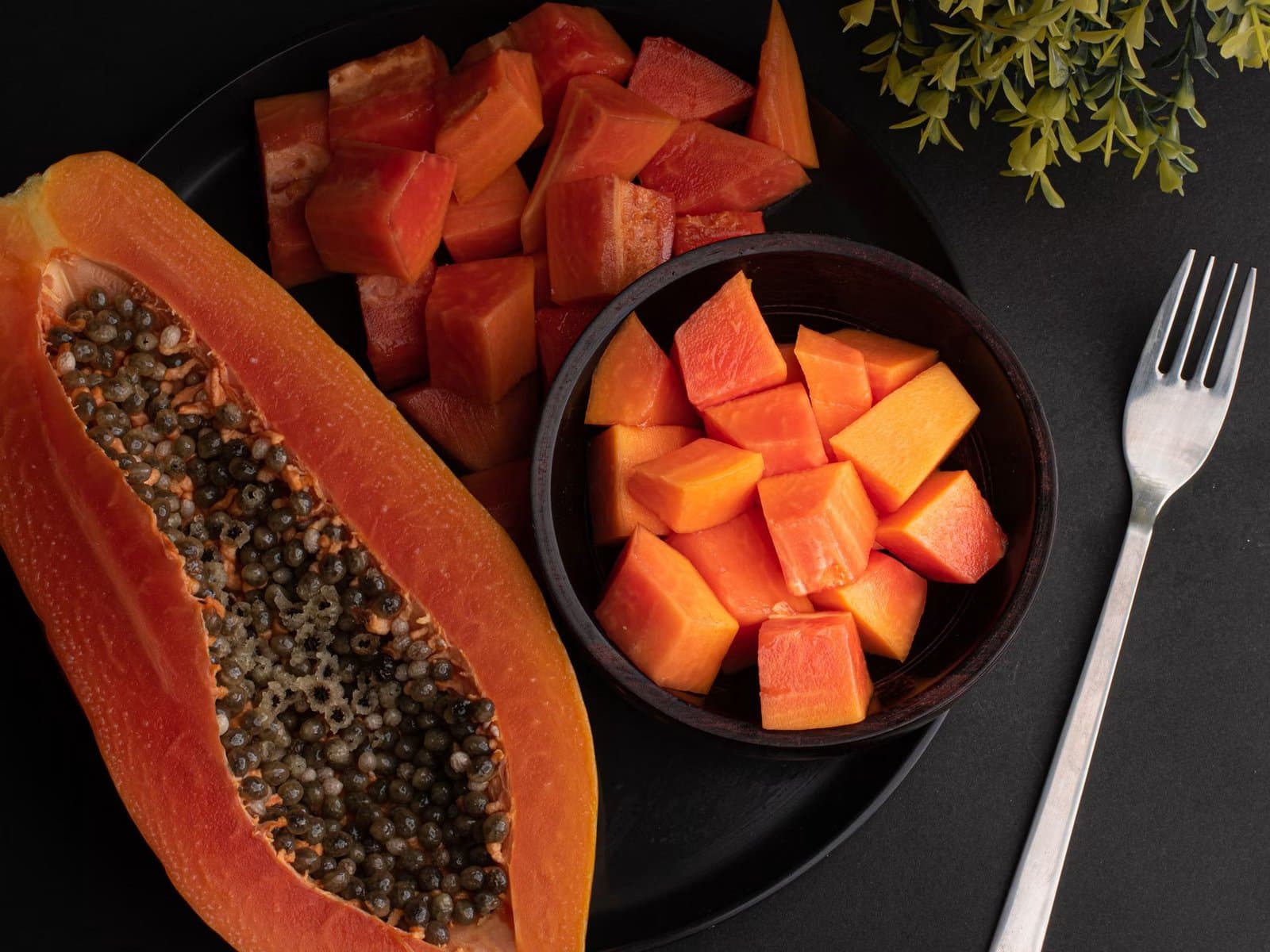
Soft, sun-coloured and naturally sweet, papaya is more than a pleasant tropical fruit. It is low in calories, rich in vitamin C and carotenoids, and easy to include in a balanced diet. In Ayurveda-inspired eating, ripe papaya can also fit beautifully into a light, fresh, satwik food pattern — when it suits the individual and is eaten mindfully.
The key is to appreciate papaya as a nourishing food, not a cure-all.
What Makes Papaya Nutritionally Valuable?
A 100 g serving of ripe papaya provides roughly 43 calories, about 1.8 g fibre, and around 60 mg vitamin C — an impressive contribution toward daily vitamin-C needs. It also supplies folate, potassium and orange-red carotenoids such as beta-carotene, which the body can convert to vitamin A as needed.
These nutrients support everyday functions:
- Vitamin C supports collagen formation, iron absorption and normal immune function.
- Fibre supports regular bowel movements and helps make fruit more satisfying.
- Potassium contributes to normal nerve, muscle and blood-pressure function.
- Carotenoids contribute to a diet rich in plant pigments associated with overall health.
Calling papaya a "superfood" is fine as a friendly shorthand for its nutrient density — but no single food can replace a varied diet, good sleep, movement and appropriate medical care.
Papaya and Digestion: What Is Real?
Papaya contains papain, a protein-digesting enzyme most concentrated in the latex of unripe fruit. This is one reason papaya has a long-standing reputation for supporting digestion. Ripe papaya also provides water and fibre, both of which can support comfortable, regular digestion.
However, papaya is not a treatment for persistent bloating, constipation, reflux, ulcers or abdominal pain. Ongoing digestive symptoms deserve assessment by a qualified clinician — especially if there is weight loss, bleeding, fever or severe pain.
The Ayurvedic and Satwik Perspective
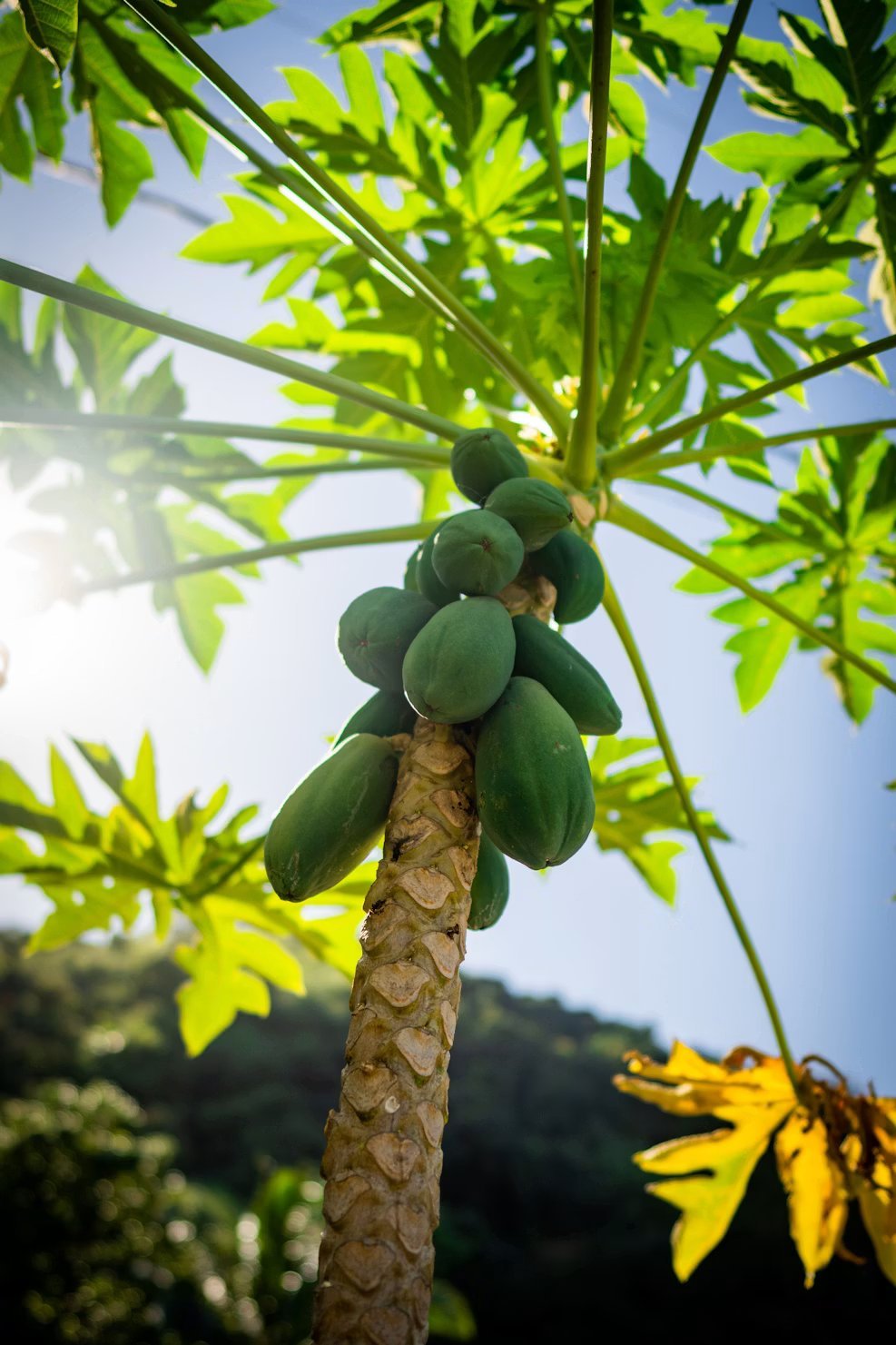
In traditional Indian food culture, ripe papaya is often valued as a light, naturally sweet fruit that can be easier to digest than rich desserts or fried snacks. In a satwik approach — one that favours fresh, seasonal, minimally processed and calmly eaten foods — ripe papaya fits well. It is also a fruit of our own climate: papaya trees thrive in the warm, tropical conditions we enjoy around the farm in Kisarawe.
A mindful way to enjoy it:
- Choose ripe, fragrant papaya with orange flesh.
- Eat it fresh, preferably on its own or as a simple snack.
- Avoid turning it into a sugar-heavy milkshake, dessert or processed juice.
- Notice your own response: even wholesome foods may not suit every person, every season or every digestive state.
Ayurveda is an individualised traditional system. Its language of agni, dosha and food qualities is not the same as modern clinical evidence, so it is best used as a complementary dietary lens — not a substitute for diagnosis or treatment.
Can Papaya Help Manage Disease?
Papaya can support a healthful dietary pattern, but it does not cure diabetes, cancer, dengue, heart disease or infection.
For people managing diabetes, whole papaya can still be included in a carbohydrate-aware meal plan. Fruit contains carbohydrate, so portion size and the overall meal matter. A practical starting amount is ½–1 cup of ripe papaya, ideally alongside a meal or paired with protein or healthy fat such as plain yoghurt, nuts or seeds. Individual glucose responses vary — follow your clinician's or dietitian's advice, and do not adjust medication based on fruit choices.
Papaya-leaf extract is often discussed for dengue, but it is not the same as eating papaya fruit. Some small studies suggest leaf extract may affect platelet counts, yet systematic reviews rate the clinical evidence as limited and call for larger, higher-quality trials. Dengue can become serious quickly: medical assessment, hydration guidance and monitoring must never be delayed for fruit, leaf juice or supplements.
When and How Much Papaya Should You Eat?
For most healthy adults, ½–1 cup of ripe papaya at a time is a sensible serving. It may be enjoyed at breakfast, as a mid-morning snack, or after a meal if it feels comfortable.
| Goal | Practical approach |
|---|---|
| Everyday nourishment | ½–1 cup ripe papaya, several times a week or as part of daily fruit intake |
| Digestive comfort | Start with ½ cup and assess tolerance; prioritise the whole fruit over juice |
| Diabetes management | Measure a ½-cup portion and count it within the meal's carbohydrate plan |
| Weight management | Use papaya to replace sugary snacks or desserts, not as an addition to them |
| Immunity support | Include papaya alongside other colourful fruits, vegetables, protein and adequate sleep |
Fresh fruit is generally preferable to juice because it retains fibre and is easier to portion. The American Diabetes Association similarly recommends choosing whole fruit and accounting for fruit carbohydrate within an individual meal plan.
Important Precautions
Ripe papaya is widely eaten as food, but a few people should take extra care:
- Allergy — avoid papaya if you have a known papaya allergy. Cross-reactions may occur in people with latex or kiwi allergy; stop and seek advice if you notice itching, swelling or breathing difficulty.
- Pregnancy — do not use unripe or semi-ripe papaya, papaya latex or papain supplements without medical advice. Unripe papaya contains more latex, and its safety concerns are different from normal intake of fully ripe fruit.
- Dengue or low platelets — do not self-treat with papaya fruit or leaf preparations; seek medical care.
- Medication and supplements — if you take regular medicines, are pregnant or breastfeeding, or have a medical condition, check with your clinician before using concentrated papaya-leaf or papain supplements.
The Bottom Line
Papaya earns its place on the plate through nutrition, simplicity and versatility: vitamin C, fibre, carotenoids, hydration and natural sweetness in one fresh fruit. Enjoy ripe papaya as part of a colourful, balanced and satwik-leaning food routine — but keep expectations grounded. It supports health; it does not replace medical care.
This article is for general educational purposes only and is not a substitute for professional medical advice, diagnosis or treatment. If you have an existing medical condition (especially diabetes, a latex or kiwi allergy, or a bleeding disorder), or are taking any medication, or are pregnant or breastfeeding, please consult your healthcare provider before making significant changes to your diet.
Related Reading
Continue exploring the Satwik wellness collection: