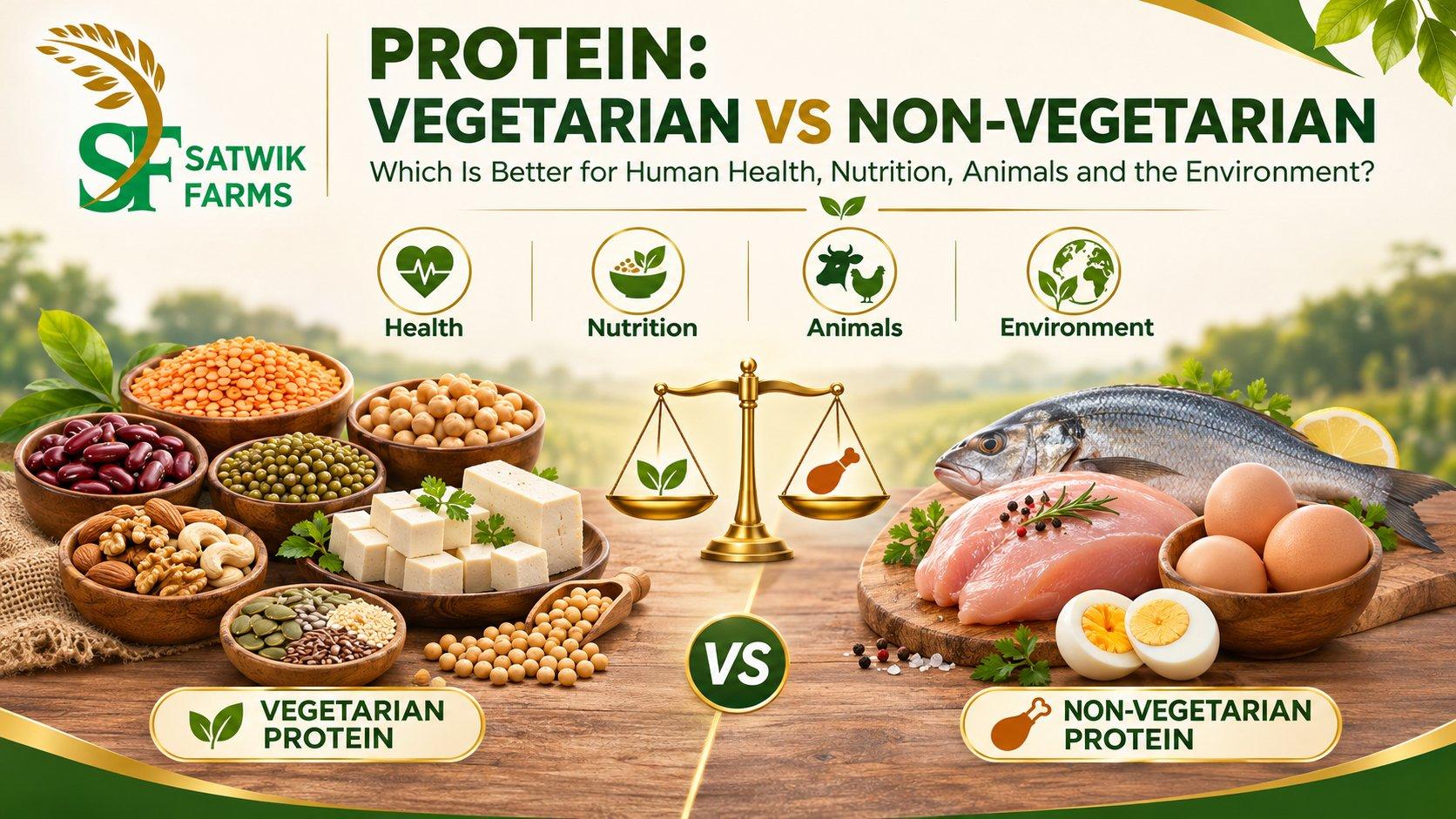
A scientific look at protein sources, nutritional quality, food-production efficiency and environmental sustainability
Introduction: Are We Eating Protein Wisely?
Protein has become one of the most talked-about nutrients in modern nutrition. From gym enthusiasts and bodybuilders to people trying to lose weight, manage diabetes or prevent age-related muscle loss, everyone seems to be increasing their protein intake. The food industry has responded with protein powders, protein bars, fortified beverages, high-protein snacks and supplements.
But an important question is often overlooked: is animal protein necessarily better than plant protein? And is producing animal protein an efficient way of feeding the world's population?
There are two dimensions to this discussion:
- Human nutrition: which protein sources provide the best amino acids, digestibility, nutritional benefits and long-term health outcomes?
- Environmental sustainability: how much food, agricultural land, water and energy does it take to produce animal protein, compared with getting protein directly from plants?
For example, producing one kilogram of chicken, pork or beef means feeding the animal substantial quantities of agricultural products — some of which could otherwise be eaten directly by people.
Does this mean vegetarian protein is always superior? Not necessarily. Animal proteins have certain nutritional advantages, while plant proteins offer other benefits — particularly fibre, phytochemicals and a lower environmental footprint.
Let's examine the scientific evidence.
Part 1: Understanding Protein
1. What is protein, and why does our body need it?
Protein is an essential macronutrient made up of smaller units called amino acids. The human body uses protein for:
- Building and repairing muscles
- Maintaining skin, hair and nails
- Producing enzymes and hormones
- Supporting immune function
- Maintaining bones and connective tissues
- Transporting nutrients and oxygen
- Maintaining muscle mass during ageing
- Supporting recovery after illness and physical activity
There are 20 commonly occurring amino acids in human proteins. Nine are essential, because our bodies cannot make enough of them, so they must come from our diet: histidine, isoleucine, leucine, lysine, methionine, phenylalanine, threonine, tryptophan and valine.
A good protein source should provide all nine essential amino acids in adequate proportions. But the quantity of protein alone does not determine its nutritional quality: two foods that each contain 20 grams of protein can differ in amino-acid composition and digestibility. This is where protein quality becomes important.
2. What makes a protein high quality?
Scientists commonly use two methods to evaluate protein quality:
- PDCAAS (Protein Digestibility-Corrected Amino Acid Score) evaluates a protein's essential amino-acid composition and its digestibility.
- DIAAS (Digestible Indispensable Amino Acid Score) evaluates the digestibility of each individual essential amino acid at the end of the small intestine. It gives a more detailed assessment of protein quality, and was recommended by the FAO in 2013.
In general:
| Protein source | Protein quality |
|---|---|
| Whey protein | Very high |
| Milk protein | Very high |
| Eggs | Very high |
| Fish | High |
| Chicken | High |
| Soy protein | High |
| Peas | Moderate |
| Lentils | Moderate |
| Chickpeas | Moderate |
| Wheat | Relatively low |
| Rice | Relatively low |
| Peanuts | Relatively low |
These are general classifications, not fixed scores for every food or preparation.
Animal proteins generally have higher digestibility and a more favourable essential amino-acid profile. However, this does not mean plant proteins are inadequate. Combining different plant foods can provide all the essential amino acids in sufficient quantities — for example:
- Dal + rice
- Rajma + rice
- Chole + whole-wheat roti
- Soybean + cereals
- Peanut + grain preparations
Importantly, these combinations do not need to be eaten in the same meal. A varied diet through the day provides complementary amino acids.
Part 2: Vegetarian Sources of Protein
Vegetarian foods provide an extensive range of protein sources. India in particular has a long tradition of eating pulses, legumes, fermented foods, dairy products, nuts and seeds. Let's look at the major categories.
3. Pulses and legumes
Pulses are among the most economical and accessible sources of plant protein.
| Food (dry weight) | Protein per 100 g |
|---|---|
| Soybeans | 36 g |
| Moong dal | 24 g |
| Masoor dal | 24–25 g |
| Chana dal | 21 g |
| Urad dal | 24 g |
| Rajma | 23–24 g |
| Chickpeas | 19–20 g |
| Dried peas | 24 g |
| Sattu (roasted chana flour) | 20–22 g |
Values are approximate and vary by variety and processing. Cooked pulses contain much less protein per 100 g, because they absorb water.
Why are pulses particularly beneficial? They provide:
- Protein
- Dietary fibre
- Resistant starch
- Iron, magnesium and potassium
- Folate
- Polyphenols and other bioactive compounds
Pulses can also help improve satiety and support blood-glucose management, and their fibre makes them particularly useful in diets aimed at controlling body weight and improving metabolic health. For people concerned about diabetes, whole pulses are generally preferable to highly refined, low-fibre foods.
4. Soybean and soy products
Soybean deserves special attention because it is one of the most nutritionally complete plant protein sources.
| Soy product | Approx. protein |
|---|---|
| Dry soybean, 100 g | 36 g |
| Firm tofu, 100 g | 10–17 g |
| Tempeh, 100 g | 18–20 g |
| Soy milk, 100 ml | 3–4 g |
| Soy chunks (dry), 100 g | 50–52 g |
Soy contains all nine essential amino acids. It also contains isoflavones, naturally occurring plant compounds. Scientific research indicates that soy can be included safely as part of a balanced diet for most people, and it is particularly useful for vegetarians who want more protein without depending heavily on dairy products.
Two practical cautions: soy may reduce the absorption of thyroid medication (levothyroxine) if taken at the same time, so leave a gap of a few hours; and anyone on hormonal therapy (HRT, oral contraceptives or tamoxifen) should check with their doctor before eating large or concentrated amounts of soy, or taking isoflavone supplements. Our tofu guide covers both in detail.
5. Sprouts
Sprouting is a traditional food-preparation method that can improve the nutritional characteristics of legumes. Common sprouts include moong and chana sprouts, methi sprouts and lentil sprouts.
Sprouting can reduce certain antinutritional compounds and improve the bioavailability of some nutrients. However, sprouting does not magically multiply the total amount of protein. The apparent protein concentration can change because the seed absorbs water and its carbohydrates and other components change.
Sprouts are particularly useful because they combine protein, fibre and micronutrients.
Hygiene matters: raw sprouts can carry harmful bacteria, so proper hygiene is essential. Children, older adults, pregnant women and anyone with a weakened immune system should eat sprouts cooked rather than raw.
6. Nuts and seeds
Nuts and seeds provide protein alongside healthy fats, minerals and fibre.
| Food | Protein per 100 g |
|---|---|
| Pumpkin seeds | 30 g |
| Peanuts | 25–26 g |
| Almonds | 21 g |
| Sunflower seeds | 21 g |
| Sesame seeds | 17–18 g |
| Chia seeds | 17 g |
| Flaxseeds | 18 g |
| Cashews | 18 g |
Although these foods contain protein, they are also calorie-dense. For people managing obesity or diabetes, portion control is important: a handful of nuts — or a spoonful of a roasted seed mix — can be nutritious, but eating large quantities simply to increase protein may add excessive calories.
7. Dairy products
For lacto-vegetarians, dairy products offer highly digestible protein.
| Food | Approx. protein |
|---|---|
| Cow's milk, 100 ml | 3.2 g |
| Curd, 100 g | 3–4 g |
| Greek yoghurt, 100 g | 8–10 g |
| Paneer, 100 g | 16–20 g |
| Whey protein, 30 g serving | 20–25 g |
| Cheese, 100 g | 20–25 g |
Milk contains two major proteins — casein (about 80%) and whey (about 20%) — and both are high-quality proteins.
Not all dairy products have identical nutritional characteristics, though. Paneer and cheese can contain substantial amounts of saturated fat, depending on how they are made. Unsweetened curd is generally a useful everyday food.
Part 3: Non-Vegetarian Sources of Protein
Animal foods are generally concentrated sources of highly digestible protein. They also provide certain nutrients that may be less readily available in vegetarian diets.
8. Meat, fish and eggs
| Food | Protein per 100 g |
|---|---|
| Chicken breast, cooked | 30–31 g |
| Chicken thigh, cooked | 25–27 g |
| Lean beef, cooked | 26–29 g |
| Mutton, cooked | 25–28 g |
| Pork, cooked | 25–27 g |
| Fish, cooked | 20–26 g |
| Tuna, cooked | 29 g |
| Egg, whole | 13 g |
Values vary with the cut, species and cooking method. One large egg provides about 6–7 g of protein.
Nutritional advantages of animal protein. Animal foods can provide:
- All essential amino acids
- Highly digestible protein
- Vitamin B12
- Heme iron
- Zinc
- Selenium
- Long-chain omega-3 fatty acids, in certain fish
- Vitamin D, in some fish and eggs
These nutrients can be particularly important for people with increased nutritional requirements.
However, the advantages of animal foods must be weighed against their fat content, processing methods and long-term health effects. Processed meats such as sausages, bacon and salami are not nutritionally equivalent to fresh fish or unprocessed chicken.
The International Agency for Research on Cancer (IARC) classifies processed meat as carcinogenic to humans (Group 1) and red meat as probably carcinogenic to humans (Group 2A), mainly on the basis of evidence linking them to bowel (colorectal) cancer. By IARC's estimate, each 50 g portion of processed meat eaten daily raises the risk of colorectal cancer by about 18%.
This does not mean all animal protein is harmful. It means the type of animal food matters considerably.
Source: WHO — Carcinogenicity of red and processed meat
Part 4: Which Is Better for Human Health?
9. Comparing vegetarian and non-vegetarian protein
Let's examine the major nutritional differences between plant and animal protein:
| Feature | Plant | Animal |
|---|---|---|
| Essential amino acids | Present; sometimes limiting in individual foods | Generally complete |
| Digestibility | Variable | Generally higher |
| Fibre | Often high | Absent |
| Saturated fat | Generally low | Variable, sometimes high |
| Vitamin B12 | Generally absent naturally | Present |
| Heme iron | Absent | Present in meat, poultry and fish |
| Magnesium | Often higher | Variable |
| Phytochemicals | Present | Generally absent |
| Cholesterol | Absent | Present |
| Environmental impact | Generally lower | Generally higher |
Neither category should be judged solely by its protein content — the overall nutritional package matters. For example:
- Lentils provide protein, fibre and minerals.
- Chicken provides highly digestible protein, but no fibre.
- Fish provides protein and, depending on the species, omega-3 fatty acids.
- Soy provides complete protein, fibre and bioactive compounds.
- Eggs provide protein, choline and vitamin B12.
What does scientific research say?
A 2024 viewpoint article in the journal Foods, titled Redefining Protein Quality: Integrating Health Outcomes and Environmental Impacts in the Plant-Animal Protein Debate, examined how protein sources relate to health and sustainability. It concluded that eating more plant protein from legumes, nuts, seeds and whole grains is associated with lower risks of cardiovascular disease, some cancers and mortality — especially compared with red and processed meats — while noting that the evidence is mixed for some outcomes and that blanket recommendations should be avoided.
Source: Visioli, F. (2024). Foods, 13(24), 4128
A 2026 systematic review and meta-analysis of 29 randomised controlled trials involving 2,363 adults aged 50 and above found no significant differences between plant and animal protein in their effects on body composition — including lean mass and handgrip strength — or on most blood markers. (Plant protein lowered total cholesterol slightly.) However, most trials used soy (25 of 29), and most tested protein isolates rather than ordinary whole foods (23 of 29). The authors caution that the results are not evidence that whole-food plant and animal proteins are equivalent — an important limitation when applying them to everyday diets.
Source: Foscolou et al. (2026), Clinical Nutrition ESPEN
The important conclusion: animal protein is not essential for maintaining muscle mass or getting enough dietary protein. Properly planned vegetarian diets can meet protein requirements.
10. Does vegetarian protein reduce cardiovascular risk?
Several large observational studies have examined how protein sources relate to heart health. Plant protein sources such as beans, lentils, soy, nuts and whole grains are generally associated with favourable cardiovascular outcomes.
A particularly important consideration is what replaces what. Replacing processed or red meat with legumes, nuts or soy is different from simply adding more plant protein without changing the rest of the diet.
A 2026 systematic review and meta-analysis of nine cohort studies involving more than one million participants found that replacing 3–5% of daily calories from animal protein with plant protein was associated with about 9% lower all-cause mortality and 12–23% lower cardiovascular mortality, along with slightly lower cancer mortality.
These are observational findings, so they show associations — they do not prove that protein substitution alone caused the benefits.
Source: Barrantes-Espinola et al. (2026), Clinical Nutrition
11. Is non-vegetarian protein better for building muscles?
Animal protein often has an advantage in leucine content and digestibility, and leucine plays an important role in stimulating muscle protein synthesis.
However, muscle development depends on several factors:
- Total daily protein intake
- Adequate essential amino acids
- Resistance exercise
- Sufficient calories
- Sleep and recovery
- Age and overall health
Soy protein, dairy protein and appropriately combined plant proteins can all support muscle development. A vegetarian does not need to eat meat to build or maintain muscle — the key is getting enough protein and spreading it sensibly across meals.
Part 5: How Much Animal Feed Is Required to Produce One Kilogram of Meat?
This is one of the most important aspects of the vegetarian versus non-vegetarian discussion.
When we eat pulses, we obtain the protein produced by plants directly. When we eat meat, another biological step is involved: crops and other feed are first eaten by animals, which convert only a portion of the nutrients into edible meat. The rest of the energy and nutrients is used for:
- Movement
- Maintaining body temperature
- Respiration
- Metabolism
- Maintaining body tissues
- Other biological functions
This means a significant amount of feed is needed to produce animal protein. Scientists measure this using the Feed Conversion Ratio (FCR):
FCR = total feed consumed ÷ weight gained by the animal
A lower FCR generally indicates better feed efficiency.
12. Feed required to produce one kilogram of animal weight
Typical commercial production estimates:
| Animal | Feed per kg live-weight gain |
|---|---|
| Beef cattle | 6–10 kg |
| Pigs | 2.7–5 kg |
| Broiler chicken | 1.7–2 kg |
| Farmed fish | 1–2.4 kg |
| Farmed shrimp | 1.2–2.4 kg |
These are approximate ranges, not universal figures. They depend on genetics, feed quality, the animal's age, farming practices and production conditions.
Source: Fry et al. (2018), Environmental Research Letters
An important distinction: these figures refer to live-weight gain, not one kilogram of edible meat. After slaughter, bones, organs, skin and other parts that are not eaten must be accounted for — so producing one kilogram of edible meat takes more feed than producing one kilogram of live-weight gain.
13. How much feed is required for one kilogram of edible meat?
A broader comparison illustrates the difference:
| Animal product | Feed per kg edible product |
|---|---|
| Beef | 19–36 kg |
| Pork | 6–9 kg |
| Chicken | 3–4 kg |
| Farmed fish | 2–4 kg |
| Eggs | 2–4 kg |
These are indicative estimates drawn from different production studies, and should not be treated as directly comparable universal averages.
Methods vary widely. A review published by the FAO, which counts dry feed only, puts beef at about 10 kg of feed per kg of edible weight. But every source ranks beef far above pork, chicken and farmed fish, with chicken and farmed salmon among the most feed-efficient animal foods. As that FAO-published review puts it: "Beef cattle require over 10 kg of feed to add 1 kg of edible weight, whereas catfish use less than 3 kg to add a kg of edible weight."
Sources: Fry et al. (2018) and its correction; Costa-Pierce et al. (2012), published by FAO
Why does beef require so much feed?
Cattle are ruminants. They have a specialised digestive system with a rumen, which lets them digest grasses and other fibrous materials that humans cannot — an important advantage of cattle. However, the animal still needs a great deal of energy to maintain its body and grow. Cattle also produce methane through enteric fermentation, the digestion process in the rumen.
So beef production generally has a significantly higher environmental footprint than poultry, fish and plant proteins.
An important qualification
Not all animal feed is suitable for human consumption. Cattle, sheep and goats can eat grass, crop residues and agricultural by-products, and some livestock systems use land that is unsuitable for growing human food crops.
A 2017 study published in Global Food Security estimated that 86% of global livestock feed intake, measured on a dry-matter basis, is made of materials that are not currently eaten by humans. The same study found that producing 1 kg of boneless meat takes, on average, 2.8 kg of human-edible feed in ruminant systems and 3.2 kg in monogastric (pig and poultry) systems. This is an important argument in favour of livestock systems that use grasslands and agricultural by-products efficiently. Nevertheless, it does not eliminate the environmental costs of livestock production.
Source: Mottet et al. (2017), Global Food Security
Part 6: Environmental Impact of Vegetarian and Non-Vegetarian Protein
Now comes perhaps the most important question for the future of food production: which protein source requires fewer natural resources?
14. Greenhouse gas emissions
Animal agriculture contributes to greenhouse gas emissions through:
- Methane from ruminant digestion
- Methane and nitrous oxide from manure management
- Feed production
- Fertiliser use
- Land-use change
- Transport and processing
Plant protein production generally avoids the methane emissions associated with ruminant digestion.
Research published in Science by Joseph Poore and Thomas Nemecek in 2018 examined data from approximately 38,700 farms across 119 countries. It remains one of the most comprehensive global studies of the environmental impact of food production, evaluating greenhouse gas emissions, land use, freshwater withdrawals, eutrophication and other environmental indicators.
Greenhouse gas emissions per 100 grams of protein
The figures below come from Our World in Data's presentation of the Poore and Nemecek dataset:
| Food | kg CO₂e per 100 g protein |
|---|---|
| Beef (beef herd) | 49.89 |
| Lamb and mutton | 19.85 |
| Beef (dairy herd) | 16.87 |
| Cheese | 10.82 |
| Milk | 9.50 |
| Pork | 7.61 |
| Farmed fish | 5.98 |
| Poultry | 5.70 |
| Eggs | 4.21 |
| Grains | 2.70 |
| Tofu | 1.98 |
| Groundnuts | 1.23 |
| Other pulses | 0.84 |
| Peas | 0.44 |
| Nuts | 0.26 |
Source: Our World in Data, based on Poore and Nemecek (2018)
What does this tell us? Producing 100 grams of protein from beef raised in specialised beef herds generates about 50 kg of CO₂-equivalent. The same quantity of protein from other pulses generates about 0.84 kg — an enormous difference.
Even chicken, which is much more environmentally efficient than beef, generally has a higher carbon footprint than pulses and tofu.
These figures are global averages. Individual farms can perform considerably better or worse.
15. Land requirement
Agricultural land is a finite resource. Animal production needs land for:
- Growing animal feed
- Grazing
- Housing animals
- Producing fodder
- Managing manure and waste
Plant protein can often be produced directly on agricultural land, without the additional animal-production stage.
Land required to produce 100 grams of protein
| Food | m² per 100 g protein |
|---|---|
| Lamb and mutton | 184.8 |
| Beef (beef herd) | 163.6 |
| Cheese | 39.8 |
| Milk | 27.1 |
| Beef (dairy herd) | 21.9 |
| Pork | 10.7 |
| Nuts | 7.9 |
| Other pulses | 7.3 |
| Poultry | 7.1 |
| Eggs | 5.7 |
| Grains | 4.6 |
| Farmed fish | 3.7 |
| Groundnuts | 3.5 |
| Peas | 3.4 |
| Tofu | 2.2 |
Land used for a year, in square metres. Source: Our World in Data, based on Poore and Nemecek (2018)
The findings are particularly significant for beef and lamb. Beef from specialised beef herds needs about 74 times as much land per 100 grams of protein as tofu. This is one reason why replacing some meat with legumes and soy can significantly reduce agricultural land requirements.
16. Water consumption
Water is another important consideration. Food production uses water for irrigation, animal drinking water, cleaning, feed production and food processing.
However, water comparisons need careful interpretation, because there are different kinds of water use:
- Green water: rainwater stored in the soil and used by crops.
- Blue water: surface water and groundwater withdrawn for irrigation and other purposes.
- Grey water: a theoretical measure of the freshwater needed to dilute pollutants to acceptable concentrations.
A kilogram of beef may have a large total water footprint, but a substantial proportion can be rainwater used by pasture. So saying that every litre of water used for beef production competes directly with drinking water would be misleading.
The location and type of water use matter. Growing feed in a water-stressed region, for example, can have greater environmental consequences than using rainfall on natural grasslands.
The overall evidence still shows that plant proteins generally require fewer resources, although the precise water advantage varies by crop and region.
17. Pollution and biodiversity
Intensive livestock production can create additional environmental problems:
- Water pollution: excess manure and fertiliser can enter rivers and lakes, causing eutrophication, algal blooms, oxygen depletion and damage to aquatic ecosystems.
- Deforestation: expanding pastureland and animal-feed production can contribute to deforestation, which is particularly concerning in ecologically sensitive regions.
- Biodiversity loss: converting natural ecosystems into agricultural land can destroy habitats and reduce biodiversity.
- Antibiotic resistance: inappropriate or excessive antibiotic use in animal agriculture can contribute to antimicrobial resistance.
These risks are not identical across all livestock systems. Well-managed farms can reduce many of these impacts.
Part 7: Comparison of All Major Protein Sources
The table below brings nutritional and environmental considerations together. Quality means protein quality (amino acids and digestibility); footprint means environmental impact.
| Food | Quality | Footprint |
|---|---|---|
| Soybean — protein, fibre, isoflavones | High | Low |
| Tofu — protein, minerals | High | Low |
| Lentils — protein, fibre, folate | Moderate | Very low |
| Chickpeas — protein, fibre, minerals | Moderate | Very low |
| Rajma — protein, fibre, resistant starch | Moderate | Very low |
| Peas — protein and fibre | Moderate | Very low |
| Peanuts — protein and healthy fats | Relatively low | Low |
| Almonds — protein, vitamin E, healthy fats | Relatively low | Low to moderate |
| Milk — calcium, B12, protein | High | Moderate |
| Paneer — protein, calcium; saturated fat varies | High | Moderate to high |
| Whey — concentrated protein | Very high | Depends on dairy production |
| Eggs — protein, B12, choline | Very high | Lower than most meats |
| Chicken — lean protein | High | Moderate |
| Fish — protein; omega-3 in certain species | High | Variable |
| Pork — protein, B vitamins | High | Relatively high |
| Beef — protein, B12, iron, zinc | High | Very high |
| Mutton — protein, iron, B12 | High | Very high |
This comparison illustrates an important point: the highest-quality protein from an amino-acid perspective is not necessarily the best protein from an overall health or environmental perspective. A food must be evaluated as a complete nutritional package.
Part 8: How Much Protein Does a Human Actually Need?
Another misconception deserves attention: more protein does not automatically mean better health.
Protein requirements depend on age, body weight, physical activity, muscle mass, pregnancy and breastfeeding, recovery from illness, and overall health.
The commonly used protein requirement for healthy adults is about 0.8 grams per kilogram of body weight per day. For example:
| Body weight | Daily protein |
|---|---|
| 50 kg | 40 g |
| 60 kg | 48 g |
| 70 kg | 56 g |
| 80 kg | 64 g |
| 90 kg | 72 g |
This is a general reference level, not an ideal target for every individual.
Protein requirements by age and activity
| Category | Daily protein |
|---|---|
| Healthy sedentary adults | 0.8–0.83 g/kg |
| Regularly active adults | 1.0–1.4 g/kg |
| Resistance training | 1.2–1.6 g/kg |
| Older adults | Often 1.0–1.2 g/kg |
| Older adults with illness or malnutrition risk | May need 1.2–1.5 g/kg, under clinical guidance |
These are practical ranges drawn from nutrition guidance and from sports and geriatric nutrition research. People with chronic kidney disease or certain other medical conditions may need individualised protein recommendations.
Does everyone need 100–150 grams of protein a day?
Absolutely not. For someone who weighs 70 kg and lives a sedentary lifestyle, eating 120–150 grams of protein every day may be unnecessary.
Protein is important, but the body also needs fibre, healthy fats, complex carbohydrates, vitamins, minerals and adequate hydration. A balanced diet matters more than maximising a single nutrient. For a closer look at the risks of eating more protein than you need, read Protein Overdose: Are We Eating Too Much Protein?
Part 9: Special Considerations for Diabetes and Weight Management
Protein is frequently promoted as a solution for diabetes and obesity. There is some scientific basis for this, but the claims are often exaggerated.
Protein can:
- Increase satiety
- Help preserve muscle during weight loss
- Reduce the share of calories from rapidly digested carbohydrates, when used as a replacement
- Support muscle recovery and maintenance
However, protein itself is not a treatment for diabetes. For people with diabetes, the quality of the overall diet matters.
Better vegetarian protein choices
- Moong dal
- Masoor dal
- Chana
- Rajma
- Soybean
- Tofu
- Unsweetened curd
- Sattu
- Sprouts
- Nuts and seeds
An important advantage of these foods is that many provide both protein and dietary fibre — a combination that supports better overall diet quality. However, portion sizes matter, because pulses and nuts also provide calories and carbohydrates.
Important: these foods support a healthy diet — they are not a substitute for prescribed diabetes treatment. Continue your medication, and if you take insulin or sulfonylureas, talk to your doctor before making big changes to your diet, as your blood sugar may fall more than expected.
Who Should Take Extra Care
Whatever mix of plant and animal protein you choose:
- Kidney disease: your protein target should come from your doctor or renal dietitian, whatever its source.
- Pregnancy: eat sprouts cooked, and if you eat fish, choose low-mercury varieties and avoid shark, swordfish and marlin.
- Young children: serve sprouts cooked, and don't give whole nuts or peanuts to children under five because of the choking risk — nut butters or finely ground nuts are safer.
- Food allergies: peanuts, tree nuts, soy, milk, eggs, fish and shellfish are among the most common food allergens. Avoid any food that has caused a reaction, and seek urgent medical help for swelling of the face or throat, or difficulty breathing.
- Vegetarians and vegans: vitamin B12 occurs naturally almost only in animal foods. Dairy and eggs supply some, but vegans need fortified foods or a supplement. If you have been vegetarian for many years, ask your doctor about checking your B12 level.
Part 10: The Ethical and Economic Dimension
There is another question that deserves attention: is it economically sensible to produce animal protein when plant protein can be obtained directly?
Consider the two production chains:
- Plant protein: agricultural land → crop cultivation → harvesting → processing → human consumption.
- Animal protein: agricultural land → feed cultivation → harvesting → animal feeding → animal growth → slaughter or harvesting → processing → human consumption.
Every additional stage requires resources.
However, livestock also provides important services:
- Converting grass into human food
- Using crop residues
- Using agricultural by-products
- Manure for soil fertility
- Livelihoods for farming communities
- Food production in regions unsuitable for crop cultivation
This is particularly relevant in countries such as Tanzania, where pastoralism and mixed crop-livestock farming are important parts of rural livelihoods.
So the objective should not be to eliminate all animal agriculture. A more scientifically defensible objective is to improve food-system efficiency, reduce waste and produce food with a lower environmental impact.
Part 11: What Is the Best Approach for the Future?
A sustainable protein strategy should consider four principles.
1. Increase direct consumption of plant proteins
Pulses, lentils, peas, chickpeas, soybeans, nuts and seeds should form an important part of everyday diets. These foods are generally affordable and environmentally efficient.
2. Reduce excessive dependence on red and processed meat
Replacing some red and processed meat with legumes, nuts, soy and other plant foods can improve diet quality and reduce environmental impact.
3. Improve livestock farming practices
Where animal agriculture is practised, priority should be given to:
- Better feed management
- Improved animal health
- Reduced feed wastage
- Better manure management
- Sustainable grazing
- Responsible antibiotic use
- Efficient water management
4. Promote whole foods rather than excessive supplementation
A person does not necessarily need expensive protein powders, bars and processed high-protein products. Traditional foods can provide excellent nutrition: dal, rajma, chana, sattu, sprouts, curd, tofu, nuts and seeds can together meet a substantial proportion of daily protein requirements.
Final Verdict: Vegetarian or Non-Vegetarian — Which Is Better?
After examining nutritional science, human health, agricultural efficiency and environmental sustainability, several conclusions emerge.
1. Protein quality. Animal protein generally has an advantage in digestibility and essential amino-acid composition. However, soy and properly planned combinations of plant proteins can adequately meet human protein requirements.
2. Long-term health. Diets rich in legumes, nuts, seeds, whole grains, vegetables and minimally processed foods have strong evidence supporting cardiovascular and metabolic health. Replacing red and processed meat with plant protein sources is particularly promising.
3. Agricultural efficiency. Plant proteins generally provide more direct food output from agricultural resources. Producing beef requires substantially more feed and land than producing protein from pulses or soy.
4. The environment. Plant protein generally has a substantially lower carbon footprint and land requirement than animal protein.
5. Affordability. Pulses, chickpeas, lentils and locally grown legumes can provide excellent protein at relatively low cost.
6. Human nutrition. There is no scientific requirement for every person to eat meat, fish or eggs to remain healthy. A properly planned vegetarian diet can provide enough protein and support healthy ageing, muscle maintenance and metabolic health. However, vegetarians should pay attention to vitamin B12, iron, zinc, calcium and omega-3 fatty acids.
Satwik Living's Philosophy: Protein Through Balanced, Natural Nutrition
At Satwik Living, we believe nutrition should not be reduced to chasing one particular nutrient. Food is not merely a source of protein, carbohydrates or fat — it is a combination of nutrients, fibre, natural compounds and nourishment that supports the entire body.
Our traditional food culture offers several excellent protein sources:
- Fresh dals and pulses
- Chana and sattu
- Sprouted legumes
- Soybean and tofu
- Fresh curd
- Nuts and seeds
- Whole grains
These foods can be combined into nutritious, balanced meals. The objective should be to get enough protein without neglecting fibre, micronutrients and overall diet quality.
Nature has already provided us with an extraordinary variety of protein-rich foods. We do not always need to look towards expensive supplements and highly processed products.
The future of nutrition should focus on three principles:
Eat adequately. Eat naturally. Eat sustainably.
A thought to remember
The best protein is not necessarily the protein with the highest concentration, but the one that nourishes the human body while respecting the resources of our planet.
Healthy people. Healthy animals. Healthy soil. A healthier planet.
Satwik Farms — Health bhi, Taste bhi.
Scientific References and Further Reading
The following scientific publications and research databases provide the evidence behind this article:
- FAO (2013): Dietary Protein Quality Evaluation in Human Nutrition. FAO Food and Nutrition Paper 92.
- Poore J. & Nemecek T. (2018): Reducing food's environmental impacts through producers and consumers. Science, 360(6392), 987–992.
- Ritchie H., Rosado P. & Roser M. (2022): Environmental Impacts of Food Production. Our World in Data.
- Fry J.P. et al. (2018): Feed conversion efficiency in aquaculture: do we measure it correctly? Environmental Research Letters, 13, 024017 (see also its correction).
- Costa-Pierce B.A. et al. (2012): Responsible use of resources for sustainable aquaculture. In Farming the Waters for People and Food, FAO/NACA.
- Mottet A. et al. (2017): Livestock: On our plates or eating at our table? A new analysis of the feed/food debate. Global Food Security, 14, 1–8.
- Visioli F. (2024): Redefining Protein Quality: Integrating Health Outcomes and Environmental Impacts in the Plant-Animal Protein Debate. Foods, 13(24), 4128.
- Foscolou A. et al. (2026): Plant- versus animal-derived protein and nutritional, cardiometabolic, and inflammatory outcomes in middle-aged and older adults: a systematic review and meta-analysis of randomized controlled trials. Clinical Nutrition ESPEN, 75, 105027.
- Barrantes-Espinola G. et al. (2026): Isocaloric substitution of animal protein with plant protein and its impact on all-cause, cardiovascular, and cancer mortality: a systematic review and meta-analysis. Clinical Nutrition, 61, 106654.
- International Agency for Research on Cancer (2018): IARC Monographs Volume 114: Red Meat and Processed Meat.
This article is for general educational purposes only and is not a substitute for professional medical advice, diagnosis or treatment. If you have an existing medical condition (especially diabetes, kidney disease, a thyroid condition or a food allergy), or are taking any medication, or are pregnant or breastfeeding, please consult your healthcare provider before making significant changes to your diet.
Related Reading
Continue exploring natural, sustainable nutrition:
- Protein Overdose: Are We Eating Too Much Protein? Harmful Effects, Diabetes & Daily Needs by Age
- Tofu: Benefits, Nutrition, Ayurveda & How Much to Eat Daily
- Chana Sattu: The Traditional Protein-Rich Superfood for Modern Living
- Chana & Moong Sprouts: Nutrition, Ayurvedic Benefits & How to Eat Them Daily
- Satwik Farming: Holistic, Regenerative Agriculture Rooted in Ancient Indian Wisdom